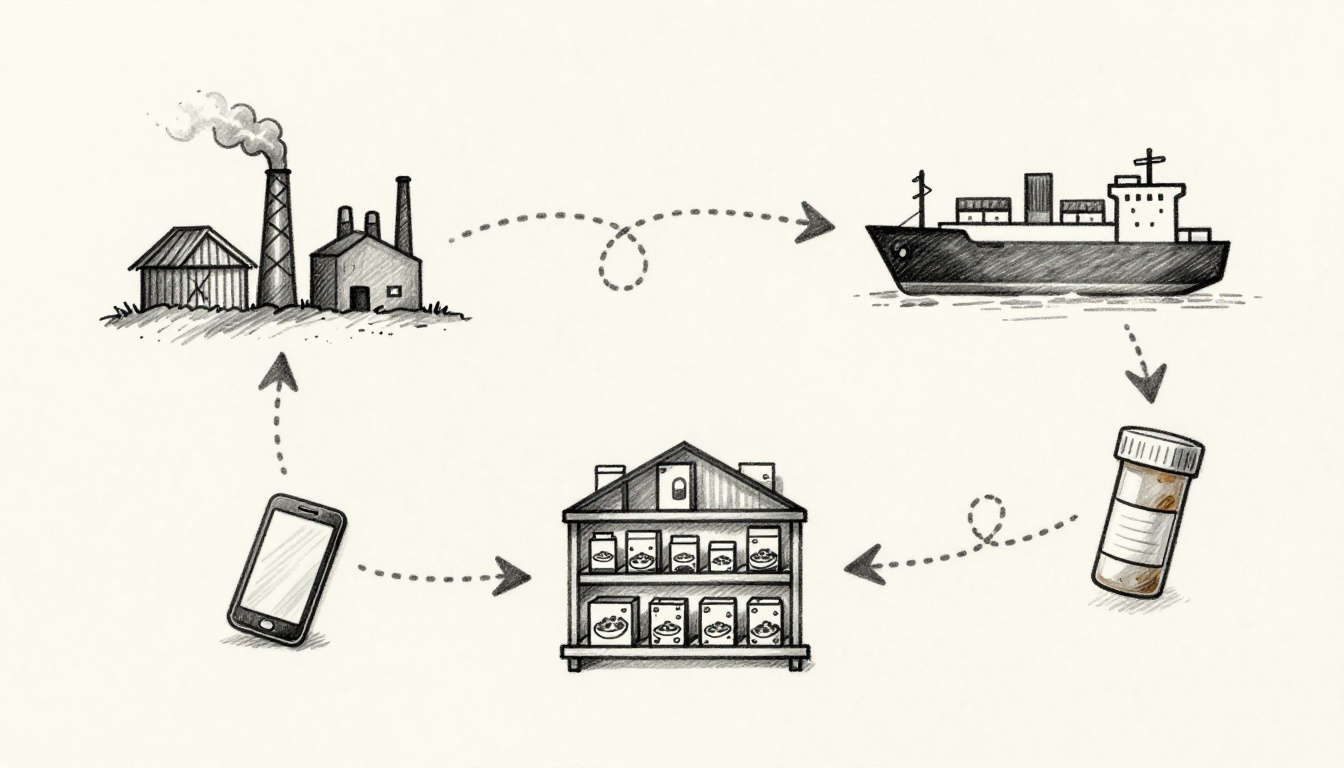
Have you ever eaten cereal, charged your phone, or filled a prescription without thinking about where it came from? Those everyday moments rely on supply chains in everyday life, the mostly invisible routes that move goods from farms and factories to your doorstep.
Supply chains are not just “business stuff.” They shape what you can buy, how fast it shows up, and what you pay. When supply chains work well, life feels easy and prices stay steadier.
When they fail, you feel it right away, through empty shelves, longer lines, and sudden price spikes. Understanding how supply chains move essentials helps you see why disruptions hurt everyone, even if you never touch a warehouse.
Next, you’ll see the journey behind your daily must-haves, the disruptions that break that journey, and real success stories. You’ll also get a look at what smarter, tougher supply chains may mean for 2026 and beyond.
How Supply Chains Deliver Your Daily Must-Haves
Think of a supply chain like a relay race. Raw materials start the race. Then factories, trucks, ships, and warehouses pass the baton. Finally, stores and delivery routes bring the product to you.
Supply chains matter because they control the basics: cost, speed, and availability. A well-run chain reduces waste and lowers transport costs. It also helps companies plan inventory so products arrive when people need them.
Here’s the simple flow most items follow:
- Raw inputs come from farms, mines, or other suppliers.
- Manufacturing turns inputs into parts and finished goods.
- Transport moves goods by ship, truck, rail, or air.
- Distribution places items in regional warehouses.
- Retail and delivery bring items to the store or your home.
When that flow works, prices stay lower, and stores don’t run out. It also helps food stay fresh and helps medicine arrive in safe conditions.
In short, supply chains touch everything from breakfast cereal to smartphones. They also shape what brands can promise during busy seasons, like back-to-school and holidays.
For a quick visual, picture a basic diagram with arrows going from “farm and mine” to “factory,” then to “shipping and trucking,” then to “store and home.” That one map explains why your day depends on faraway places.
From Farm to Your Breakfast Table
Your food supply chain is built for timing. Crops grow on schedules, but weather and labor can shift those schedules fast. Then processing and packaging prepare items for shipping and storage.
After that, trucks and cold storage move products to grocery stores. When companies plan well, you get steady options like fresh fruit, bread, and school lunch staples.
Also, new delivery pilots are pushing for faster produce movement in 2026. For example, drone delivery is being tested in different cities as a way to cut time from warehouse to doorstep, especially when traffic slows normal routes. Faster routes can help with freshness, and fewer delays can help keep shelves stocked.
Factory Fabrics to Your Closet
Clothes move through a chain that’s longer than most people realize. Fabric comes from mills. Garments get sewn in factories. Then shipments head to ports, warehouses, and retail buyers.
This is one reason clothing prices can change. Costs depend on fuel, labor, shipping capacity, and even customs rules. When any link slows down, inventory can pile up in the wrong place.
Some brands also use data to reduce waste and keep shelves full. Zara is a well-known example. Reporting on Inditex’s approach describes how AI supports faster design and tighter inventory control, helping stores keep popular styles in stock while reducing leftover items that don’t sell.
Gadgets That Charge Your Day
Electronics rely on components, and components rely on specialized supply. Chips, batteries, screens, and connectors come from different production sites. Then those parts get assembled, tested, packaged, and shipped to retailers.
When chip supply tightens, it can affect more than phones. It can also hit laptops, tablets, and gaming devices. In turn, shortages can bring higher prices and delayed releases.
Supply disruptions can also happen upstream. Weather, manufacturing downtime, and trade rules can limit parts availability. Then companies have to decide whether to sell fewer units, charge more, or wait and restock later.
You may not see the reason while you shop, but the chain decides what’s on the shelf.
Pills and Shots That Keep Us Healthy
Medicine has one of the strictest supply chains. Many drugs depend on cold storage, clean production rules, and careful handling across borders.
If the chain slows down, it can limit which treatments are available, especially during winter months. It can also raise costs when transport becomes more expensive or when production sites face disruptions.
Climate and weather risks matter here too. A SupplyChainBrain feature highlights how stronger storms and floods in the Southeast have exposed weak links in US medical supply chains, especially when manufacturing is concentrated and inventory stays lean.
That’s why medical supply chains often focus on transparency and planning, not just cost.
When supply chains run “just in time,” shortages can show up quickly. Health items do not tolerate long delays.
When Chains Snap: Disruptions That Spike Prices and Empty Shelves
Supply chains break for many reasons, and the impact is personal. When goods can’t move, companies can’t restock. Then prices rise, and shelves get thin.
The most common causes in recent years include bad weather, trade pressure, and other risks that slow global logistics. Realtime reporting on 2025-2026 risks points to extreme weather, including floods and storms, plus tariff-related cost pressure and more disruption in freight networks.
For everyday buyers, the outcome looks similar across product types: longer waits and bigger bills.
Here’s how disruptions often show up in the US market.
| Item | What disrupts the chain | What you notice |
|---|---|---|
| Rice and other staples | Weather hits farming, plus trade cost pressure | Higher prices, fewer choices in stores |
| Chips and electronics | Tight supply for key parts, plus shipping slowdowns | Delays, higher electronics costs |
| Medicine and health supplies | Weather and component costs add risk | Price increases, limited treatment options |
Supply chain shortages are also at risk in 2026, according to coverage from Supply Chain Dive. Their reporting discusses how shortages can shift across categories as bottlenecks move.
If you’ve ever gone to buy something and found it “temporarily unavailable,” you’ve felt the chain snap. Meanwhile, families don’t just lose convenience. They also face stress when essentials cost more.
The cost you feel, even if you never see the warehouse
Disruptions don’t stay in warehouses. They show up at checkout. They can also hit school lunches, work commutes, and weekend plans.
That’s why supply chains matter in everyday life. They shape the stability behind routines people depend on.
Smooth Chains in Action: Stories Saving Your Time and Cash
Even with all the risk, supply chains can also improve life. Success usually comes from better planning, smarter routing, and faster responses when problems pop up.
Zara offers a strong example in fashion. Reporting on Inditex describes how data-driven operations support Zara’s rapid drops and tighter inventory control. When you sell through what you already have, you avoid expensive overstock. That helps keep prices steadier and reduces waste.
In grocery and retail, logistics tech also matters. FreightAmigo’s roundup on AI in last-mile delivery points to real use cases where routing and delivery timing get improved through analytics. The goal is simple: move goods with fewer delays, so stores restock on time.
Then there’s the bigger shift happening behind the scenes. More organizations are investing in automation and planning tools to reduce the gap between demand and supply. When demand forecasts improve, stores order the right amount, and fewer items go missing.
All those wins add up to one thing you can feel: less waiting and fewer surprises.
A “smooth” supply chain is not luck. It’s planning that holds up when conditions get messy.
Tomorrow’s Chains: Smarter, Greener, and Tougher Than Ever
March 2026 has supply chains thinking about three goals: sustainability, better data, and stronger backup plans.
First, sustainability is becoming part of how goods move. For example, companies like Walmart have expanded efforts with greener truck fleets. When fleets cut emissions, they also tend to reduce fuel spending. That can support steadier costs for the long run, especially for items that depend on transport.
Second, AI is changing how deliveries get routed and how inventory gets scheduled. The idea is not magic. It’s pattern recognition. Better forecasts help companies order earlier or reroute faster. That can cut transit time and reduce the amount of time goods sit unused.
If you want a wider view, KPMG’s “Supply Chain Trends 2026” discusses shifts like AI at scale and changing operating models. Their overview helps connect day-to-day shopping with what leaders plan for.
Third, resilience matters more than ever. The more disruptions stack up, the more organizations add flexibility. That can mean extra sources for key parts. It can also mean additional storage locations or updated cold-chain methods for medicine.
And weather risks keep pushing the topic. Press coverage from the American Cancer Society highlights how weather disasters can increase risk for drug supply chain disruption. That’s a reminder that tough problems need more than cost-cutting.
When supply chains get greener, smarter, and tougher, everyday life improves. Essentials arrive on time more often. Prices can stay steadier. Communities get fewer “empty shelf” moments.
Conclusion
Supply chains in everyday life are the reason your cereal, phone charger, clothes, and prescriptions show up when you need them. They turn distant farms and factories into familiar routines.
The downside is also clear. When chains snap, you feel it through shortages, delays, and higher costs. You don’t have to be an expert to understand that a broken link hurts real people.
The good news is real progress. Brands are using smarter planning, and many industries are building stronger backup options. That work can mean fewer surprises for your next trip to the store.
So next time you spot an origin label or read how an item moved to get to you, pause for a second. That system keeps life running, and supporting resilient choices helps it stay that way.