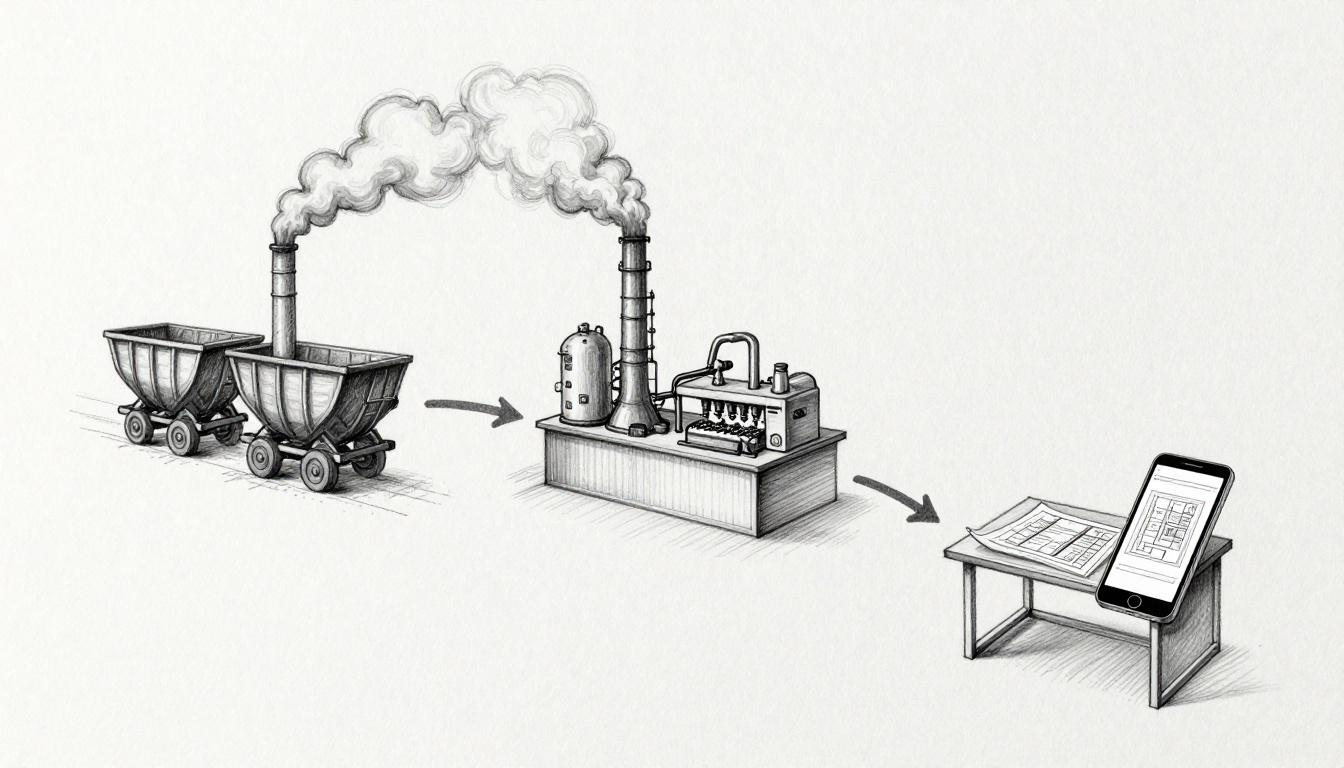
Ever held a smartphone and wondered how far its materials traveled? The path from raw materials to finished products process can span farms, mines, refineries, and factories. It also includes planning, testing, and packaging along the way.
If you shop often, you already see the results: better fit, better performance, fewer defects, and fewer surprises. Understanding the journey also helps you spot what labels mean (and what they might hide). Plus, it shows why waste reduction matters, because every extra step costs money and materials.
To make sense of it, think of manufacturing like a recipe. First you plan the ingredients, then you prepare them, then you cook, then you check the dish before serving. Next, you keep improving the recipe over time, so the final product costs less and lasts longer.
Planning and Sourcing: The Blueprint Before Anything Moves
Before any metal gets smelted or plastic gets molded, a company maps out the job. Designers turn ideas into specs. Then teams decide which materials can meet those specs at the right cost. After that, buyers locate suppliers who can deliver the right grade, the right time, and the right quantity.
This is where delays start, or where they get prevented. If a supplier slips, production can stall. If the wrong material arrives, quality tests can fail. Therefore, smart planning focuses on timing as much as it does on price.
Here’s a simple way to picture the flow:
Product idea → Design specs → Bill of materials (BOM) → Supplier quotes → Purchase orders → Delivery to production
One helpful guide for the bigger picture of manufacturing process types is The Complete Guide to Manufacturing Processes (VKS). It’s useful when you want a clear view of the overall categories factories rely on.
Creating the Design and Bill of Materials
Design work starts with constraints. Will the product need to resist heat? Should it handle stress? How light does it need to be? Then engineers pick materials that match those demands.
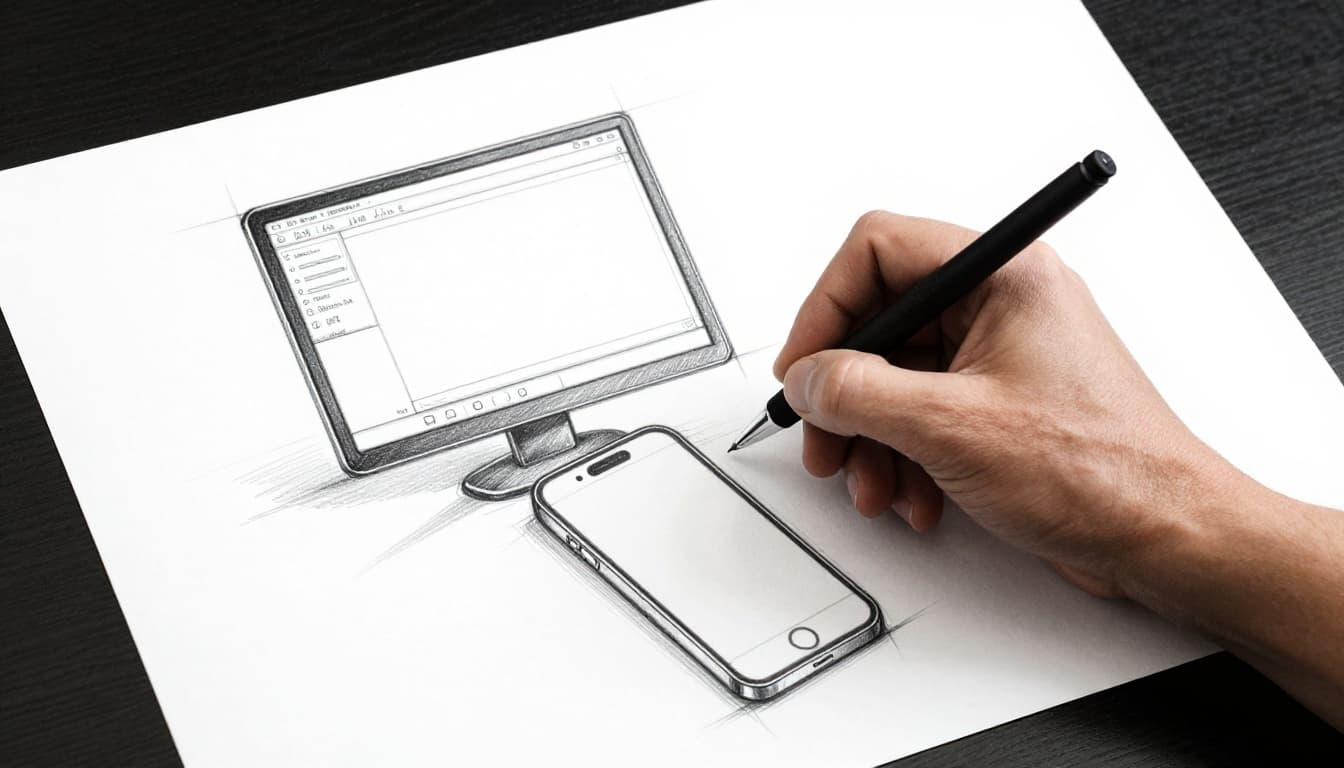
For a smartphone, the “raw” list is surprising. It’s not just one material. You often need silicon, glass, aluminum or steel parts, copper wiring, and plastics for housings. Each part also needs dimensions, tolerances, and surface finish targets.
Then comes the bill of materials (BOM). A BOM is the master list of what goes into the product. It tells teams how many parts they need, which grades they require, and where each item fits in the final assembly.
At this stage, prototypes matter. Teams may build samples, test fit, and adjust designs before ordering huge quantities. Because changes late in the process can cost a lot, early planning keeps the rest of the pipeline calmer.
Finding Reliable Suppliers Worldwide
Once the BOM is set, the sourcing work begins. Buyers request quotes, compare lead times, and check material specs. They also review past quality performance, because good specs on paper don’t always match real output.
Companies often use a mix of suppliers. One source might be cheaper. Another might deliver faster. Still another might be safer for rare materials. That’s why sourcing isn’t just purchasing. It’s risk management.
For a practical view of how firms approach raw material procurement, see Raw Material Procurement: Process and Strategies Explained from GEP. The key idea is that procurement includes planning, contract negotiation, purchase orders, inventory handling, and payment cycles.
It also helps to look at example sourcing strategies. Global trade can introduce surprises like shipping delays or changing tariff rules. So buyers look for multiple pathways to get the same “job done” with different suppliers if needed. You can get a feel for that with 10 Examples of Sourcing Strategy for Supply Chain (Global Sources).
In addition, many firms now plan inventory buffers for high-risk items. Even small buffers can prevent line shutdowns. Of course, buffers cost money too, so teams balance risk and cash flow.
Extracting and Refining: Pulling Value from the Earth
Now the process starts to get physical. Raw resources have to be found, collected, and cleaned up before manufacturing can begin. In other words, nature supplies the basics, but factories supply the form and purity.
This is also where sustainability concerns show up first. Mining and drilling can disrupt land and water. Plant harvesting can stress ecosystems. Refining usually adds energy use and emissions too. That’s why good manufacturers track environmental impact from the start.
A lot of this work falls under materials processing, which Britannica describes as the steps used to change materials into useful forms. If you want the science-backed overview, see Materials processing | Britannica.
Mining, Drilling, and Harvesting Raw Resources
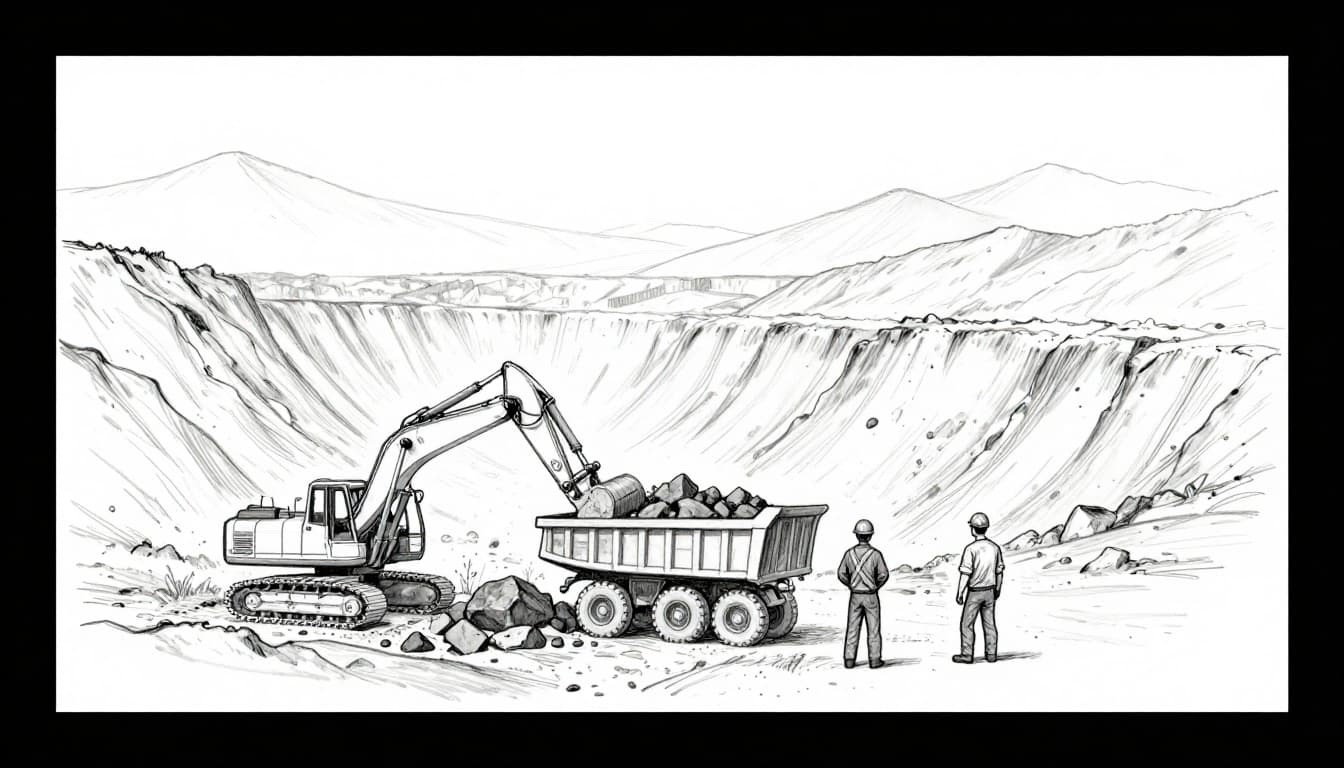
Each product starts with a “home” for the needed resource. Steel starts with iron ore. Plastics often start with petroleum or natural gas feedstocks. Cotton comes from farms. Copper comes from ore bodies that may be mined at open pits or underground.
Here’s a quick look at three common paths:
- Metals: Dig out ore (or extract from tailings). Then separate valuable minerals from rock.
- Oil and gas: Drill wells, then capture crude feedstocks for later processing.
- Plants and fibers: Grow crops, harvest them, and prepare fiber for textile or packaging uses.
Some locations also drive cost and speed. Australia has major iron ore operations. The U.S. has oil and gas regions. Regions matter because shipping plus timing affects the final product price.
Even so, the extraction stage has more than one goal. It needs consistency. It needs enough volume. It also needs materials that meet quality requirements for the next steps.
Refining into Usable Forms
Raw extraction is rarely “ready to use.” Ore contains impurities. Crude oil contains many compounds. Plant fibers may need cleaning and treatment before they become stable inputs.
Refining turns messy sources into consistent feedstocks.
For metals, refining often means separating the metal from oxygen and other elements. Steelmaking can involve blast furnaces, where iron ore is turned into molten iron, then processed further into steel. For plastics, feedstocks get refined into building blocks used in polymer production.
To see this with a concrete example, check How Steel Is Manufactured (Economy Insights). It breaks down the core stages from iron ore to steel products in plain language.
Refining also sets up manufacturing success. If the input purity is too low, later steps create defects. If the chemical makeup is off, the final part can fail stress tests. As a result, refining quality can decide whether a whole batch passes or gets scrapped.
And yes, scrapping still happens. That’s why many systems increasingly include recycled inputs. When scrap is refined, it can become “new” material again, reducing demand for fresh extraction.
Processing and Manufacturing: Shaping Parts and Building Products
After refining, materials get turned into parts. This stage changes form, size, and shape. It also joins parts together into assemblies.
Factories use methods based on the product. Some parts require precision machining. Others rely on molding and forming. Many products combine several methods because each part has its own needs.
To keep it simple, manufacturing usually includes these kinds of steps:
- Heating or melting materials to make shaping possible
- Mixing materials for uniform properties
- Cutting or machining parts to exact dimensions
- Joining parts (welding, bonding, fastening)
- Assembling components into the final product
If you want an outside view of typical process types, The Complete Guide to Manufacturing Processes pairs well with this section’s flow.
Turning Materials into Components
Component making is where raw inputs become “touchable” parts. For metals, it might include rolling, casting, forging, or machining. For plastics, it often includes extrusion and injection molding. For some parts, factories use powder processes or additive manufacturing.
Here are common routes you’ll see:
- Cutting and machining: Removes material to reach exact sizes.
- Forming and extrusion: Pushes material through dies to create shapes.
- Molding: Forces molten plastic or composite material into a cavity.
- 3D printing: Builds parts layer by layer, often for prototypes or custom pieces.
The big difference between mass production and custom work comes down to tooling. Mass production uses molds, dies, and fixed setups for speed. Custom work often uses flexible setups, faster changeovers, and more manual control.
It helps to think of it like shoes. Mass-produced shoes share one mold. Custom shoes need adjustments to fit each buyer. In manufacturing, that “fit” is tolerances, strength, and finish.
| Production style | Typical setup | Best for | Tradeoff |
|---|---|---|---|
| Mass production | Repeated tooling and set lines | High volume | Less design flexibility |
| Batch production | Change setups between runs | Mixed orders | More planning time |
| Custom production | Flexible routing, more manual checks | Low volume or unique specs | Higher unit cost |
Bottom line: the method that wins depends on volume, design complexity, and the cost of mistakes.
Assembly Lines in Action
Once parts exist, assembly brings them together. In some factories, assembly lines stay highly repeatable, especially for cars and appliances. In others, teams assemble electronics in tightly controlled clean areas.
Historically, Henry Ford’s moving assembly line showed how repeatability can cut time. Modern lines do the same, but with tighter sensors and better controls. Robots also handle tasks that are repetitive or risky, like lifting heavy parts or welding with consistent bead patterns.
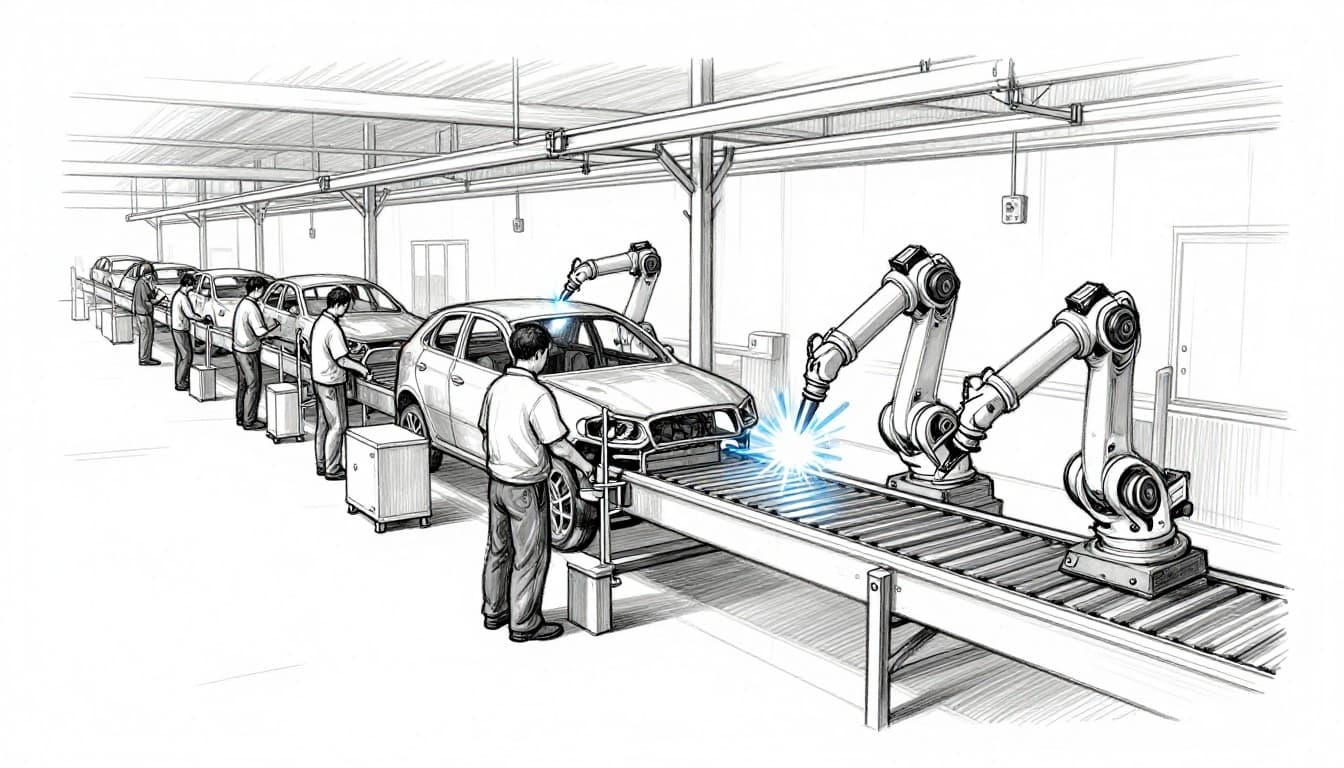
Even when robots do work, humans still matter. They handle exceptions, swap parts, and watch gauges. In many plants, humans and robots work side by side. One might place fasteners, while another welds with machine-level repeatability.
After assembly, the product moves to checks. That’s important because assembly can introduce misalignment, missing parts, or surface damage. So the next step protects both customers and the brand.
Quality Checks, Finishing, and Packaging: The Final Polish
Quality is not one moment. It’s a set of checks across the entire process. You can think of it as a smoke alarm system. It catches issues early, before they grow into big failures.
Finishing and packaging also affect the final outcome. Paint affects corrosion resistance. Label accuracy affects usability. Packaging affects whether the product survives shipping.
Together, these steps reduce returns and help products meet safety rules.
Rigorous Testing Every Step of the Way
Factories test for more than appearance. They test strength, fit, and performance. They also test whether a product can handle real-world stress.
Common testing includes:
- Visual inspection: Looking for cracks, dents, and surface issues
- Dimensional checks: Measuring parts against tolerances
- Machine tests: Running parts under load or repeated cycles
- Safety checks: Confirming protections work as expected
For electronics, stress tests can include drops, bends, and heat cycles. For phones, labs often test durability to predict how a device behaves after months of use.

If testing catches issues, teams may rework parts or scrap a batch. That feels wasteful, but it prevents worse waste later. A recall can cost far more than early checks.
Adding the Last Touches Before Shipping
Finishing can be both functional and cosmetic. For example, coatings can reduce corrosion. Printing and labeling help users identify model numbers, chargers, and safety info.
Packaging is the last safety layer. It protects the product from shock and moisture. It also needs to match the shipping reality: trucks, warehouses, and sometimes rough handling.
In recent years, many brands shifted toward better packaging. They use less material, choose recyclable options, and cut protective layers when possible.
This helps because packaging waste often grows with volume. In short, the “last mile” still affects both cost and the environment.
2026 Innovations: Smarter, Greener Ways to Make Products
Manufacturing keeps changing in 2026. In the U.S., trends focus on automation, improved defect detection, and smarter planning for materials and energy. You’ll also see more attention on cutting waste across the chain, not just inside the factory.
Realtimes shifts also reflect cost pressure. When inputs get more expensive or travel gets slower, factories need better control.
Robots and AI Taking Over Tough Jobs
Robots already handle many repeat tasks. In 2026, the big shift is more smart control. AI watches what’s happening and can spot problems earlier. Instead of waiting for a bad batch, systems can flag drift in settings, rising vibration, or abnormal heat.
Cobots also play a bigger role. They work close to people and handle parts that are awkward to lift or move. Predictive maintenance also reduces downtime by alerting teams before a machine fails.
There’s also more talk about physical AI in factories. For example, reports have described humanoid robots used for precision assembly tasks on EV lines, with high success rates in controlled operations. See coverage like Xiaomi deploys humanoid robots on its EV assembly line (The Machine Herald). That kind of reporting shows where experimentation is moving.
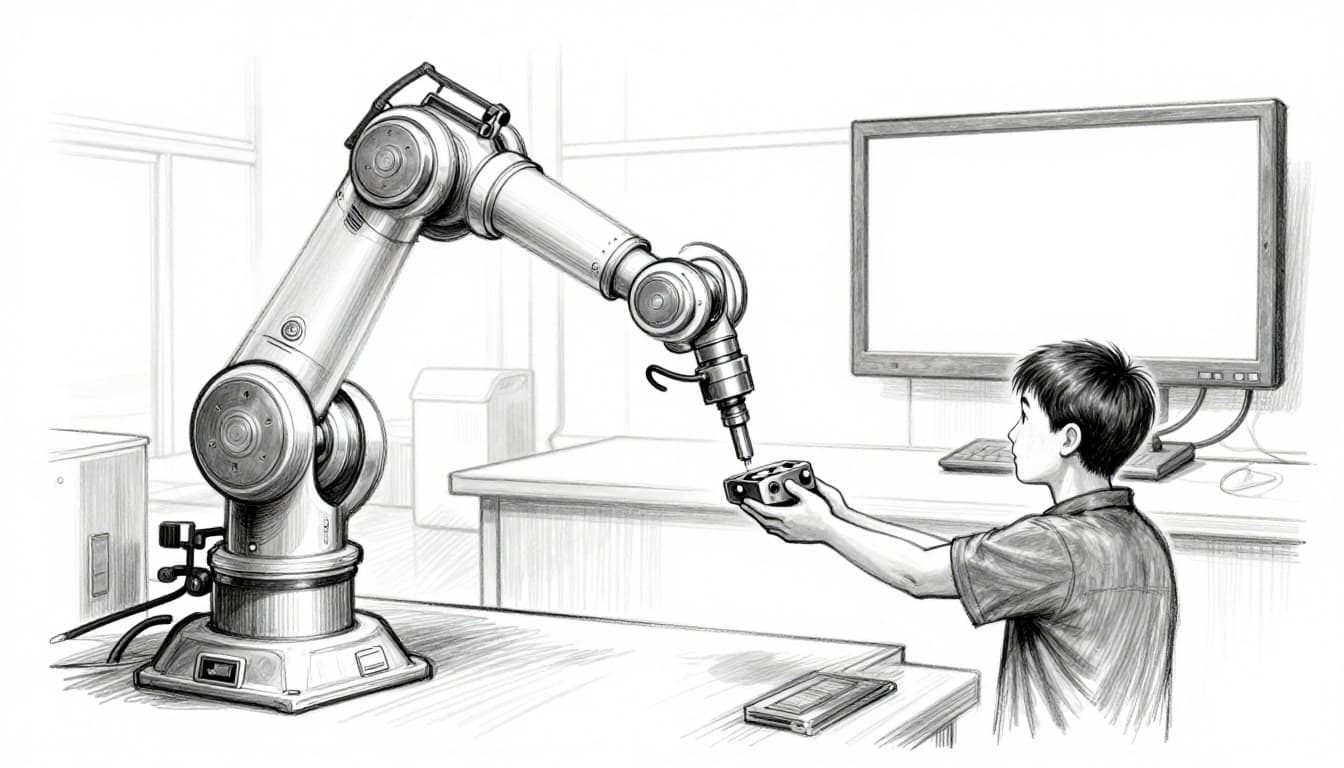
Meanwhile, AI tools also support better planning. They can model supply risks and help teams reroute orders when delays hit. According to recent industry reporting, a growing share of manufacturers are planning more agent-like automation over the next year or two. The trend makes sense because it reduces surprises.
Sustainability: Cutting Waste from Start to Finish
Sustainability isn’t one department’s job. It touches extraction, refining, manufacturing, and packaging. It also touches how much gets wasted during production.
In 2026, sustainability efforts often focus on:
- Less scrap through better process control
- More recycled content when quality allows
- Smarter energy use with real-time monitoring
- Waste tracking across suppliers and plants
Many manufacturers also push for circular economy practices. That means designing products so components can be recovered. It also means improving recycling pathways for materials that are hard to process.
If you want a practical sustainability lens for manufacturers, Mitsubishi Manufacturing publishes guidance like Sustainable Manufacturing Practices: Complete Guide 2026. It’s a good read when you want examples of waste and emissions control ideas that apply beyond one product line.
The big takeaway: sustainability improves both outcomes. You reduce waste, and you often reduce cost. Less scrap means fewer raw inputs, fewer rework hours, and fewer disposal fees.
Conclusion: The Journey Behind Every Finished Product
Raw materials rarely become finished products by accident. First comes planning and sourcing. Next comes extraction and refining. Then manufacturing shapes inputs into parts. After that, testing and finishing make sure the product is ready for real use.
If there’s one idea to remember, it’s this: quality starts long before the factory floor. When teams plan well, choose dependable inputs, and test early, the finished product feels better and lasts longer.
So the next time you read a label, think about the full path it represents. Want a faster way to make smarter choices? Share this post with a friend, then check how local manufacturers handle materials and waste. What would you look for first: recycled content, better durability, or cleaner production steps?