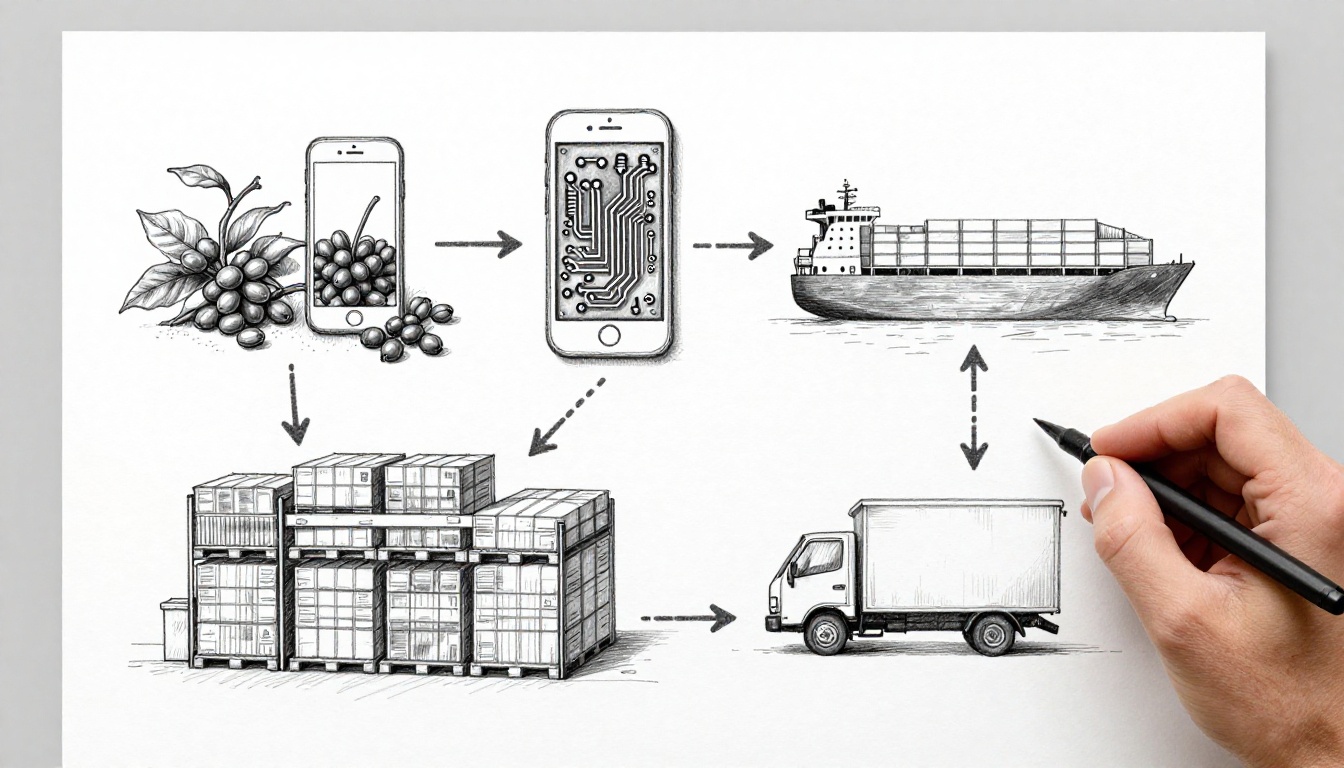
Have you ever wondered how your morning coffee ends up in your cup, without you thinking about trucks, warehouses, or farms? Or how your new phone arrives so fast after you click “buy”? That whole path is a supply chain.
A supply chain is the network of people, steps, and processes that turns raw materials into finished products. Then it delivers those products to customers. It matters because it shapes price, availability, and even what happens during global events. When parts of the system break, shelves can empty, shipping costs can jump, and delays spread quickly.
In this guide, you’ll see how supply chains work in plain terms. You’ll meet the main players. You’ll follow a product from demand to delivery. Then you’ll look at real-world examples (including big tech and big e-commerce). Finally, you’ll cover the biggest hurdles hitting supply chains in 2026 and the fixes that are gaining traction.
Let’s start with the people and parts that keep things moving.
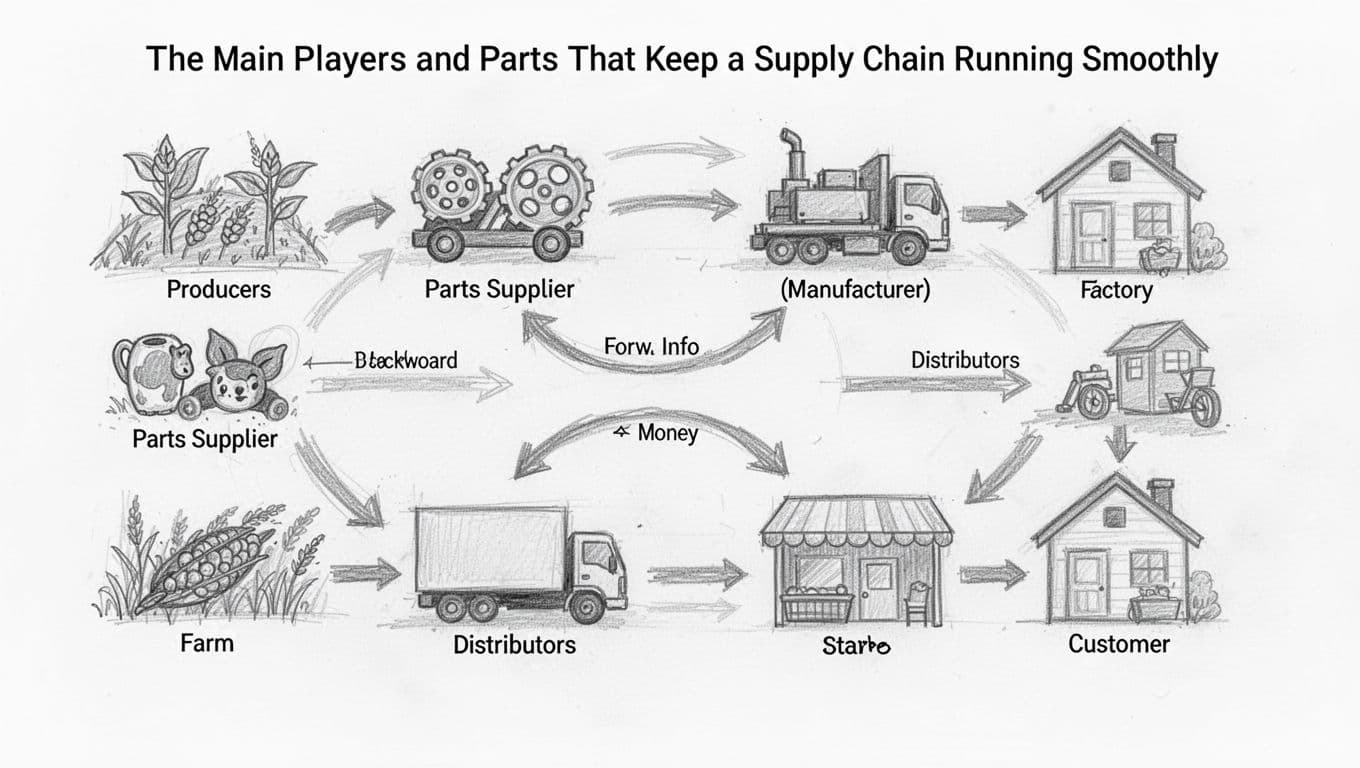
The Main Players and Parts That Keep a Supply Chain Running Smoothly
Think of a supply chain like a relay race. Each team hands off a “baton” at the next step. If one runner stumbles, the whole race slows down.
In real life, those handoffs include several key roles. Some partners focus on making the product. Others focus on moving it, storing it, selling it, or supporting customers after purchase. In addition, supply chains run on three related “flows,” not just one. Goods move forward, while information and money move in ways that keep everyone coordinated.
Here are the core players you’ll see in most supply chains:
- Producers: grow or extract raw materials (like coffee beans, wheat, or metals).
- Suppliers and vendors: refine and make key inputs (like steel, chips, packaging, or fabric).
- Manufacturers: build the finished product (like turning parts into phones).
- Distributors and transporters: move goods and store inventory along the way (like shipping to regional warehouses).
- Retailers (and channels): sell to the customer (stores, marketplaces, direct sales).
- Customers: place orders, which affects what happens next.
- Supply chain managers and planning teams: coordinate schedules, inventory levels, and risk plans.
Just as important, supply chains rely on three flows:
Materials or products (forward) go from raw inputs to finished goods.
Information (forward and backward) includes inventory levels, demand forecasts, production updates, and shipping status.
Money (mostly backward) moves from customers to retailers, then to suppliers and producers, based on contracts and terms.
If you want a simple view of how supply chain management ties these parts together, this overview from Santa Clara University is a solid reference on planning, sourcing, manufacturing, delivery, and returns: what supply chain management includes.
From Farmers and Miners to Factories: Who Does What
The “raw material” phase is where many supply chains begin, and it can surprise people. It’s not only factories that matter. Farms, mines, and natural resources shape what’s possible later.
Here’s how the early steps usually break down:
- Producers: They grow crops or extract materials. For example, coffee starts with farms. Electronics start with mined inputs like rare earth minerals.
- Suppliers: They turn rough inputs into parts. A producer might extract ore. Then a supplier refines it into materials used for manufacturing.
- Manufacturers: They combine parts into a finished product. This is where parts meet engineering, quality checks, and packaging.
Because these steps depend on each other, timing matters. If a producer harvests late, a supplier may miss the production schedule. If a supplier has a shortage, a factory can’t build what it planned.
So, the early part of a supply chain is really about capacity and reliability. It’s also about meeting specs. A “similar” material isn’t always good enough. Small differences can cause big problems later.
Getting Goods to You: Distributors, Retailers, and the Final Stretch
Once the product exists, the supply chain shifts into motion. Now the main job becomes moving goods to the right place, at the right time, in the right condition.
In most cases, you’ll see these roles:
- Transporters and warehouses: Goods travel by truck, rail, ship, or air. Warehouses hold inventory until retailers need it.
- Retailers and sales channels: They place orders and sell units to customers.
- Customers: They request products. That request becomes demand, and demand becomes the next planning input.
Order processing is a key “bridge” here. Retailers send orders when inventory drops. Warehouses receive shipments and prepare them for the next move. Then delivery teams bring items to homes or stores.
Meanwhile, information keeps flowing. Tracking updates tell everyone where shipments are. Stock data tells retailers how fast they’ll sell. Pricing and payment terms also move through the system, so each partner can stay funded while waiting on delivery cycles.
Next up, let’s follow the journey itself.
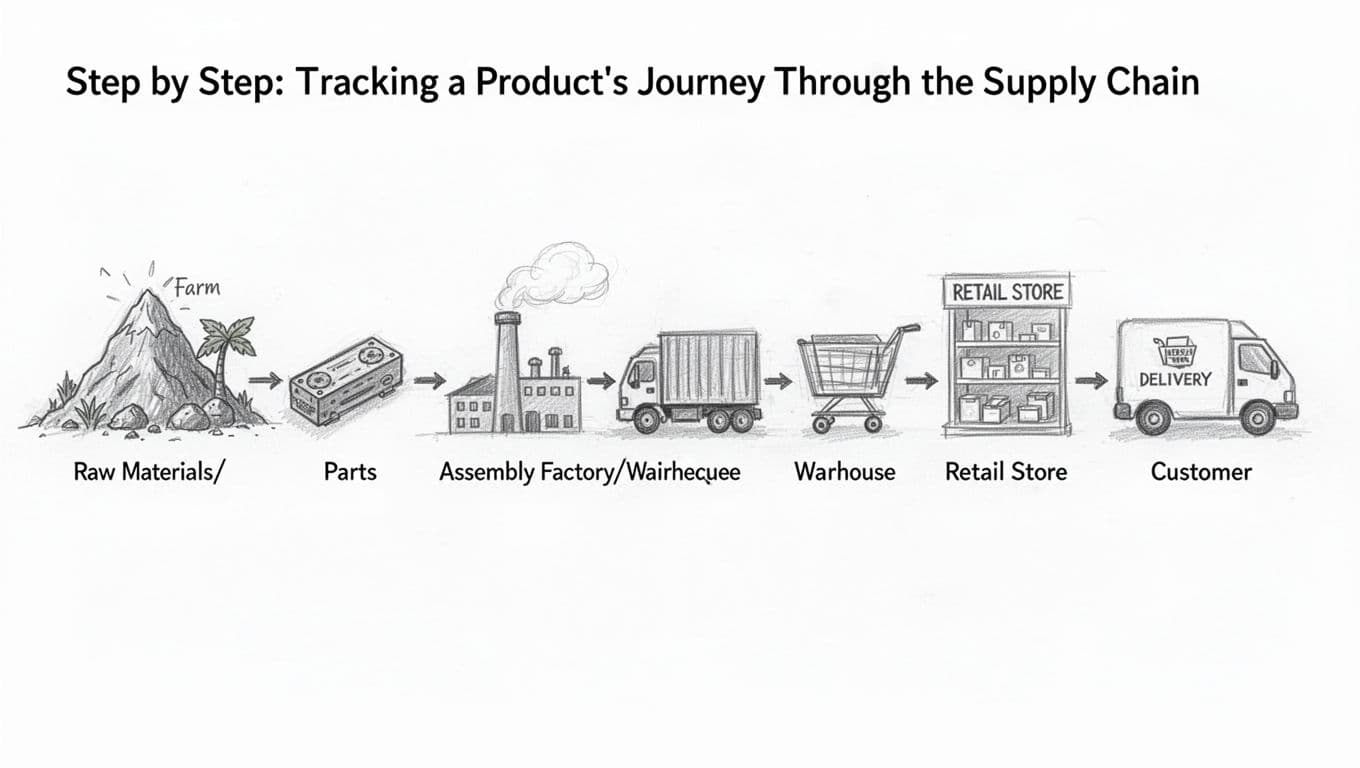
Step by Step: Tracking a Product’s Journey Through the Supply Chain
How does a supply chain actually “work” on a busy day? It works through coordinated planning, scheduling, and handoffs. Most modern supply chains run with a demand signal that triggers the next moves.
A helpful way to picture this is with a pull model. Customer demand pulls product needs backward through planning. Then production and delivery push forward goods to meet that demand.
Pulling It Backward: How Demand Starts the Whole Process
It helps to start at the customer. When you buy something, that purchase is data. Companies track it and use it to forecast what they’ll need next.
From there, the demand signal moves backward:
- Customers buy from retailers.
- Retailers reorder from distributors.
- Distributors request replenishment from manufacturers.
- Manufacturers place orders for components with suppliers.
- Suppliers plan raw inputs with producers.
That backward “pull” doesn’t mean nothing gets made until you order. Instead, teams use demand forecasts to decide what to produce and what to keep in inventory. When demand shifts, the chain must react fast.
This is also where supply chain planning tools matter. One common planning approach looks at demand, supply, inventory, and logistics together. For a clearer look at the main building blocks, see key components of supply chain planning.
Pushing Forward: From Factory to Front Door
Now let’s move forward, step by step. Picture a simple product journey, like a phone or a bag of coffee beans that you’ll buy later.
- Sourcing raw materials
Teams secure inputs like minerals, crops, or packaging materials. - Refining parts
Suppliers process raw inputs into usable components. This step often takes time. - Assembling the product
Manufacturers build and test the finished item. Quality checks prevent costly fixes later. - Order fulfillment
Distributors and warehouses pick, pack, and label orders based on retailer needs. - Delivery
Transport carries shipments to stores or directly to customers. - After-sales support, returns, and repairs
If something breaks, returns flow back. That feedback also improves future planning.
In other words, a supply chain isn’t one trip. It’s a loop that keeps learning. If you return an item, companies update forecasts and inventory rules.
One gotcha can surprise people: delays stack. If assembly finishes late, warehousing gets tighter. Then delivery time windows shrink. Finally, customer service gets flooded.
When planning falls behind, the chain usually compensates with more inventory. That raises costs and can still miss demand.
That brings us to real examples, where this coordination runs at massive scale.
Supply Chains in Real Life: How Giants Like Apple and Amazon Make It Happen
Big brands don’t just “move products.” They build systems that handle millions of decisions. Still, you can understand their supply chains by breaking them into the same steps.
In this section, you’ll see two stories. One shows a high-tech product path. The other shows how fast fulfillment depends on planning and warehouses.
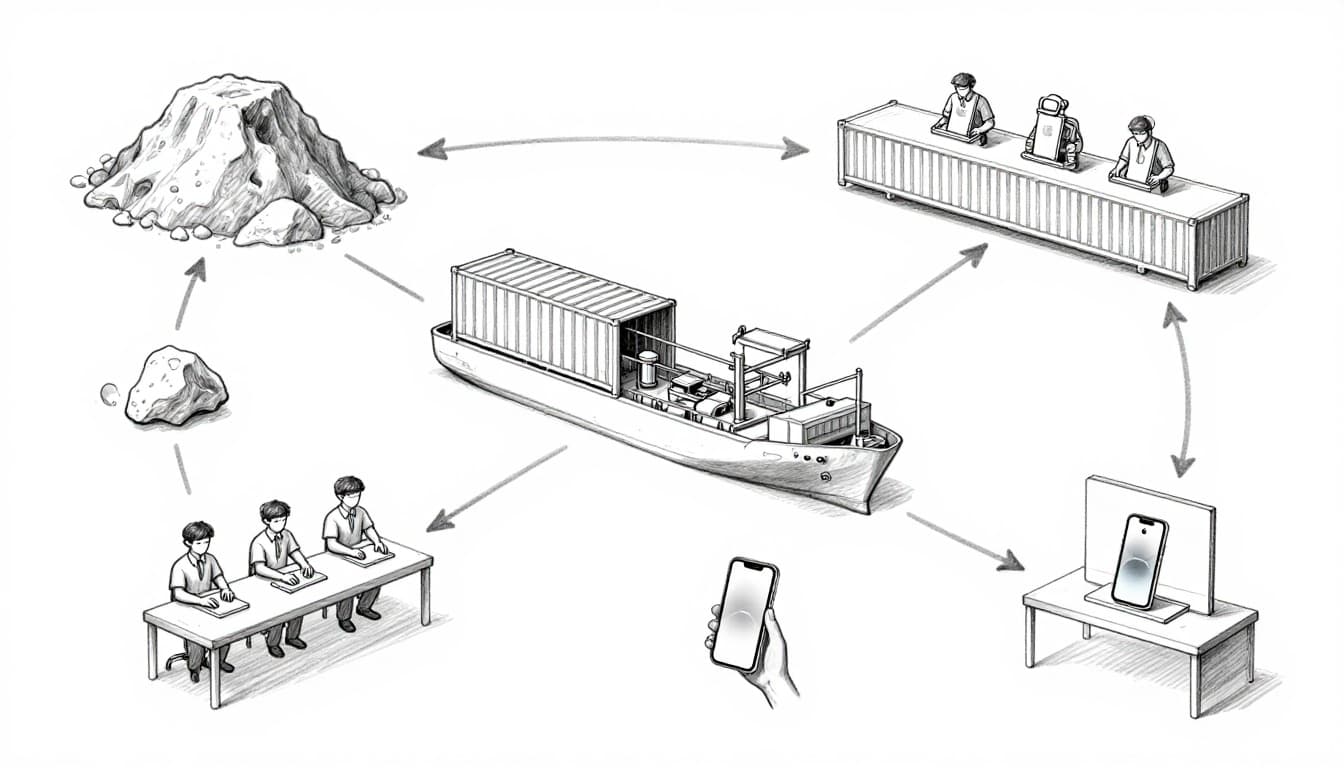
Apple’s High-Tech Path from Mine to iPhone in Your Hand
Apple’s supply chain is complex because the inputs are global and the tolerances are tight. Components often come from specialized suppliers, then get assembled by manufacturing partners. Then distribution moves finished units to markets that match demand.
A useful industry view of Apple’s procurement and logistics approach is covered by ISM here: Navigating the Apple Supply Chain Complexities.
A simple, realistic version of the path looks like this:
- Global sourcing: teams buy raw and component inputs worldwide, based on specs and availability.
- Component creation: suppliers make things like circuit boards and memory.
- Assembly: manufacturing partners assemble devices and run tests.
- Shipping to distribution: goods travel in container shipments or air freight when timing is urgent.
- Market distribution: finished units move to regional hubs, then retail and online channels.
The big challenge is balancing speed and risk. Apple needs enough capacity to meet demand. At the same time, it can’t bet everything on one source or one region.
Also, forecasts play a huge role. If Apple expects strong demand for a release window, then upstream partners must be ready. If demand slips, excess inventory becomes expensive.
Amazon’s Speedy Magic: Warehouses to Doorstep in Hours
Amazon’s strength is not just transportation. It’s how it places inventory and processes orders quickly.
Here’s the mindset behind fast delivery:
- Warehouses near customers hold inventory closer to demand.
- Automated systems help pick and move items faster.
- Data planning helps decide what to stock and where.
Amazon also invests in robotics to handle repetitive work in fulfillment centers. For a real example of robotics at scale, see Amazon robotics fulfillment center investment.
In a simplified chain, the process looks like this:
- Products arrive at fulfillment centers.
- Orders trigger picking and packing.
- Transport moves packages to delivery routes.
- Drivers deliver to your address.
As a result, the “final stretch” is often the shortest part. The longer work happens earlier, when the right items must be in the right building, at the right time.
Now let’s talk about what can break the plan, and what companies are doing about it in 2026.
Big Hurdles in Supply Chains and Smart Fixes Shaping 2026
Supply chains struggle when reality hits planning. Weather can delay shipments. Strikes can slow ports. Geopolitical events can change trade routes. Even small component shortages can stop entire product lines.
In 2026, companies face a mix of classic issues and newer pressures. Costs are higher in many places. Risk management has become more urgent. And customers expect fewer delays.
To add structure, here’s a quick map of common hurdles and practical fixes.
| Supply chain hurdle | What it looks like | Common fix |
|---|---|---|
| Shipping delays | Congested ports, storms, reroutes | Buffer inventory, alternate routes, better carrier plans |
| Material shortages | Chips, specialty minerals, or key chemicals | Multiple sourcing, longer lead-time planning |
| Forecast errors | Too much inventory or too little stock | Demand sensing, tighter sales feedback loops |
| Returns and reverse logistics | More repairs and restocking needs | Faster inspection, improved packaging and quality control |
Then there’s the bigger shift. Many leaders now plan for uncertainty, not just for averages. According to KPMG’s overview of supply chain trends for 2026, leaders should prepare for changes driven by AI, data needs, and risk conditions: Supply Chain Trends 2026 | What Leaders Need to Prepare For.
Top Disruptions That Can Throw Everything Off Track
Let’s name the disruptions that hit most often, and why they spread.
- Component shortages
If one part runs out, assembly can’t complete. The famous case is the chip shortage, which showed how one upstream gap can affect cars, phones, and appliances. - Energy and fuel shocks
When fuel prices jump, shipping costs jump. Then companies either raise prices or delay orders to protect margins. - Trade restrictions and tariffs
New rules can force companies to rethink sourcing and manufacturing locations. Contracts also need updates when duties change. - Port and route disruptions
A delay at one hub can ripple across weeks. That’s because containers are scheduled and rerouted in batches. - Quality failures
Defects can turn into returns, and returns create reverse logistics load. That slows inventory too.
Each issue hurts for a different reason. Still, the root cause is often the same: limited visibility and slow reaction time.
A supply chain can survive a disruption, but it struggles when the problem stays hidden too long.
2026 Trends: AI, Green Tech, and Bringing It Closer to Home
Supply chains in 2026 are getting smarter, and they’re getting pushed to improve sustainability.
Here are three trends shaping what happens next:
AI for prediction and planning
AI can forecast demand, spot unusual patterns, and recommend better routes. In practice, that can reduce stockouts and cut excess inventory.
More automation in warehouses
Robots and automated material handling help speed up picking and packing. That reduces “human bottlenecks” during peak periods.
Sustainability and lower emissions
Many companies face pressure to cut waste and emissions. That includes better packaging, route optimization, and recycled or lower-impact materials. It also includes reporting and compliance in the US and EU.
Nearshoring and reshoring
Some companies are moving parts of production closer to key markets. After recent trade and disruption waves, this can reduce lead times and risk exposure.
Still, the goal isn’t to copy-paste a new strategy everywhere. The goal is resilience: fewer single points of failure, better forecasting, and faster decision-making when conditions change.
At the end of the day, supply chains are built by people making tradeoffs under pressure. The best systems keep learning, so customers get fewer surprises.
Conclusion
A supply chain is the system that turns raw materials into products and gets them to customers. It works through coordinated players, and it runs on multiple flows: goods forward, information both ways, and money through agreements.
You also saw the core journey: sourcing, refining, assembling, fulfillment, delivery, and after-sales support. Then you looked at real examples, where forecasting and planning determine whether a product lands on time.
Finally, you covered what disrupts supply chains (shortages, delays, and forecast errors) and what companies are doing in 2026. AI, automation, sustainability efforts, and nearshoring are all pushing supply chains toward better resilience.
Next time you order something, ask yourself one thing: what steps had to go right for it to arrive smoothly? If you’ve noticed a delay or shortage, share what you bought and where you noticed it.