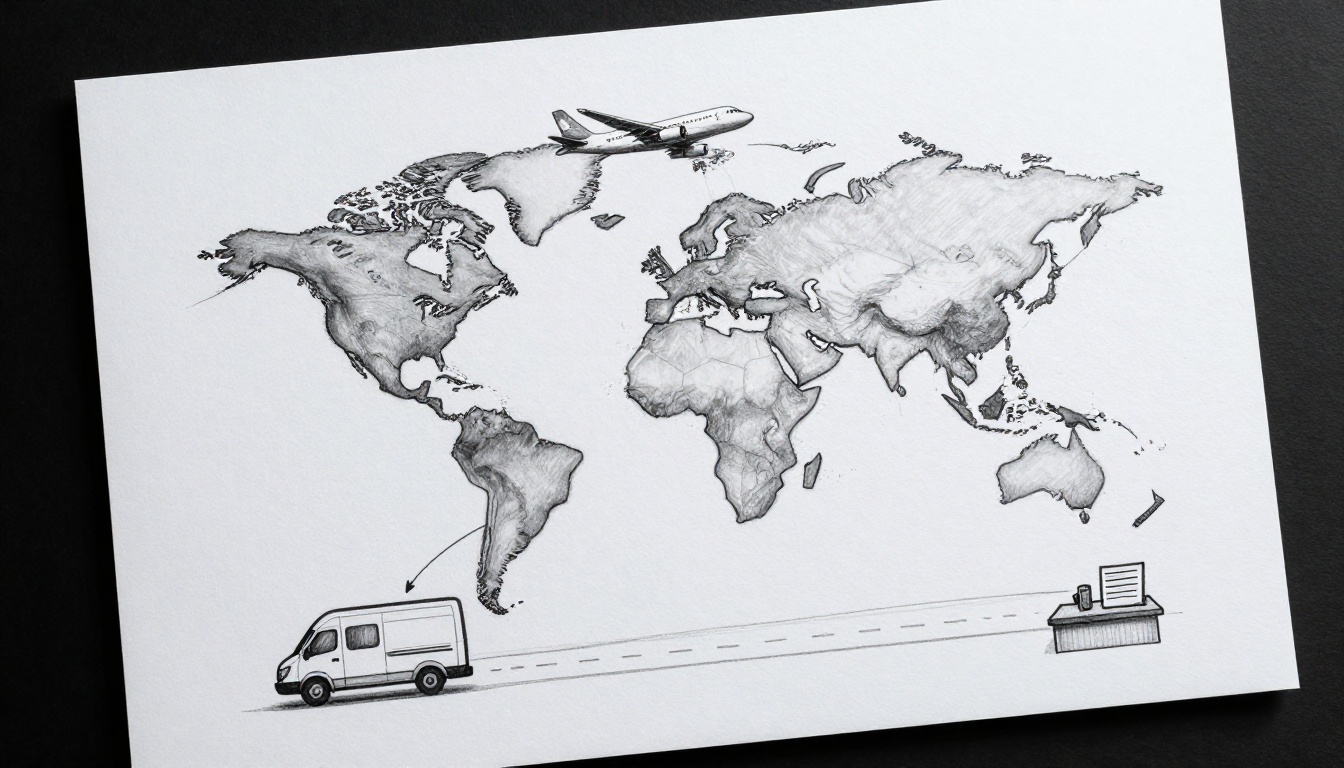
Picture a new gadget you ordered online landing at your door days after leaving another country. That trip looks simple from your phone. Behind the scenes, how products cross borders is a chain of choices, paperwork, and checks.
For shoppers, delays show up as “out for delivery” that never arrives. For businesses, one wrong detail can mean extra fees or a stopped shipment. In 2026, rules keep shifting, especially for small parcels moving into the EU.
This guide breaks down the path in plain terms. First, you’ll see the main shipping routes and why each one fits certain goods. Next, you’ll follow a simple customs walk-through, including what changed for EU low-value items. Then you’ll learn the key documents and the people who coordinate the journey. Finally, you’ll get real challenges and fixes, plus trends that are reshaping cross-border shipping right now.
The Primary Shipping Methods Products Use to Cross Borders
Most international shipments don’t take one straight line. Instead, they follow a chain: pickup, main transport, then delivery. Transport mode mainly changes time, cost, and risk.
In early 2026, cross-border freight across North America shows what’s typical in the US lanes. Truck freight leads by value, while air is growing faster. In January 2026, total North American freight hit $126.9 billion, down 5.5% from January 2025. Trucks carried about $84.6 billion (down 3.5%). Air carried about $7.9 billion (up 28.1%). Sea freight carried about $6.6 billion (down 19.7%). In other words, land moves most cargo value, but air keeps pulling ahead for speed.
So which mode should you expect for a given product?
- Sea freight: Cheapest for big, heavy lots, like clothes or electronics in volume. Typical timing is weeks. Goods often travel in containers.
- Air freight: Fast for urgent and high-value goods, like tech parts or certain medicines. Timing is days, but costs stay high.
- Land freight: Quick and flexible for nearby neighbors, like US-Mexico routes. It’s often days, and sometimes even faster.
- Rail and multimodal: Useful for heavy loads or long hauls, especially when you want to avoid air pricing.
If you want a refresher on how planners decide between modes and trade terms, see Worldwide Logistics Guide: Modes, Incoterms, and Lead Times.
Here’s where each method fits best.
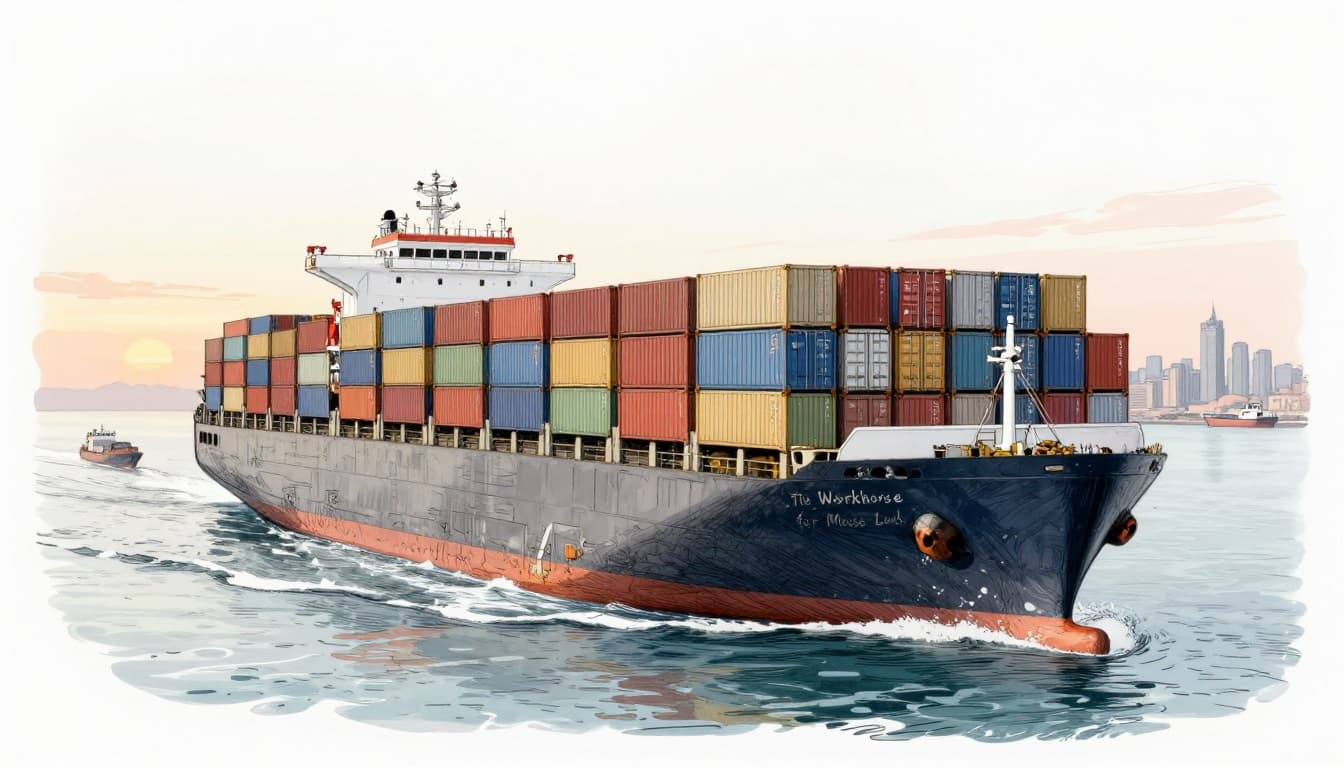
Sea Freight: The Workhorse for Massive Loads
Sea freight works like the slow-moving freight elevator of global trade. It’s not designed for “rush it tomorrow.” It’s designed for “move a lot, move it safely, move it often.”
Most ocean cargo rides inside standardized containers. That matters because containers make handoffs easier. A shipment can move from a factory truck to a port, get loaded onto a container ship, then switch to rail or trucks at the other end.
Sea freight also benefits from hub-and-spoke patterns. A ship might call at major hubs first, then smaller legs distribute containers to nearby ports. This setup helps carriers fill routes even when demand varies.
Why do companies keep choosing sea freight in 2026? Because unit cost stays low. Even when transit gets a little slower, ocean is still the best match for items like:
- Bulk goods and general merchandise
- Apparel and home goods
- Many electronics shipped in large batches
The tradeoff is speed. Expect weeks, not days. You also have to watch disruption risk. In 2026, disruptions around key routes can add days to sailing and affect booking choices. Still, with planning, sea freight remains the most common backbone for cross-border inventory.
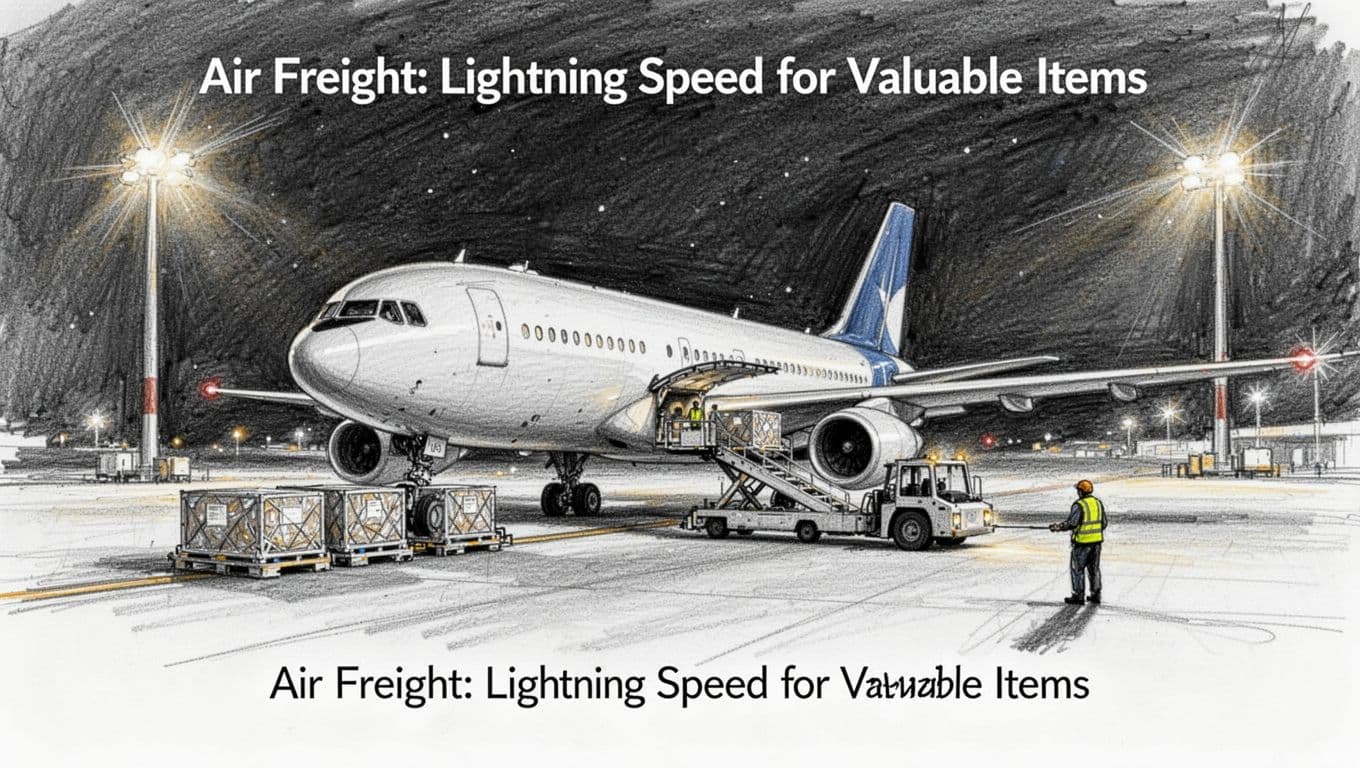
Air Freight: Lightning Speed for Valuable Items
Air freight is the “express lane” for trade. It’s perfect when delivery timing affects sales, production, or customer trust. It’s also the go-to for high-value goods where the cost of delay hurts more than the freight bill.
In practical terms, air cargo often moves through major hubs. From there, goods fly to nearer airports, then get trucked to final locations.
You’ll see air used for:
- Replacement parts needed fast
- Tech components and prototypes
- Certain high-value shipments (for example, some medical supplies)
Air freight has also benefited from steady growth in demand tied to manufacturing and e-commerce patterns. It’s especially attractive for fast replenishment cycles, where companies keep less inventory “just in case.”
The main downside is cost. Air freight expenses rise quickly if cargo weight or space gets tight. Also, air can still face delays, but fewer shipments depend on it for large-volume value.
Land Freight: Fast and Flexible for Nearby Countries
Land freight is often the simplest path for nearby markets. Trucks carry goods across borders where roads and rail connections support short lead times.
For US buyers and sellers, this can mean US-Mexico or Canada routes. It also shows up when companies practice nearshoring, which keeps supply closer to demand. Nearshoring to Mexico has sped up in 2026 for US firms, especially in e-commerce. The big reasons are proximity and trade deal benefits under USMCA for eligible goods.
Land freight’s strengths are clear:
- Shorter transit times
- Frequent departures
- Lower risk of long ocean delays
It’s also flexible. If demand spikes, a company can adjust truck or rail schedules faster than it can restructure ocean bookings.
The downside is capacity and driver limits. During peak seasons, border wait times and truck availability can still create bottlenecks.
Rail and Combined Routes: Smart for Heavy or Long Hauls
Rail often shines when you need to move large loads without paying air rates. It’s common across regions with strong rail networks, like parts of Europe and Asia.
Rail also pairs well with other modes. Many lanes use rail for the main movement, then combine it with truck or sea legs. This is called multimodal shipping.
In 2026, combined routes also fit sustainability goals. Companies look for ways to cut emissions by reducing the share of the most carbon-intensive transport steps. The exact setup depends on the lane, cargo type, and available services.
In simple terms, rail and multimodal routes help when you want more speed than sea freight, but you still can’t justify air.
Step-by-Step: Clearing Customs When Products Hit the Border
Transport gets the goods to the border. Customs decides what happens next. Think of it like a gatekeeper process that verifies, taxes, and checks cargo before release.
In 2026, many countries push for electronic submissions and faster processing. That’s good news. It reduces delays caused by missing paper, slow data entry, or mismatched forms.
Here’s a simple version of how customs clearance usually works when products cross borders.
- Prep before departure
You match each product to an HS code, set declared value, and pack goods correctly for inspection. - File electronically (often in a single window)
Brokers or shippers submit documents and data through required systems. - Shipment arrival and scans
Scanners and system checks flag risk based on details in the filing. - Declare and pay duties or VAT
If charges apply, you pay them (or use the right program to handle payment). - Inspections if flagged
Some shipments get physical checks. Others pass with paperwork only. - Release and delivery
Customs authorizes the shipment, then it moves to the final carrier step.
One gotcha matters for EU e-commerce in 2026: low-value parcels changed on July 1, 2026. The EU ended the duty-free rule for low-value goods under €150. Instead, a flat €3 customs duty applies per different type of item (based on tariff codes) when small parcels enter from non-EU sellers. VAT still applies, often handled through IOSS for qualifying online orders.
If you sell into the EU, “under €150” won’t protect you from duties after July 1, 2026. Plan for landed cost changes early.
For a fuller view of what customs clearance looks like across steps and scenarios, use The Complete Customs Clearance Process in 2026 – FreightAmigo.
Customs clearance also impacts returns. If you ship back a returned item, you often need matching paperwork. Otherwise, the return can get treated like a new import, with new charges and checks.
Preparing Your Shipment Before It Leaves
The customs clock often starts running long before the goods arrive. That’s why preparation matters.
Before departure, you usually need:
- HS codes for each product type
- Accurate value and weight details
- Correct labels and carton breakdowns
- Clear packing so inspectors can find what you said you shipped
If a product description on the invoice doesn’t match what’s inside the box, customs may delay the shipment. In 2026, many systems flag risk when data looks inconsistent.
Also, the way you pack affects scan results. For example, tightly packed cartons can still clear fine, but inspectors may need access to confirm items match the filing.
Filing Paperwork and Paying Fees at the Border
Once the shipment is on the way, paperwork moves into electronic systems. Many countries use advanced “single window” processes, so data flows into customs databases more quickly.
Then comes duties, taxes, and fees. In the EU example above, the duty rule change for low-value goods means sellers and platforms must update pricing and checkout estimates.
In the US, similar concepts apply, but the exact charge setup depends on the entry type, product classification, and trade programs used.
The key idea is simple: customs wants the same story in every document. When the story matches, clearance speeds up.
Inspections and Final Release
Not every shipment gets a physical inspection. Still, inspections happen when risk scores or data mismatches trigger checks.
During inspection, officers may:
- Review product types and quantities
- Verify declared values and origin details
- Scan or examine packaging
Once customs accepts the shipment, it releases to delivery. At that point, you’ll often see carrier tracking update quickly. Until release, tracking might show “processing at facility” for longer than you expect.
Must-Have Documents and the Team Behind Cross-Border Moves
Documents are the language of cross-border trade. If customs can’t read your shipment story, you pay in time.
At the same time, documents are only part of the system. A cross-border move relies on people who coordinate each leg, each handoff, and each filing.
Top Documents You Cannot Skip
Here are the core documents that commonly show up in imports and exports:
| Document | What it tells the border |
|---|---|
| Commercial invoice | Who sold what, for what price |
| Packing list | Item counts, weights, and carton details |
| Bill of lading or waybill | Shipment route and carrier responsibility |
| HS code list | How customs classifies the goods |
| Certificate of origin | Where the product was made (for rules of preference) |
| Insurance paperwork | Coverage details if loss or damage happens |
| Import/export license (when required) | Proof you’re allowed to move regulated goods |
In real life, some shipments need extra paperwork for specific items. For example, regulated products might require licenses or extra compliance statements.
Key Players Who Coordinate the Entire Trip
These folks handle the heavy lifting:
- Shippers and exporters: They own the sending side and create the shipment details.
- Freight forwarders: They plan the route, book space, and manage document flow. Companies often use forwarders because they know the lane rules.
- Carriers: Ocean lines, airlines, trucking firms, and rail operators move the goods.
- Customs brokers: They prepare or review customs entries and help prevent misclassification mistakes.
- Governments and border agencies: They run the systems, inspections, and rules.
- Tech platforms: Many teams use logistics software to track filings, status updates, and compliance history. Tools in this space include platforms like e2open.
A good shipment feels calm on the outside. On the inside, the right team keeps deadlines and data lined up.
Real Challenges in Border Crossings and Proven Fixes
Cross-border shipping rarely fails at only one point. It usually breaks at the least forgiving moment. That could be a tariff change, a wrong HS code, or a return that arrives without matching paperwork.
In 2026, the most common pain points include:
- Higher costs and delays driven by duties, returns, and compliance friction
- Customs rule changes that catch sellers off guard
- Return chaos, where reverse logistics needs the same careful paperwork
- Geopolitics and route disruptions, which affect transit times
- Paperwork errors, especially on small parcels with fast turnover
Customs clearance itself can become the main delay source. One reason is that regulation updates often move slower than transport updates. As trade systems digitize, errors still happen, and they can stop a shipment until corrected.
To understand why customs can dominate delays, see Why Customs Clearance Has Become the Primary Source of Supply Chain Delay in 2026.
Here’s how teams respond with proven fixes.
| Challenge | Common cause | What helps |
|---|---|---|
| Delays and rising costs | Wrong HS code, value mismatch, or unexpected duties | Use clean product data, double-check classifications, and plan landed cost early |
| Border rule shifts | New systems or duty rules apply to specific lanes or parcel types | Review lane updates each season, update templates, train teams |
| Returns get stuck | Return entries missing matching invoices or codes | Build return flows with the same data quality as outbound |
| Route disruptions | Port or transport leg issues add days | Use multimodal options, keep safety stock, and plan buffer time |
| Paperwork errors | Human mistakes in invoices or packing lists | Use document QA checks and automated data matching |
Smart strategies keep goods flowing. Most fixes fall into two buckets: better data and better planning.
Tackling Delays and Rising Costs
Nearshoring is one big lever in 2026. When you move production closer to your main market, you cut long transit risk. For US companies, Mexico has become a key option for faster restocks.
Besides distance, companies also benefit from trade frameworks. When goods qualify under USMCA rules, costs can drop versus uncertain tariff exposure. That shift can make landed costs easier to forecast.
Another fix is inventory localization. Instead of one giant warehouse overseas, companies hold more stock in-region. It reduces how often you need urgent air freight.
Navigating Returns and Regulatory Changes
Returns are where many cross-border flows get messy. A customer sends an item back, but customs still sees an import unless your paperwork matches rules.
In 2026, compliance tech helps teams link outbound and return records. It also helps track which shipments need special handling. When returns move through the same systems, fewer packages get “stuck in limbo.”
Meanwhile, regulatory changes keep arriving. EU customs updates for 2026 include system shifts and new control mechanisms. Even when you’re not in the EU, your customers and platforms might be. So your catalogs, product descriptions, and tariff codes must stay accurate.
2026 Trends Transforming How Products Cross Borders
Trade adapts fast when customers and regulators push for better service. In 2026, cross-border shipping trends focus on speed, visibility, and smarter risk control.
International shipping also reflects a real market shift. Supply has grown, which can push down ocean rates. At the same time, shippers still pay for reliability because delays cost money.
Here are the trends shaping how products cross borders right now:
- Nearshoring gains momentum (especially for US companies using Mexico) to cut transit time and delivery risk.
- AI-backed tracking and predictions help teams spot delays earlier and reroute before problems grow.
- More focus on returns handling, with better data links between outbound and return entries.
- Intermodal and greener routes as firms try to cut emissions without losing speed.
- More regional stocking so last-mile delivery stays steady during peak seasons.
These trends matter to you because they change what you feel as a shopper. Faster reorders. More accurate delivery windows. Fewer “held for customs” surprises.
If you want a wider look at what’s reshaping cross-border eCommerce in 2026, check Four trends that will reshape cross-border eCommerce in 2026 – IMRG.
Conclusion
Cross-border shipping is a chain, not a mystery. Products move by sea, air, land, or rail, based on speed needs and cargo size. Then customs checks the shipment story through electronic filings and inspections.
Behind the scenes, documents and people do the real work. The right HS codes, accurate invoices, and a reliable broker can prevent costly delays. When issues do happen, the fix is usually better planning and cleaner data, not luck.
With 2026 trends like nearshoring, AI tracking, and improved returns workflows, global trade keeps adjusting. If you want fewer customs headaches, start with the basics: match your product data to the right codes, and use trusted logistics support.
What’s your biggest pain point with cross-border shipping, delays, duties, or returns?