Ever order a gadget from China or Europe and watch it land weeks later? The wait can feel random. But goods moving between countries follows a clear path, stage by stage.
For businesses, that path affects cost, timing, and risk. For shoppers, it explains why “in transit” can mean a few things at once. If you’re curious about the international shipping process, you can spot each handoff, from contract terms to the final delivery.
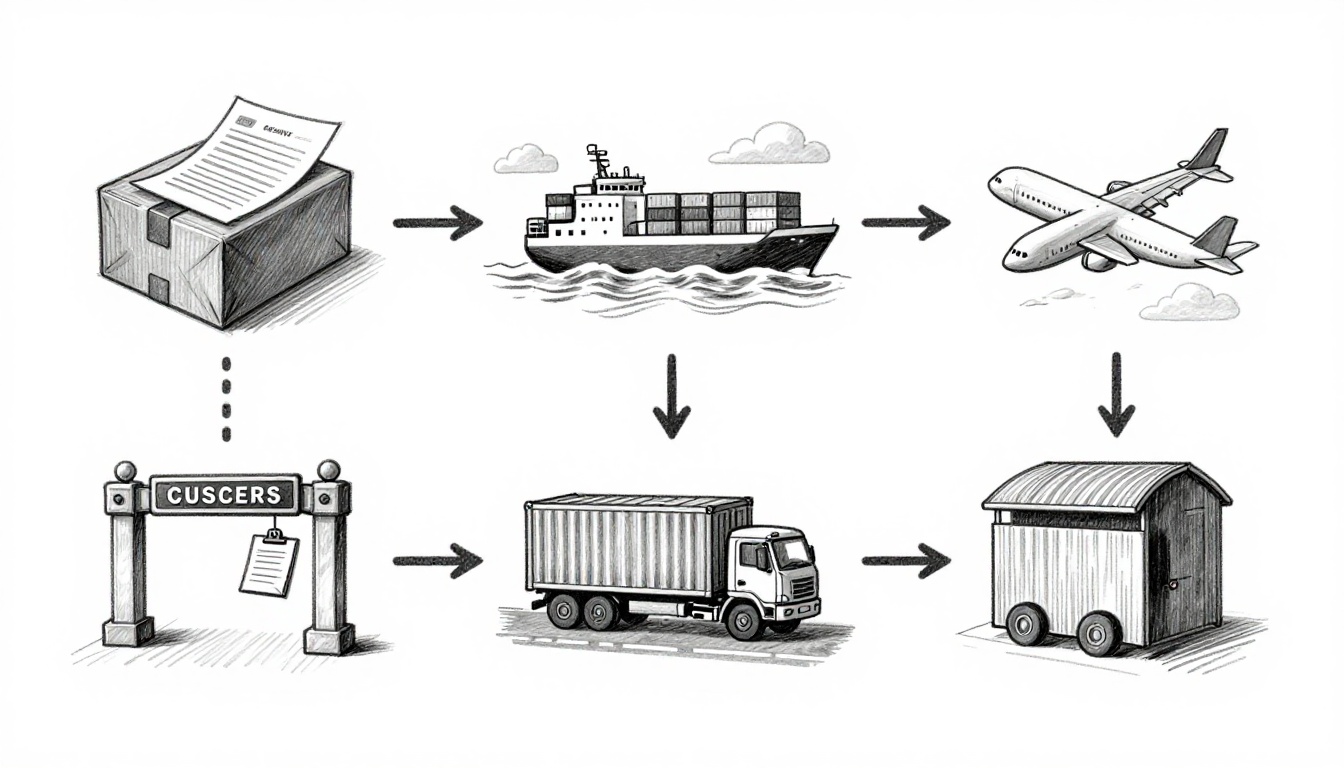
Here’s the big picture. Goods typically move through six stages: agreement and packing, choosing transport, exporting customs clearance, the in-transit journey, importing customs and inspections, and then last-mile delivery. Along the way, key players like freight forwarders, carriers, and customs authorities coordinate the details.
Also, rules and tools keep changing. In 2026, more shipments use digital tracking. At the same time, green shipping rules and emissions reporting continue to expand. So planning the route is only half the job, you also need the paperwork to match.
Let’s walk through each step like a map.
Step One: Agreeing on Terms and Getting Goods Ready to Ship
Before a shipment moves, the buyer and seller decide who does what. That’s where Incoterms come in. Incoterms (the 2020 version is still the standard in 2026) define who pays costs, when risk shifts, and which party handles shipping tasks.
Then you get practical. The seller packs the goods, labels them, and runs basic quality checks. After that, the seller prepares starting documents that customs and carriers rely on. You’ll usually see:
- Commercial invoice (what’s being sold, value, buyer and seller info)
- Packing list (how items are packed, weights, cartons or units)
- Contract (what both sides agreed to)
- Certificate of origin (where the goods come from, often needed for trade preferences)
Also, some products face export controls. This can include certain tech, minerals, or items with special technical specs. If you ignore those controls, clearance can stall.
If you want a clear refresher on how the terms work, see Incoterms 2020 explained complete guide.
Here’s a quick look at common Incoterms and what they feel like in real life.
| Incoterm | Best fit | Who handles main costs | Main risk shift idea |
|---|---|---|---|
| FOB | Ocean or port-to-port shipments | Seller until loading | Buyer takes risk after loading |
| CIF | Ocean, to a named destination port | Seller arranges insurance too | Buyer takes risk after loading |
| DAP | Seller handles export and transport | Seller to destination, buyer on delivery | Buyer takes risk once at buyer’s location |
| DDP | Buyer wants “door-ready” terms | Seller handles most duties and delivery | Buyer takes risk after final delivery |
A simple example helps. Say you ship clothes from Vietnam to the US. With FOB, the seller loads at the port, then the buyer manages sea freight onward. With DDP, the seller often handles more steps, including duties.
One more shift since recent years: many buyers now push more responsibility to sellers for documentation accuracy and compliance. That means the seller’s prep phase matters more than ever.
Why Incoterms Are Your Trade Lifesaver
Incoterms sound like contract jargon, but they prevent real mistakes. If the parties pick the wrong term, the wrong side may pay for freight, or risk may shift too early. That’s when disputes start.
Here’s the practical rule: match the term to how you actually plan to move the goods. If you know you’ll use a carrier to your facility, DAP or DDP might fit better than FOB. If you’re only using port-to-port ocean shipping, FOB or CIF often makes more sense.
Also remember this: mismatched terms plus unclear paperwork equals delays. Customs and carriers don’t fix contract confusion for you.
Essential Prep Documents You Cannot Skip
After Incoterms, the next goal is consistency. Documents must match the goods, the shipment, and each other.
- Commercial invoice proves the transaction details (price, item descriptions, value).
- Packing list proves what’s inside each carton (weights and quantities).
- Certificate of origin can support trade deals and preference rates.
- Export declaration and shipping instructions help carriers move the cargo legally.
Tip: many teams use digital document tools. That reduces typos and keeps formatting consistent. Even small errors like wrong weights or descriptions can trigger holds.
In short, Step One sets the foundation. If the base is wrong, everything above it wobbles.
Step Two: Picking Transport and Teaming Up with a Freight Forwarder
Once the goods are ready, the next question is transport. Sea, air, and land each change the timeline and cost. In 2026, carriers also adjust routes for reliability, not just price.
Many shippers also bring in a freight forwarder. Think of them as a cargo coordinator. They book carriers, guide paperwork, and help prevent mix-ups across borders.
As a starting point for how this works, review freight forwarder red flags and basics. It’s a useful reality check on fees and responsibilities.
Sea, Air, or Land: Which Shipping Method Fits Your Goods?
Use this as a simple decision map. Where does your priority sit: speed, cost, or regional reach?
| Mode | Best for | Typical tradeoff | Common example |
|---|---|---|---|
| Sea freight | Bulk goods, lower cost | Slower transit, port schedules matter | Shipping containers of apparel |
| Air freight | Small, high-value, urgent loads | Higher cost per unit | Spare parts or electronics |
| Trucking/rail | Shorter legs or inland moves | Needs smooth handoffs | Port-to-warehouse delivery |
In 2026, planners also consider diversification. Some routes shift based on demand and disruptions. If you want a quick comparison view, see air vs sea vs rail in 2026.
The Freight Forwarder’s Superpowers in Global Shipping
A freight forwarder typically helps with:
- Booking the right space on a carrier (not just “any boat” or “any flight”)
- Coordinating multi-modal legs (for example, truck-to-port-to-truck)
- Handling paperwork handoffs between parties
- Tracking progress and flagging issues early
- Helping settle questions about documents when something doesn’t match
You still need to review details. However, a forwarder reduces the chance that a shipment stalls because one party missed a step.
Meanwhile, tracking tools help too. Many shipments now include GPS and IoT-style monitoring, so you can see location and sometimes condition, not just vague status updates. That improves planning for receiving and inventory.
Also, sustainability trends keep growing. Some corridors include low-emission options or fees tied to greener service.
Step Three: Export Customs Clearance in the Seller’s Home Country
Now the shipment enters official control. In the seller’s home country, export customs clearance checks the goods are allowed to leave and that the documents match reality.
In many cases, the seller (often with a forwarder’s help) files export details such as:
- Export declaration
- Commercial invoice
- Packing list
- Bill of lading (or another transport document, once booked)
- Licenses or permits (if certain items need them)
- HS code information (used to classify goods)
If export controls apply, this step becomes even more important. Post-2024 rules tightened for some tech exports to certain destinations, and that pressure keeps influencing how firms plan sourcing and shipping.
Here’s a flowchart-style walk-through of what often happens:
- Seller completes export paperwork (with correct product info and values)
- Carrier or forwarder confirms the shipment plan (routes and transport document)
- Export customs reviews the filing and may request checks
- Fees are paid if required, and licenses are verified when relevant
- Clearance is granted, then loading begins
- Tracking starts when the cargo is moved and scanned
Example: exporting electronics from the seller’s port. If the HS code or product description doesn’t match internal records, customs may hold the export filing until the mismatch is fixed.
Navigating Export Documents and Fees Smoothly
To avoid holds, focus on three things:
- HS codes: classify correctly, not loosely.
- Values and descriptions: keep them consistent with the invoice.
- Licenses: confirm you need them before you ship.
Fees vary by country and product type. Still, most delays come from errors, not from the fees themselves.
Step Four: The In-Transit Adventure and Arrival at Destination
During travel, everyone watches the shipment. Carriers scan cargo at key points. Forwarders update tracking feeds. Many companies also use apps to monitor progress.
In-transit risks still exist. Cargo can face route changes, weather delays, or port congestion. On top of that, customs rules can require extra screening after a shipment arrives.
Sustainability also plays a role. For example, EU-linked trade often pushes more reporting on emissions and transport choices. Carriers respond by improving route planning and documenting compliance details.
When the shipment reaches the destination, the cargo is unloaded. Then the next phase begins: import customs handling.
High-Tech Tracking Keeps Your Goods Safe on the Move
Tracking can help in three ways:
- Visibility: you know where the shipment is and when it may arrive
- Condition monitoring: some systems track shocks, temperature, or container status
- Faster decisions: teams can reroute receiving or adjust inventory plans
Even when apps don’t give “real-time” in the strict sense, scans and event updates are still useful. In 2026, tracking adoption keeps rising because it reduces guesswork.
Step Five: Tackling Import Customs and Final Delivery
Import clearance is where risk and cost meet. Customs checks the shipment details, then the importer pays duties and may face inspections.
Key inputs include:
- HS code classification
- Country of origin
- Declared value
- Trade agreement eligibility (like USMCA, when rules of origin are met)
Also, some goods face bans or forced-labor checks under various enforcement programs. If something triggers a review, delays follow.
In 2026, two policy pressures still matter. First, EU CBAM rules affect carbon-related costs for certain products, including steel. Second, the US shift after 2024 reduced or ended a low-value exemption for many small imports. That means more shipments can require formal import handling instead of quick release.
After customs release, the shipment moves to the buyer. The buyer then inspects goods, confirms order accuracy, and pays under the contract terms, sometimes through a letter of credit.
Example: a shipment clearing US customs. If the invoice value or HS code doesn’t match the filing, the release can wait until corrections are made.
Import Duties, Inspections, and 2026 Regulation Updates
To prepare, do these basics early:
- Confirm HS codes and origin details.
- Set up a way to respond to inspection requests fast.
- Budget for duties and possible documentation updates.
Tariffs and fees can shift with policy. So it helps to plan for “best-case and worst-case” landed costs.
From Port to Your Door: Last Legs of the Trip
The final leg often includes trucking, drayage, warehousing, and delivery scheduling. This is where delays still happen, even after customs release.
Common pitfalls include:
- Receiving paperwork that arrives late
- Wrong delivery address details
- No plan for appointment windows
- Missing packaging breakdown info for warehouse staff
Then the shipment ends where it matters: in your buyer’s hands, ready to use or sell.
Conclusion: A Clear Six-Step Map for International Goods Movement Step by Step
So, how do goods move between countries step by step? First, parties lock in Incoterms and prepare accurate documents. Next, a freight forwarder and carriers choose transport and book space. Then export customs clears the shipment, and it travels with ongoing tracking. After arrival, import customs handles duties, inspections, and any rule checks. Finally, last-mile delivery brings the goods to the buyer.
If you remember one takeaway, make it this: clear terms plus correct paperwork beats luck every time.
Want to make this real? Share your shipping story (what moved, from where to where, and what delayed it). Or check the local rules for your next shipment and plan your documents before you book transport.