You ever get a shipping update that says “in transit,” then days pass with no change? It’s the kind of silence that makes you picture your package sitting somewhere, unopened by anyone who can help.
For businesses, that uncertainty turns into lost money. For customers, it becomes missed plans. In 2026, product tracking has to work from the moment goods hit storage, through packing, and all the way to the delivery door.
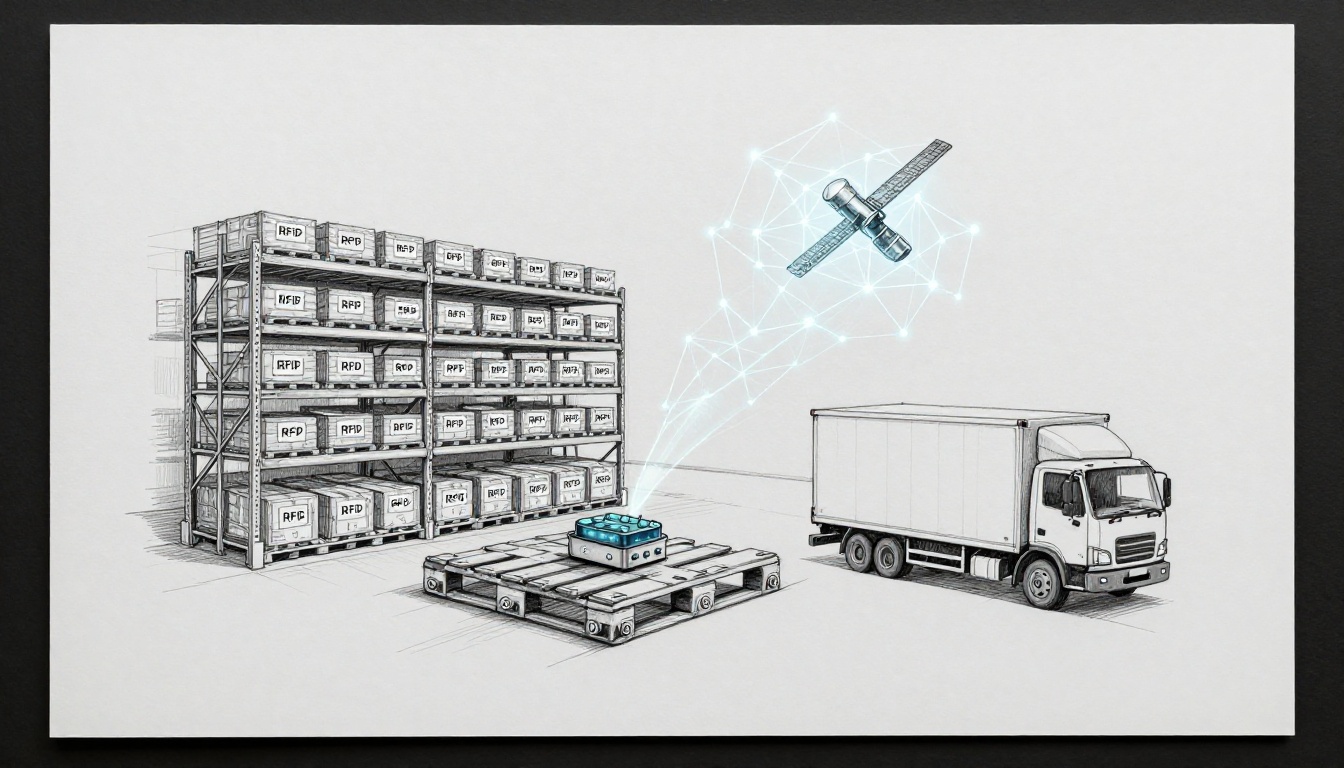
Most modern supply chains now rely on a mix of tools. RFID speeds up inventory checks. IoT sensors watch location and conditions. GPS helps pinpoint shipments outdoors. Then AI and blockchain add smarter decisions and tamper-resistant records.
The best part, you don’t need a tech degree to understand it. You just need to know what each tool does, where it fits, and why the combo works better than any single method. Next, you’ll see how warehouses track items every day, then how shipping gets real-time visibility.
How Warehouses Use Everyday Tech to Track Stored Products
Warehouses track products like a library tracks books. The goal is simple: you always know what you have, where it is, and when it moved. In practice, it’s hard because items sit in bins, move between zones, and get handled by people and robots.
So warehouses mix tools. Some are low-cost and easy to deploy. Others cost more, but they reduce errors and speed up counting.
If you’re comparing common approaches like RFID, barcodes, and IoT, this guide is a helpful reference: RFID vs barcode vs IoT overview.
Here’s the practical difference, in plain terms:
| Tracking method | How it reads items | Typical scan speed | Best fit |
|---|---|---|---|
| Barcodes | Optical scan (line-of-sight) | Slower, one at a time | Low to medium volume |
| RFID | Radio signals (no line-of-sight needed) | Fast, bulk reads | High-volume inventory |
| IoT sensors | Bluetooth, LoRa, or cellular signals | Live updates | Temperature, vibration, shocks |
The takeaway is clear: barcodes start simple, RFID scales fast, and IoT adds “what condition is it in?” so issues get caught early.
Barcodes: The Simple Starting Point
Barcodes are the entry point for many companies. They’re cheap, widely supported, and easy to train for. In most setups, workers scan a label with a handheld scanner, then the system records a move.
This works best when your flow is steady and volume is manageable. It’s also common when items move by the case or pallet, not by every single unit.
Still, barcodes have limits. Most scans require line-of-sight. If a label faces the wrong way, gets scuffed, or sits behind shrink wrap, scanning slows down. Also, scanning is often one item at a time. That means counting large batches takes time and pulls staff into repetitive work.
If you want a quick decision guide for choosing tag types, see RFID vs barcode vs NFC choices. Even if you never adopt NFC, the comparison helps you reason about tradeoffs.
Despite those limits, barcodes still earn their place. They’re great for quick receiving checks. They’re also useful as a backup when you can’t read RFID tags due to packaging constraints.
So why do warehouses keep using them? Because they’re often “good enough” for certain product lines, and they don’t require a full systems rebuild.
RFID Tags Speeding Up Inventory Counts
RFID is where inventory tracking starts to feel modern. Instead of pointing a scanner at a label, an RFID reader sends out radio signals. Tags reply automatically, so you can capture many items at once.
That bulk reading is the main reason RFID helps in storage. In many deployments, RFID can read 1,000+ items per minute, and it can reach up to around 40 feet depending on tag type and setup. Just as important, RFID doesn’t require perfect line-of-sight. A box can be turned, stacked, or partially covered, and it can still get read.
RFID also improves accuracy. Many systems report inventory accuracy over 99.5% when scans are consistent and the process is set up correctly. That jump matters because small mistakes create big ripples: picking the wrong item leads to returns, reshipments, and customer complaints.
Costs can sound scary at first. But passive RFID tags often land around $0.08 to $0.50 each depending on volumes and specs. Even then, companies usually focus on the products where errors hurt most.
In 2026, more RFID tags are also getting “smarter.” Passive tags can now pair with sensing elements for data like temperature or humidity in certain packaging formats. That means RFID isn’t only about “where it is.” It can also hint at “is it still safe to sell?”
When warehouses combine RFID with clear receiving and put-away rules, counting gets faster and more consistent. It’s like upgrading from taking attendance by hand to scanning every badge at once.
IoT Sensors Adding Eyes on Conditions
RFID tells you location and identity. IoT sensors add the missing layer: condition. That matters for goods that can’t drift outside safe ranges.
IoT devices can track location using methods like BLE for close-range visibility and LoRa for long-range coverage. Some systems also use cellular for wider reach, especially in larger facilities or across multiple sites. In other words, IoT can tell you what’s happening in real time, not just after the damage.
Typical IoT sensors for warehouse use can cost roughly $5 to $150 for higher-volume deployments, with more advanced setups costing more depending on power needs and ruggedness. For many teams, the price is worth it when the goods are high-value or sensitive.
Common signals include:
- Temperature and humidity readings for food, chemicals, or medical supplies
- Vibration or shock data for items that can crack or break
- Door open events or zone dwell time
For example, if a batch of medication sits in the wrong area of a cold storage zone, you want the system to notice immediately. Otherwise, you might only find out when the product fails inspection.
Energy is also a big issue, because sensors need power. However, newer designs and battery options can reduce maintenance. In some cases, energy-harvesting approaches help tags last longer without frequent battery swaps.
The big benefit of IoT is simple: it helps you catch a bad situation early, before it becomes a write-off.
Real-Time Tracking Keeps Shipments on Course
Storage tracking answers “what do we have, and where is it?” Shipping tracking answers “where is it right now, and what changed?”
Once packages leave the warehouse, the environment gets harder. Trucks move. Roads shake. Loads heat up. Containers wait in yards. Theft attempts also happen during delays, not just during handoffs.
So real-time systems pull data from multiple sources. GPS provides location outdoors. IoT devices can report shocks, door opens, and temperature spikes. Then the platform turns those signals into alerts for operators.
In many setups, the goal isn’t just visibility. It’s faster action. If a shipment slips behind schedule or starts warming up too much, teams need to know right away.
For a deeper look at what’s commonly used in 2026 for live visibility, this breakdown of real-time options can help: real-time cargo tracking technologies in 2026.
GPS and IoT Teaming Up for Location Precision
GPS works well once goods move off-site. It gives location updates based on satellite signals. For many shipments, that’s accurate enough for routing and exception handling.
However, GPS has limits inside buildings or in dense urban areas. That’s where IoT helps. In warehouses, BLE or RFID can provide close-range accuracy. On the road, GPS and other sensors fill in the gaps.
Also, some systems use different wireless options based on the situation. LoRa can cover longer distances in large facilities. Cellular can support broader range for teams that want updates across networks.
Put together, this becomes a chain of evidence. RFID at the pallet gate links to shipment records. GPS shows the truck’s path. IoT sensors show whether the ride was rough, hot, or delayed.
Then planners can do real things with the data. They reroute a truck. They hold an order if temperature limits get breached. They also adjust staffing when a late wave shows up.
In other words, tracking becomes a feedback loop, not a set of static check marks.
Alerts That Prevent Delivery Disasters
Live data isn’t helpful unless it triggers action. That’s why tracking platforms focus on alerts: signals that something changed and someone should respond.
Good alerts are specific. They point to a shipment, show why the system flagged it, and route it to the right team. Otherwise, alerts flood inboxes and get ignored.
Common alert triggers include:
- Temperature or humidity outside a safe band
- Door open events in a sealed shipment
- Long dwell time at a yard or port
- Excessive shocks that suggest rough handling
Some logistics teams also use disposable tracking devices when permanent sensors don’t make sense. For example, disposable smart labels and GPS trackers can add visibility without long setup or returns. One example is disposable smart shipping labels for real-time freight tracking.
That approach matters for routes that vary a lot. It’s also helpful for one-time shipments where you don’t want to buy expensive equipment per load.
The main “gotcha” with shipping alerts is calibration. If you set thresholds too tight, you trigger too many false alarms. If you set them too loose, you miss real damage. Over time, teams tune those rules using past shipment outcomes.
When the alerts work, customers notice. Fewer mysteries lead to fewer calls, and fewer surprises lead to more trust.
AI and Blockchain Making Tracking Smarter and Secure
In 2026, tracking isn’t only about reading signals. It’s also about interpreting them. That’s where AI comes in.
AI can spot patterns in RFID, IoT, and GPS logs. It can also predict what’s likely to happen next. For example, if a specific route often causes temperature spikes, the system can warn you earlier. If certain warehouse zones repeatedly trigger mispicks, AI can flag training needs or layout issues.
Also, leaders are paying attention to outcomes, not just dashboards. In a 2026 FedEx update, FedEx reports that 97% of leaders say visibility alone isn’t enough and that turning logistics data into actionable insights with analytics and AI matters. See FedEx’s logistics intelligence report.
Blockchain enters the picture with a different promise: records that are hard to change. When shipment events are written into an immutable log, you get a stronger audit trail for compliance, claims, and dispute resolution. Many teams pair blockchain ideas with RFID because RFID already creates structured event data.
A helpful way to think about it:
- RFID and IoT create accurate facts.
- AI interprets those facts.
- Blockchain keeps the facts harder to rewrite.
AI Predicting Problems Before They Happen
AI works best when it gets consistent input. With RFID and IoT data, the system can learn how long items typically sit in each zone. It can also learn which conditions correlate with later damage.
Instead of waiting for a failure, AI can forecast risk. That might mean:
- rerouting a shipment to avoid a delay-heavy yard
- scheduling maintenance for a sensor or packing station
- warning teams when a heat trend suggests a temperature breach is coming
AI can also help with operations inside a warehouse. For instance, it can optimize robot routes and reduce congestion around high-traffic aisles. When robots move with better data, picking becomes smoother.
Another benefit is shrink prevention. If the system sees patterns that don’t match normal movement, it can trigger investigations sooner. Theft often leaves “behavior fingerprints,” like items that skip expected scan points.
And yes, AI can reduce “busy work.” Operators don’t need to read every raw event log. They can focus on the flagged items that matter.
Blockchain Locking in Product Histories
Blockchain is often discussed as “proof of history,” and that’s a useful shorthand. The core idea is a tamper-resistant ledger that stores event records across the supply chain.
For product tracking, that can support what some teams call a digital passport. Each scan event, transfer event, and condition log can link to the product’s lifecycle.
This becomes valuable when rules apply. Some goods need strict traceability due to safety standards. Others require records to support sustainability claims or regulatory reporting.
Blockchain also supports dispute handling. If a claim arises, you want credible event data. A shared ledger reduces the chance that different parties hold conflicting versions of “what happened.”
In 2026, the most common reality is hybrid adoption. Companies don’t always put everything on-chain. They often store event data in a system of record and use blockchain for the parts that need stronger audit strength.
The best outcome is trust. When partners agree on a record, less time goes into arguments, and more time goes into fixes.
Challenges Companies Face and Smart Fixes
Tracking sounds great until you try it. Then you run into real-world friction: cost, installation complexity, data volume, and changing processes.
Some companies also face a “tech clash.” RFID hardware, sensor platforms, scanning apps, and transport systems might come from different vendors. If they don’t integrate well, you get duplicate records or missing events.
Then there’s data overload. Sensors can create too many signals. If the platform can’t sort what matters, teams drown in noise.
Despite those challenges, the winners use phased rollouts. They start small, prove value, then expand.
Tackling High Costs and Tech Clashes
Tagging everything can get expensive. Even if a passive RFID tag seems cheap, the costs add up once you factor in labor, readers, software, maintenance, and packaging changes.
So many teams focus on high-impact products first. Think: items that sell fast but get mishandled often, or goods that require temperature control. Then they build experience and refine their workflow.
Integration also needs a plan. Start by mapping “what events must be captured.” Then confirm the data format each system uses. Finally, pick a platform approach that ties those events into one timeline.
If you’re moving from barcodes to RFID, you may need a transition strategy. For example, you might keep barcode labels on some SKUs while using RFID on others. That reduces risk while staff learn the new flow.
Another smart fix is smarter data handling. Instead of logging every event, systems can use rules to group events into “meaningful events,” like “received,” “moved to zone,” and “temperature breach detected.”
The bottom line is practical: tracking costs less when you track the right things, with the right thresholds, for the right stage.
Lessons from Big Players Like Amazon and FedEx
Big players show what works at scale. Amazon has popularized warehouse automation plus fast identification, including RFID-enabled picking workflows. The key takeaway isn’t the robot itself. It’s the ability to count, locate, and pick quickly with fewer errors.
FedEx also highlights the shift from visibility to action. When data becomes actionable, fewer shipments get stuck unnoticed. Teams can focus on the exceptions that need help.
Other vendors help companies test new methods through pilots and demos, especially for RFID in retail and logistics. Some real deployments also use combinations of RFID readers, RTLS systems, and IoT sensors based on the site layout.
Here’s a realistic lesson: most successful programs start with one problem.
- Faster inventory counts
- Fewer damaged goods
- Better route reliability
- Lower shrink
Then the company expands once the process runs smoothly.
Conclusion: Tracking Gets Stronger When Tools Work Together
If the hook from the start hit home, you’re not alone. Lost or delayed packages create frustration because updates depend on tracking accuracy.
In 2026, the strongest systems come from multi-tech tracking. RFID speeds up inventory in storage. IoT adds condition visibility. GPS keeps shipments on course outdoors. AI flags patterns and predicts risk. Blockchain strengthens records when compliance and disputes matter.
So the next step is simple. Check how your current supply chain tracks items during storage and transit. Then test a focused RFID pilot or a sensor-based condition check on one product line. Small pilots can turn “we think it’s fine” into proof you can act on.