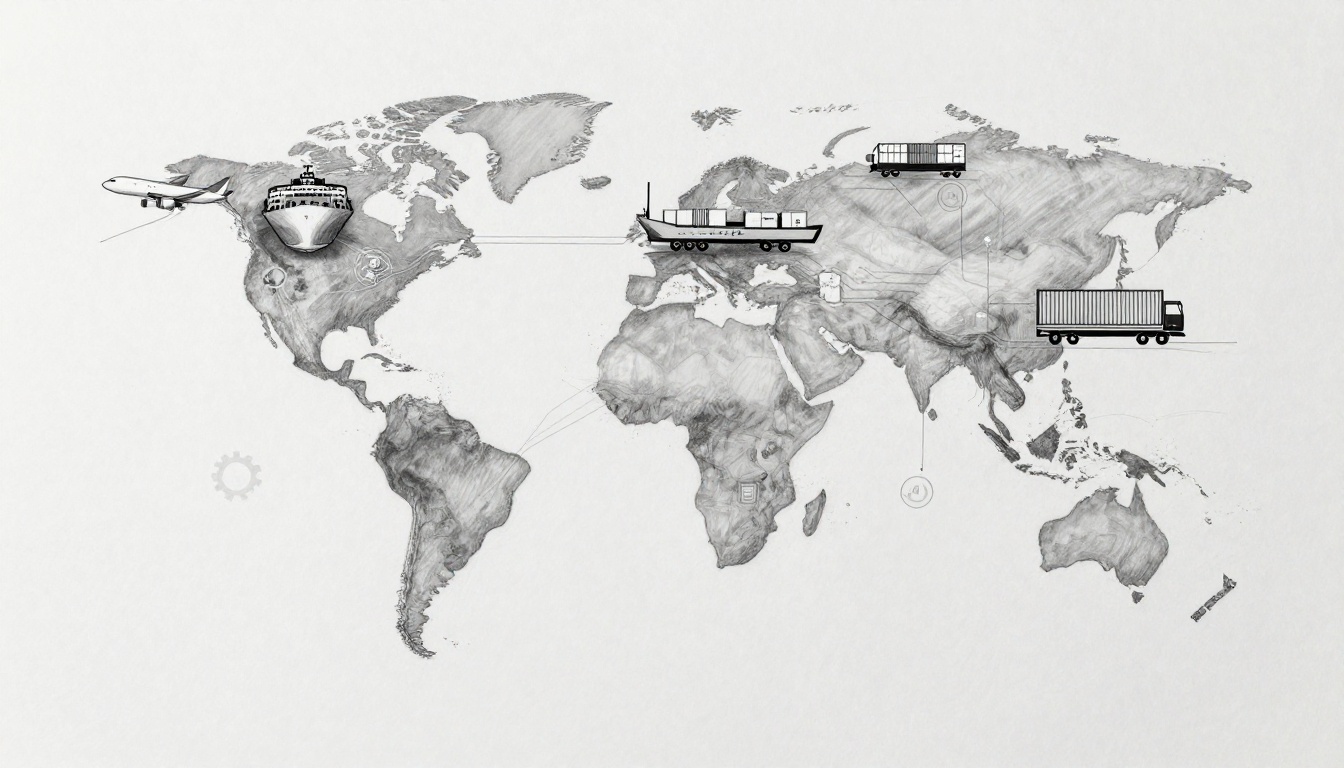
In early 2026, extreme weather is still hitting supply lines fast, with Europe seeing about €43 billion in losses from heat, drought, and floods in 2025. The risk keeps growing too, with flooding losses up 27% since 2000. Meanwhile, you feel it as delays, empty shelves, and higher costs, especially when routes and ports take damage.
That’s why technology improving global supply chains matters right now. Tools like AI, IoT, and blockchain help teams spot trouble sooner, track shipments in real time, and share key data with less confusion, so they can reroute faster, cut waste, and build more trust across partners. We’ll look at the main March 2026 trends in AI planning, IoT visibility, and blockchain trust next.
AI and Machine Learning: Spotting Problems Before They Hit
AI and machine learning help supply chains do something humans usually do late: notice the problem before it turns into a headache. Instead of waiting for delays to show up in a status report, these systems read early signals from weather, traffic, port activity, and orders. Then they predict what’s likely to break next, so teams can act while options still exist.
At its best, the tech turns uncertainty into a set of clear choices, with likely outcomes and expected impact. In 2026, more companies are using this approach to move faster, spend less on rush shipping, and cut avoidable errors that come from manual work.
In simple terms, think of it like a smoke alarm plus a helpful mechanic. You get a warning early, and then you get suggested fixes right away.
Agentic AI: Your Autonomous Supply Chain Teammate
Agentic AI goes beyond “watching.” It can take action on your behalf, within set rules. Picture a supply chain teammate that keeps working even when nobody is online. If a shipment gets stuck, it can rebook and reroute, then confirm the new plan.
Here’s a real-world style example you’ll recognize in 2026 operations. A truck should reach a distribution center on Tuesday, but an unexpected storm slows the route. The agent checks live traffic, carrier capacity, and warehouse receiving windows. Then it updates the pickup, switches lanes or carriers, and adjusts the delivery appointment.
In other words, you don’t just get alerts. You get outcomes.
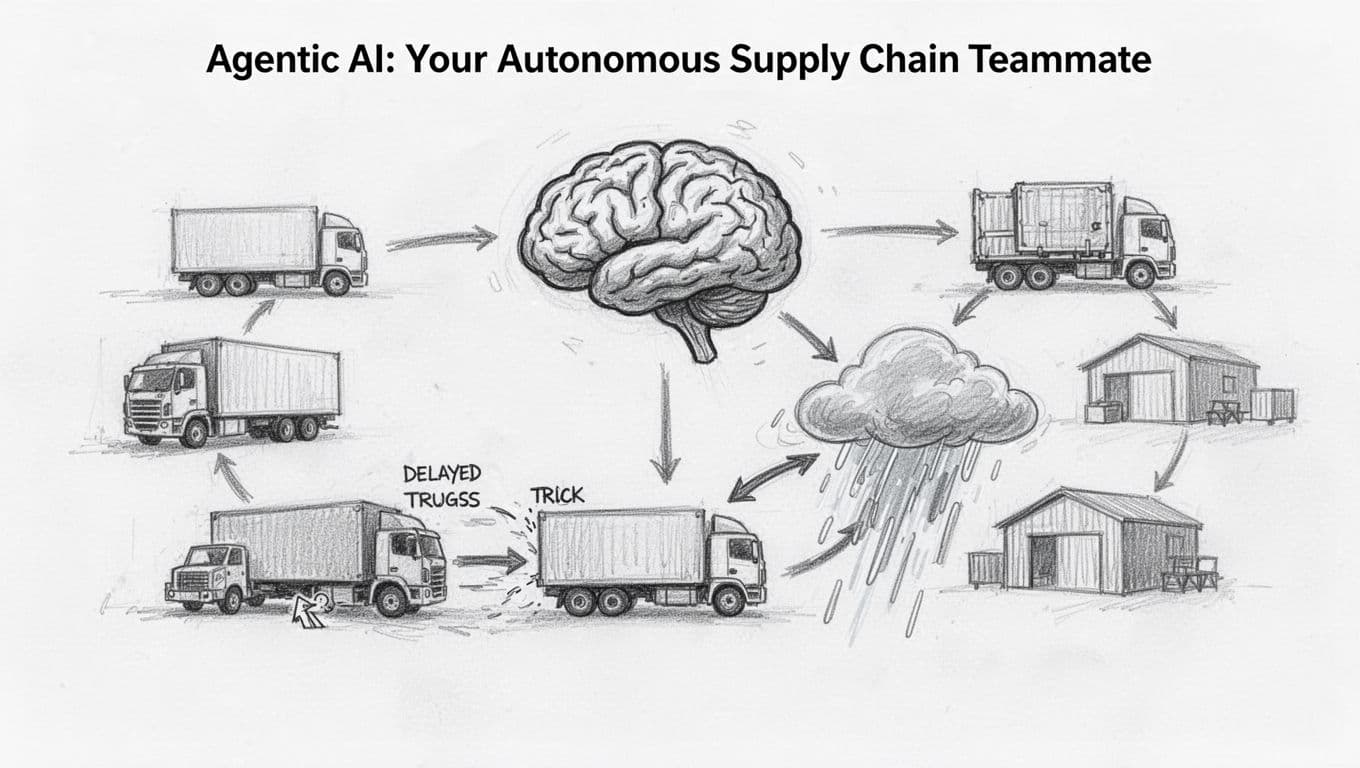
Many agentic AI setups work in “safe zones.” They handle routine moves automatically, while routing changes that affect cost or service levels get human review. That split reduces bottlenecks without removing control. For a look at how teams talk about agentic automation in logistics, see Flexport and Maersk agentic AI use cases.
Common benefits teams report in 2026 rollouts include faster response times, fewer manual handoffs, and lower error rates from copying and retyping data.
- Speed: faster rebooking during disruptions
- Fewer mistakes: less data entry and fewer missed exceptions
- Better continuity: fewer “wait for approval” loops
Smart Control Towers Guiding Real-Time Choices
Control towers used to be dashboards. Now, in 2026, they act more like an operations center that blends data and recommends the best next step. AI-powered towers pull inputs from many sources, like internal order and inventory systems plus external feeds on weather, traffic, and delays.
Then they run “what if” tests. What if we reroute this lane? What if we shift volume to a nearby warehouse? What if we change the pickup window? Instead of one flat view, you get a prioritized plan based on cost, speed, risk, and service level.
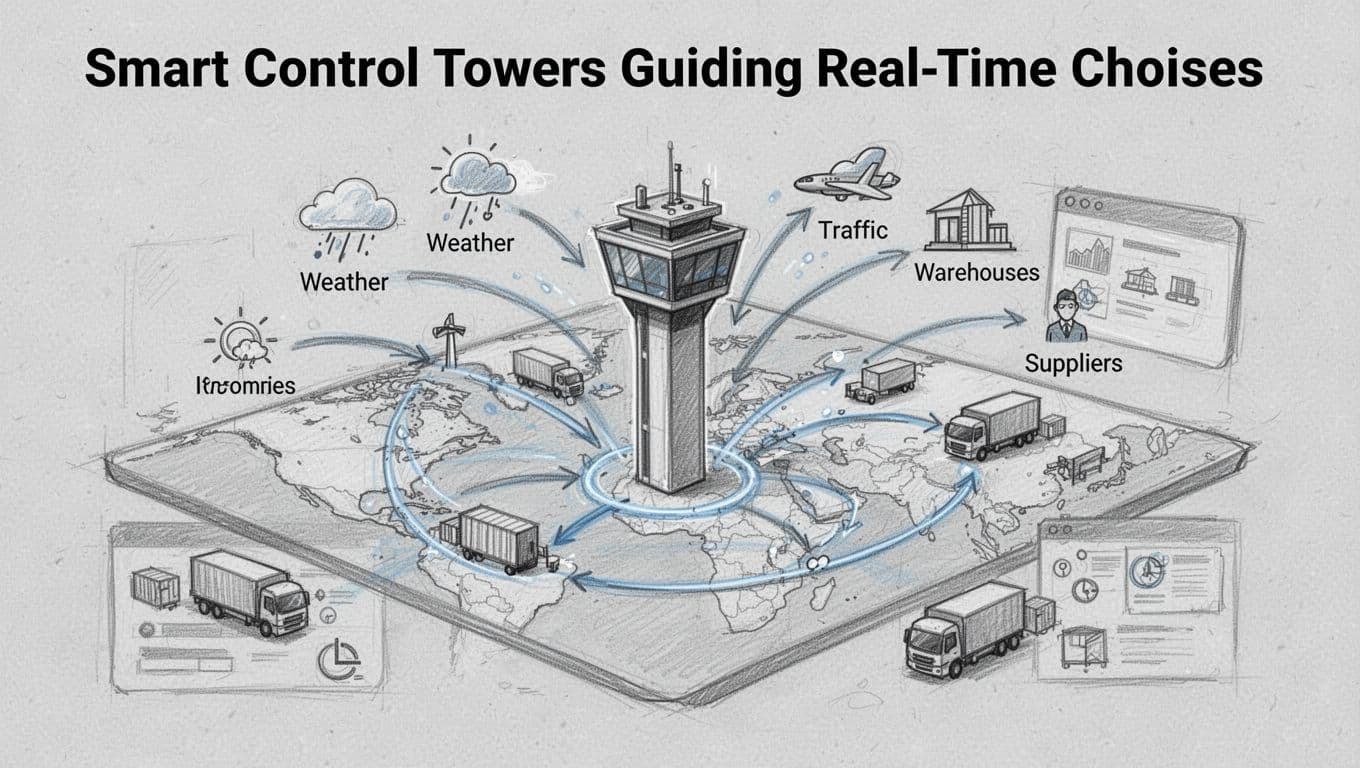
This is where efficiency gains show up in everyday terms. When the tower spots a likely disruption, it can push a suggestion to planners and buyers before customers feel it. As a result, teams spend less time chasing updates and more time making decisions that stick.
For a deeper look at how control towers keep moving toward predictive operations, check predictive control towers in 2026.
Here’s a quick snapshot of what these systems improve:
| Control Tower Outcome | What You Notice On The Ground |
|---|---|
| Faster decisions | Fewer last-minute calls and escalations |
| Better routing choices | Less rerouting churn and lower costs |
| Higher accuracy | Fewer mismatched ETAs and incorrect bookings |
| Smoother partner coordination | Clearer plans across carriers and warehouses |
Bottom line: agentic AI can act, and smart control towers can guide. Together, they help you spot problems early and respond before the damage spreads.
IoT Sensors: Tracking Every Step in Real Time
IoT sensors act like a quiet witness for every shipment move. They watch key conditions minute by minute, then report what changed right away. Instead of guessing how a package arrived, teams can see the story as it unfolds.
That matters most when delays lead to waste, safety risks, or missed sales. With real-time tracking, supply chain work turns from “after-the-fact blame” into “early course correction.” And once you combine sensor data with edge computing and AI, you can fix problems fast, even before someone files an exception.
Protecting Sensitive Goods from Spoilage
When temperature and humidity drift, spoilage starts quietly. A cold chain shipment can go wrong long before anyone opens the box. That’s where IoT sensors give you a real-time early warning system, not a vague “it got delayed” message.
DHL’s approach focuses on continuous monitoring of conditions in warehouses and in transit. Sensors track temperature and humidity non-stop, then send alerts when readings move outside safe bands. In practical terms, DHL can catch cold-chain issues like heat spikes, moisture swings, and equipment problems sooner, so goods do not ride out the damage until it’s too late.
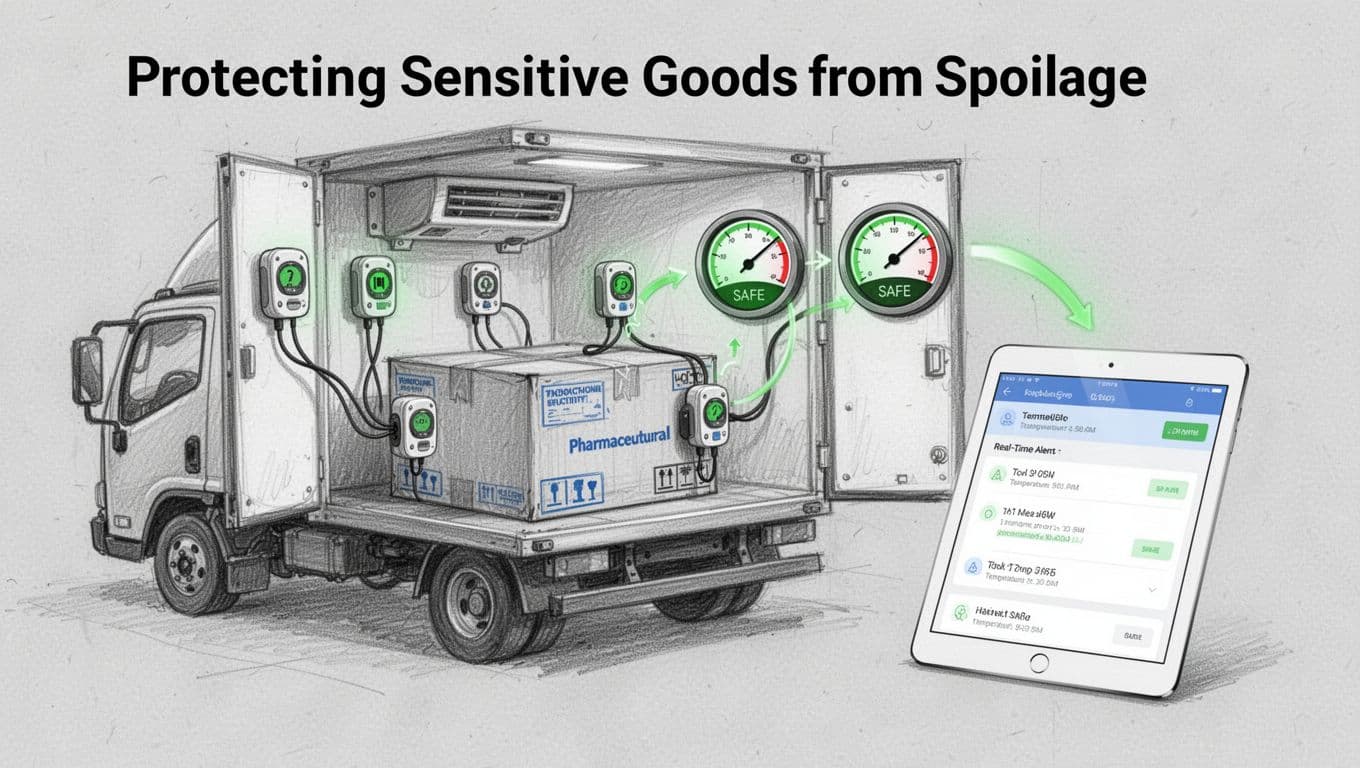
Here’s how it plays out in a vivid scenario.
Imagine a pallet of vaccines leaving a regional warehouse. As soon as loading begins, sensors record the baseline. Then, during the trip, a door seal loosens slightly. Humidity rises, and temperature starts to creep upward. Sensors detect the change and push an alert to the monitoring team (or to an edge device that can trigger actions immediately). Next, the system helps operators make a fast choice: reroute, adjust cooling, or swap to a better storage unit at the next stop.
This is exactly the kind of shift cold chain research points to. One study on temperature-sensitive logistics highlights how more granular and responsive monitoring helps reduce spoilage compared with older methods that rely on infrequent checks (Cold Chain Monitoring with IoT Sensors).
Real benefits you can expect in 2026 operations
- Less spoilage, less waste: By spotting risk signals early, sensors reduce losses in food and pharma cold chains.
- Faster fixes: Edge systems and alerts reduce the time between “something changed” and “action taken.”
- Safer handling: When humidity control matters (mold risk, packaging integrity), continuous readings help teams stay within limits.
If you want a bigger picture on why this grows, market forecasts for cold chain visibility keep rising, and IoT plus AI sits at the center of that momentum (The $497 Billion Cold Chain Boom). In plain terms, teams are replacing “checked at pickup and pray” with “checked all the way through.”
Smarter Routes Cutting Delivery Times
Time loss in shipping is rarely random. It comes from traffic jams, dock congestion, weather shifts, and last-minute order changes. IoT sensors help here too, because they feed route decisions with live facts instead of old assumptions.
Amazon is a strong example of pairing IoT with AI for route planning that changes in real time. The system gathers signals like GPS location, delivery vehicle data, and environment inputs. Then AI recalculates the route constantly, so it avoids slowdowns as they appear. The difference feels small in theory. In practice, it saves minutes that add up across millions of deliveries.
In other words, it behaves like a driver with a map and a live traffic radio, except it never gets tired and it updates every moment.
What the IoT-AI combo does on the ground
- Avoids traffic congestion by selecting smoother paths as conditions change.
- Replans during the day when new signals arrive (like sudden traffic or new orders).
- Improves on-time performance because estimated arrival times stay more accurate.
Amazon-style routing can improve on-time delivery performance by 25% to 35%, and AI routing can cut fuel use by 10% to 15%. Those are not minor gains when you’re running daily volume across dense cities. Even better, IoT tracking reduces uncertainty for customers, since visibility becomes more reliable and arrival windows stay closer to reality.
For an extra look at how AI shows up in Amazon supply chain work, see Amazon’s AI-driven supply chain transformation.
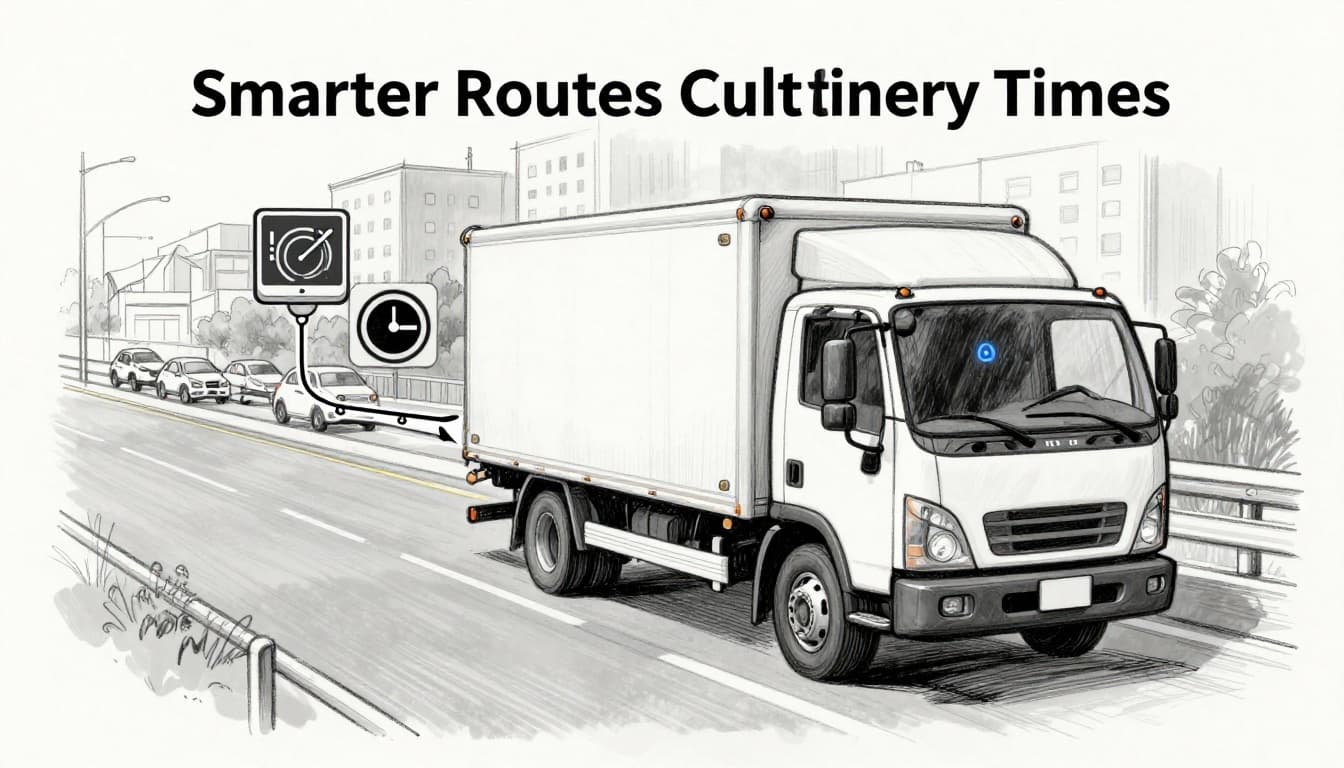
Picture a driver leaving a fulfillment center. At first, the planned route looks fine. Then a traffic event hits the main road. A sensor read or GPS signal shows the slowdown right away. The AI system recalculates, and the next turn changes. The truck dodges the jam, and the delivery lands closer to the promised time.
That boosts satisfaction for a simple reason: people trust what they can see. When updates come from live sensors, not delayed scans, your customer experience feels more like “this will arrive soon” and less like “we will check again later.”
Ultimately, IoT sensors turn routes into living plans. Instead of walking a fixed path, logistics starts moving like a person who watches the sidewalk ahead and adjusts their steps.
Blockchain: Creating Trust with Unbreakable Records
When trust breaks in a supply chain, everything slows down. Labels get questioned, batches get mixed up, and teams waste days chasing proof. Blockchain helps here because it creates tamper-proof records that track a product from the factory floor to the shelf.
In pharma and auto, that matters a lot. A wrong batch in a hospital or a fake part on an assembly line can turn into costly recalls fast. With blockchain, the record of what happened stays consistent across every party, so you spend less time proving and more time fixing.
Lightning-Fast Recalls and Fraud Protection
Think about a recall like a fire drill. Without clear records, teams search room by room. With blockchain records, they grab the right extinguisher immediately. Because every handoff can be written to an immutable ledger, teams can trace a suspect lot quickly and confirm which stores or plants received it.
That speed changes outcomes. Instead of recalls taking weeks, blockchain-backed traceability can reduce the timeline to seconds for high-confidence decisions. Even better, AI can help interpret the trace trail, reporting 2.2-second traceability for specific batch events when data is already linked to the chain.
Fraud protection also improves. Counterfeiters can’t easily “rewrite history” once the record is set. In pharma, that means more confidence that a vial shipped under the right conditions actually reached the right destination. For context on how blockchain can strengthen pharma traceability and resilience, see end-to-end pharma traceability with blockchain.
And in autos, the same concept applies to part provenance. If a component’s record doesn’t match the ledger trace, teams can block it before it hits the line, reducing waste and rework.
Smart Contracts Streamlining Payments
Blockchain trust gets even stronger when payments follow verified events. That’s where Chainlink fits. Smart contracts run on-chain, but they still need real-world facts, like “the shipment arrived” or “the temperature stayed in range.” Chainlink oracles connect those facts from the real world into the contract.
Here’s the practical flow in pharma and auto: IoT sensors capture conditions, Chainlink verifies the report integrity, and the smart contract auto-initiates payment when the rules match. As a result, disputes shrink, and suppliers get paid closer to the moment performance proves out.
A clean way to see the setup is in a simple combo table:
| Tech combo | What it checks | What it triggers | Best fit |
|---|---|---|---|
| IoT sensors + blockchain ledger | Batch ID, location, cold-chain events | Immutable proof for recalls | Pharma |
| Chainlink oracle + smart contract | Sensor report authenticity | Auto-release payment | Pharma and auto suppliers |
| Vehicle or parts tracking + ledger | Delivery acceptance, provenance | Faster invoice resolution | Auto parts networks |
For details on verifying report integrity on-chain, use Chainlink onchain report verification. When this automation lands well, teams often report around 30% cost savings from fewer invoice errors, less manual chasing, and quicker exception handling.
In short, blockchain gives you unbreakable records, and smart contracts help money move only when the proof is real.
Automation, Robotics, and Cutting-Edge Tools Boosting Speed
Warehouses and factories don’t run on mood, they run on motion. When you add automation and robots, you stop wasting the day on repetitive steps and start moving goods like a well-tuned conveyor of decisions.
Robots Taking Over Repetitive Tasks
Robots take over the tasks that slow teams down: repeated picking, pallet handling, sorting by size, and moving loads between stations. Since they can work 24/7, you get steady output even when demand spikes or staff gets sick. Also, fewer manual touches usually means fewer mix-ups, like mislabeled cartons or wrong batch moves.
In practice, you often see three wins show up fast:
- Lower labor cost pressure: Automation handles the heavy, boring parts, so labor shifts to monitoring, problem-solving, and quality checks. Recent results show warehouse robotics can cut labor costs by 25% to 30%.
- Higher speed and throughput: Autonomous mobile robots (AMRs) and related systems keep product moving without breaks. Some setups report order speed gains around 300%.
- Better accuracy: With sensors and AI guidance, robots can hit about 99% pick accuracy, which reduces rework and inventory fixes.
In food and pharma, this matters even more because mistakes can become waste or risk. For example, pharma logistics firms now use automation to stage, palletize, and protect sensitive goods with tighter process control (robots in pharma logistics at McKesson).
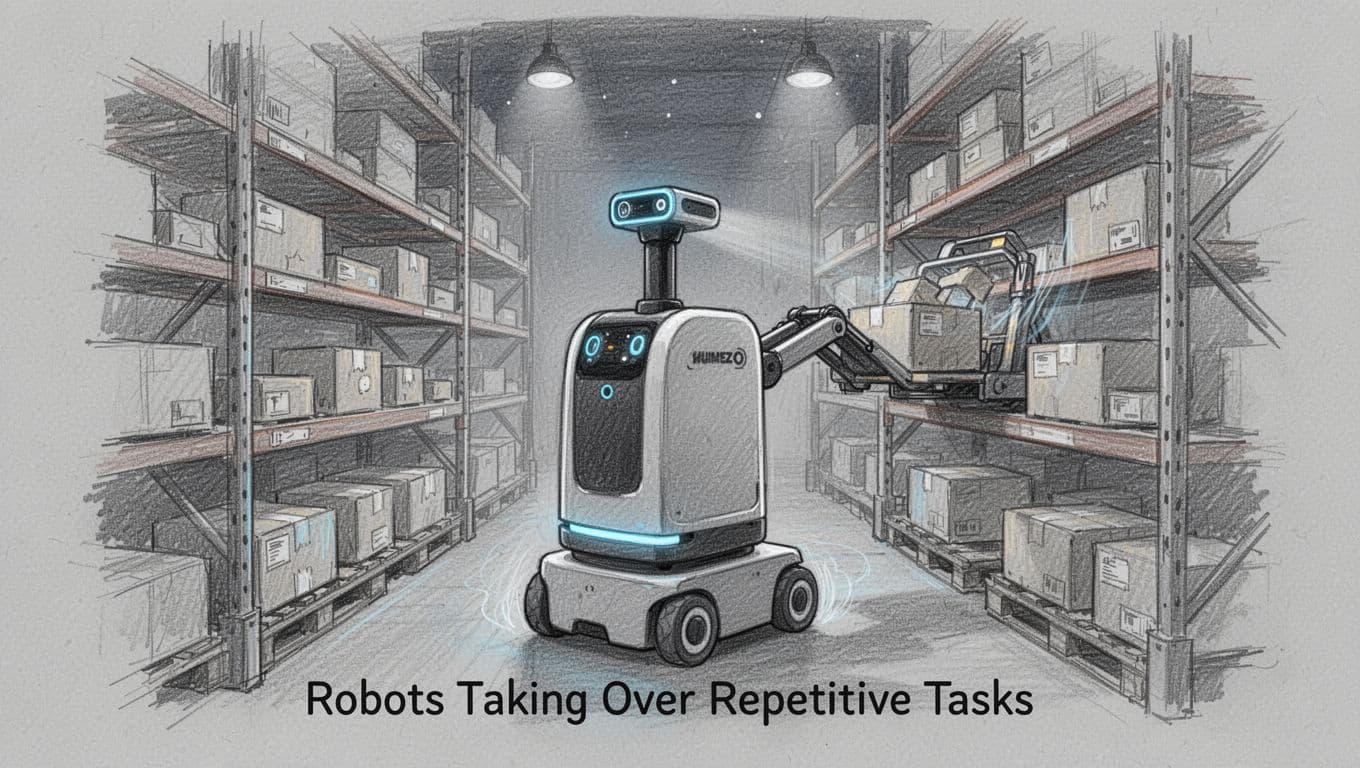
If you want a concrete feel, think of robots as the “always-on assembly line” that never gets tired, while people act like quality inspectors and exception handlers.
Digital Twins: Testing Fixes in a Virtual World
Digital twins act like live, virtual copies of your warehouse or network. They use real-time signals, then update the virtual model as conditions change. That means you can test delay fixes before you risk real shipments.
Now add blockchain to the mix. When you pair twin data with trusted records, you can run resilience sims with more confidence. For example, you can simulate a route closure, forecast how cold-chain handling changes, and compare outcomes using a consistent event history. Research also points to the value of digital twin-enabled risk management in improving supply chain resilience through scenario testing (blockchain and digital twin resilience research).
Here’s what teams do in day-to-day planning:
- Pull live operations data (inventory, travel times, dwell times).
- Run “what if” scenarios (dock delays, equipment downtime, order surges).
- Choose the plan that best balances speed, service, and risk.
- Apply changes to the real system with fewer surprises.
Because the twin keeps learning, it becomes a rehearsal space. It’s like running drills for storms, but for supply chain disruptions.
5G and Sustainability Making Chains Greener and Tougher
Speed alone doesn’t earn trust, especially when sustainability matters. 5G helps because it delivers fast, reliable connections for IoT sensors and robots, so systems react in seconds instead of minutes. That reduces idle time, reroute waste, and cold-chain risk caused by slow reactions.
AI plus blockchain can also support eco-tracking. When sensor events (temperature, location, handling time) are recorded in a shared ledger, partners can verify claims and reduce guesswork. In short, you can track more than movement, you can track environmental impact.
For sustainability and emissions, there’s growing attention on using AI in telecom to support ESG goals. That connects directly to 5G-heavy logistics, because faster control can mean less wasted transport (AI to reduce 5G emissions).
On the ground, these tools cut waste in three ways:
- Less spoilage in food and pharma by tighter monitoring and faster corrections.
- Fewer re-routes because robots and planners see bottlenecks early.
- Lower excess packaging and handling since accuracy and flow improve.
Conclusion
Technology improving global supply chains shows up in three real outcomes, faster decisions, less waste, and stronger proof across partners. AI and agentic planning cut delays by spotting trouble early, while IoT sensors keep shipments accurate in real time. In parallel, blockchain creates trustworthy records that speed up traceability and reduce blame when something goes wrong.
Because these systems work together, chains also get greener. Better monitoring and route updates reduce reroutes and fuel waste, and automation in warehouses lowers errors that lead to extra handling. Even with disruption risk like extreme weather, AI, IoT, and digital twins help teams adjust plans sooner, not after the damage spreads.
Cyber risk still comes with more connected devices, especially IoT and shared data links. Teams reduce that risk with zero-trust access checks, private 5G control, tamper-proof ledgers, and stronger security planning as adoption grows.
If your supply chain depends on speed and customer trust, start adopting these tools now, then build the right security and ops habits for 2026. What will you measure first, time to recover from disruption, or confidence in shipment status?