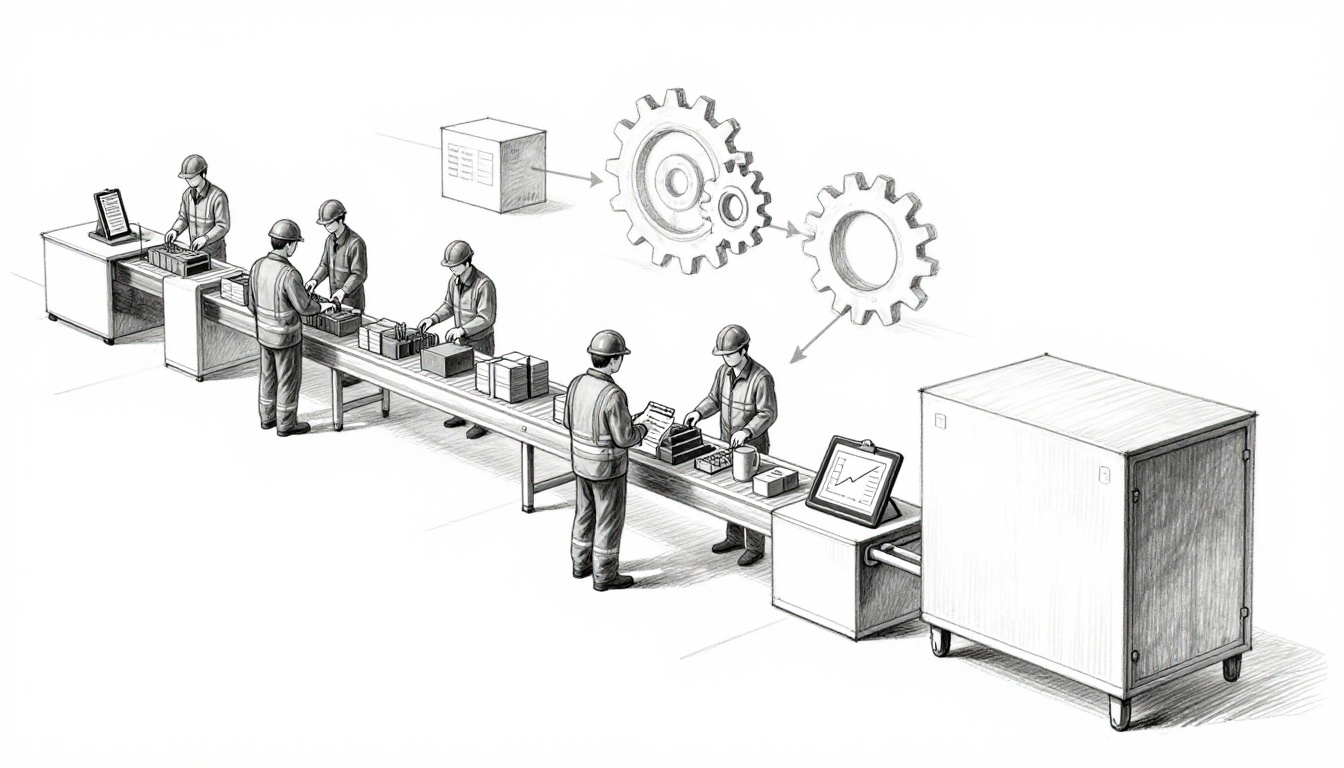
A customer orders once, then repeats only if it feels the same every time. One brand that once impressed people started slipping, and returns climbed fast. The team fixed the “big” issues, but the small ones kept showing up.
Another company took a different path. They built a system for consistent product quality, then treated it like a daily habit, not a yearly project.
In 2026, that shift matters more than ever. Expectations rise with every review, and supply chains change faster. At the same time, more rules cover how products must be made, labeled, and documented. If quality depends on one person’s memory or scattered spreadsheets, the risk grows.
So how do you keep quality steady across shifts, sites, and suppliers? The answer usually comes from three areas working together: a strong quality management foundation, smart tech that finds defects early, and team practices that turn lessons into repeatable work. You’ll also need to match these tools to how you operate, whether you’re running a factory line or delivering services.
Next, build a quality system that captures the right data, shares it quickly, and supports audits without the scramble.
Set Up a Rock-Solid Quality Management Foundation
Consistent product quality starts long before the first customer sees the product. It starts when you define what “good” looks like, then record and control the steps that lead there.
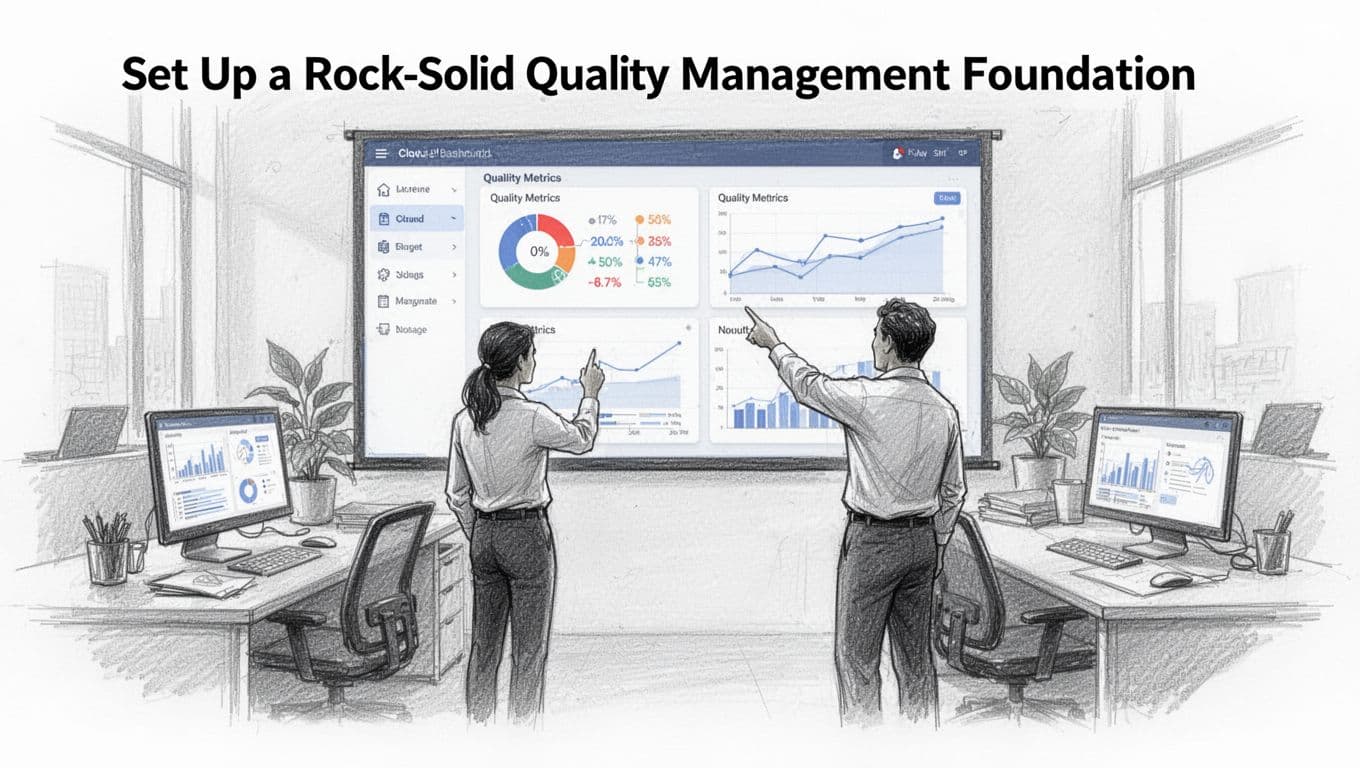
Most teams begin with a QMS (quality management system). The real upgrade in recent years is moving that QMS into the cloud. Instead of paper forms or disconnected spreadsheets, cloud tools act like a central hub for quality data. They pull evidence from tests, inspections, complaints, and supplier checks. Then they help teams follow the same process across locations.
A big benefit is automation. For example, when a measurement fails tolerance, the system can trigger a nonconformance workflow. It can assign tasks, request root-cause notes, and track corrective actions. That means fewer handoffs, fewer lost files, and faster decisions.
You also gain real-time visibility. Instead of waiting for a weekly meeting, quality and operations can see trends as they happen. If one lot starts drifting, you respond while there’s still time to fix the process.
Cloud QMS also helps with compliance. Many platforms support regulated workflows and training records, which makes audits less painful. If you sell into FDA-regulated categories or follow ISO expectations, having audit-ready records in one place reduces last-minute stress. For a clear overview of how cloud QMS works in regulated settings, see Cloud QMS for regulated industries.
Here’s a simple way to picture the change:
- In a paper setup, quality data lives in folders.
- In a cloud QMS, quality data lives in workflows.
A factory can track parts by batch and link test results to each lot. A service firm can log customer complaints, tag root issues, and route fixes to the right team.
Why Cloud QMS Beats Spreadsheets Every Time
Spreadsheets aren’t bad. They’re just limited when the stakes are high.
The problem shows up fast. Someone edits a file. The version changes. The team trusts the wrong copy. Or quality notes sit in email threads, then get lost when someone leaves.
Cloud QMS systems reduce that risk through controlled access, version control, and shared workflows. When your team runs the same templates for inspections, corrective actions, and approvals, results become more consistent.
Cloud QMS also supports faster checks. If your process requires an approval before release, the system can enforce the workflow. In other words, you stop quality from depending on “who remembers.”
Another advantage is how cloud platforms handle data at scale. If you have multiple suppliers, you need a clear way to track certifications, incoming inspections, and performance. When purchasing and quality share the same system, you get fewer surprises.
That matters even more as AI moves from experiments into real use. In 2026, 56% of global manufacturers use AI in operations, up from 18% in 2023. Yet adoption is uneven, and only 20% of teams feel ready for full AI use. Cloud QMS helps close that gap by standardizing the data AI needs.
For more reasons regulated teams move away from on-site tools, read Benefits of a Cloud QMS for regulated industries.
Finally, cloud QMS gives you live dashboards. When a defect rate climbs, you don’t wait. You spot the pattern, then investigate the process drivers behind it. That’s proactive problem solving, without relying on heroic effort.
Consistency comes from repeatable workflows, not repeatable luck.
Weave in ESG and Regulations Without the Hassle
Quality doesn’t live alone anymore. Customers expect proof, and rules often ask for evidence.
In 2026, ESG reporting in the US still leans heavily on state requirements. For example, California’s SB 253 (Climate Corporate Data Accountability Act) requires large companies doing business in California to report Scope 1 and Scope 2 emissions by August 10, 2026. The supply chain part, Scope 3, follows next year. California’s SB 343 also targets truthful eco-claims by setting compliance due October 4, 2026.
Why does this connect to consistent product quality? Because eco-claims, materials sourcing, and process controls are part of trust. If your labeling says one thing and your documentation supports another, quality failures become reputational failures too.
A well-built QMS helps in two ways.
First, it tracks evidence. You can store testing results, supplier docs, training records, and change control history. When you need an audit trail, you don’t scramble.
Second, it supports structured goal tracking. Many cloud QMS platforms let teams link quality activities to ESG-linked requirements. That can include supplier qualification steps, documentation standards, and traceability expectations.
Even if your work is not “medical devices” or “pharma,” you still face documentation demands. ISO frameworks often require controlled procedures. FDA-related industries expect clear records. EU MDR may apply if you sell into the EU. Digital systems make these connections easier.
Here’s the mindset shift: instead of treating compliance as paperwork, treat it as part of the same system that prevents defects. When your evidence is consistent, audits get faster, and teams trust the data more.
Harness AI and Smart Tech to Catch Defects Before They Ship
Once your QMS captures clean data, you’re ready for the fun part. Smart tech helps you spot problems earlier and faster than human checks alone.
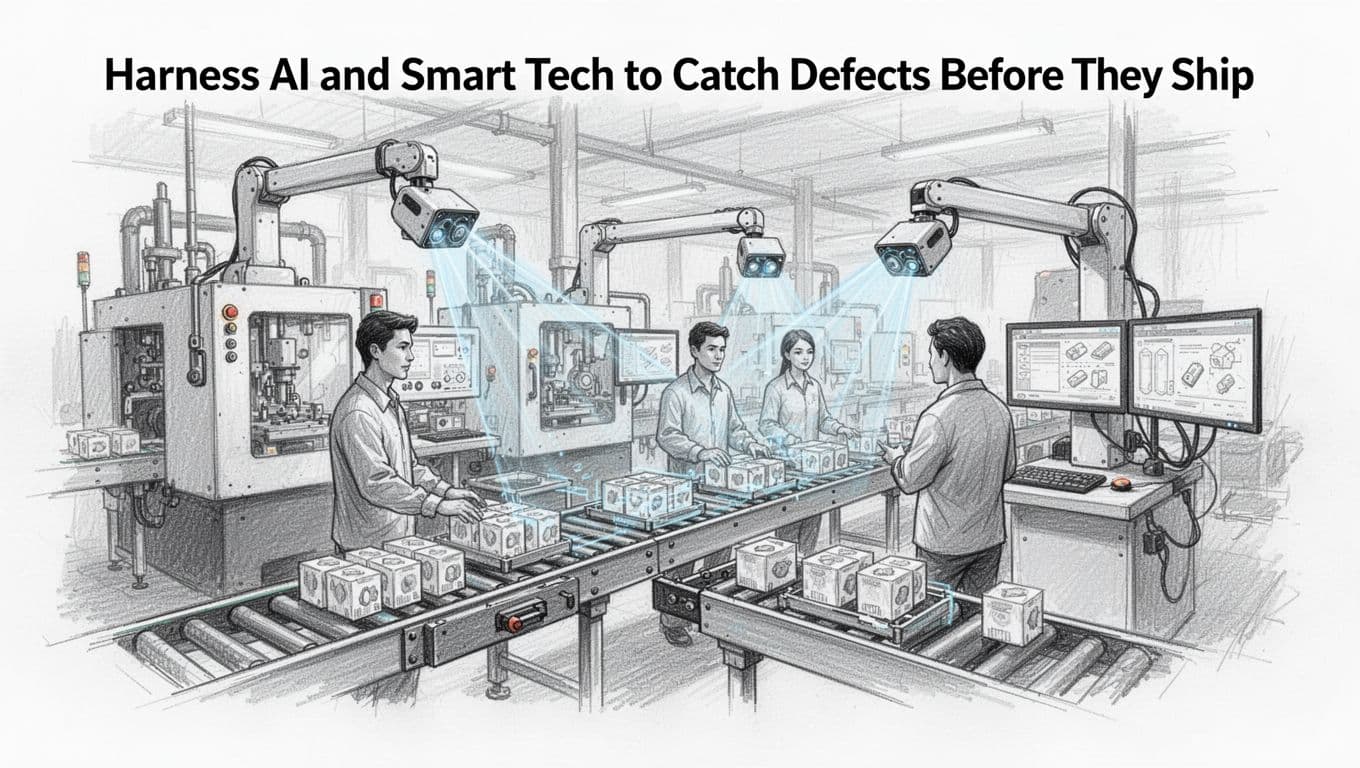
AI can use machine learning to detect patterns in inspection results. It can also predict where defects might appear next, based on past performance. In manufacturing, that often starts with computer vision, plus sensor data from equipment.
In 2026, adoption keeps growing. Again, 56% of global manufacturers use AI in operations, and 98% explore or consider AI-driven automation. The lesson is clear: teams that wait for “perfect readiness” fall behind.
But AI only works well when the data is consistent. That’s why the foundation matters. If you feed AI messy records, you’ll get messy predictions.
AI Checks That Spot Tiny Flaws Instantly
Some defects are obvious. Others are small and easy to miss, especially late in a shift.
AI inspection helps in three common situations.
First, it handles repetitive visual checks at a steady pace. A camera doesn’t get tired. If your defect pattern is consistent, AI can flag anomalies quickly.
Second, AI supports better thresholds. Instead of one fixed “pass or fail,” you can track severity and probability. That helps your team decide when to stop a run or keep producing.
Third, AI improves defect routing. When a system flags an issue, it can link the finding to the exact product step, tool, or lot. Then the QMS triggers the correct investigation workflow.
This is also where predictive analytics adds value. If machine history shows a trend, you can forecast risk. For example, a machine’s vibration pattern might predict when a process will drift. Then you schedule adjustments before parts fail.
Here’s the shift you want: fewer surprises at the end of the line. More fixes while the line still has options.
For a practical view of AI vision in quality control, see AI vision inspection for real-time defect detection.
Digital Twins Let You Test Without Real Risks
Now imagine you could test process changes without risking downtime or scrap.
That’s what digital twins aim to do. A digital twin is a virtual model of a product, process, or system. It updates using real data from the shop floor, so it mirrors what’s happening in physical reality.
Teams use digital twins to watch performance under different conditions. They can test process tweaks, predict bottlenecks, and evaluate quality risk before changes hit production. When you connect a digital twin to your QMS data, you can also compare “planned outcomes” against “actual results.”
This reduces guesswork. Instead of blaming people after defects appear, you can check whether process conditions shifted. Then you adjust the process parameters with less trial and error.
Digital twins also fit well with cyber-physical systems (CPS). In plain terms, a CPS links sensors, software, and machinery. When your data flows into models, your quality system becomes more responsive.
For more on how digital twins influence quality control, read How digital twins influence quality control.
The biggest win is learning speed. When teams can test safely, they improve more often. And when they improve more often, quality stays consistent.
When you treat quality data like a living system, defects become signals, not mysteries.
Empower Your Team with Practices That Stick
Even with tech, your people still matter most.
You can have the best AI cameras, but if teams ignore findings or handle root causes inconsistently, quality will drift. So you need practices that keep improvement going.
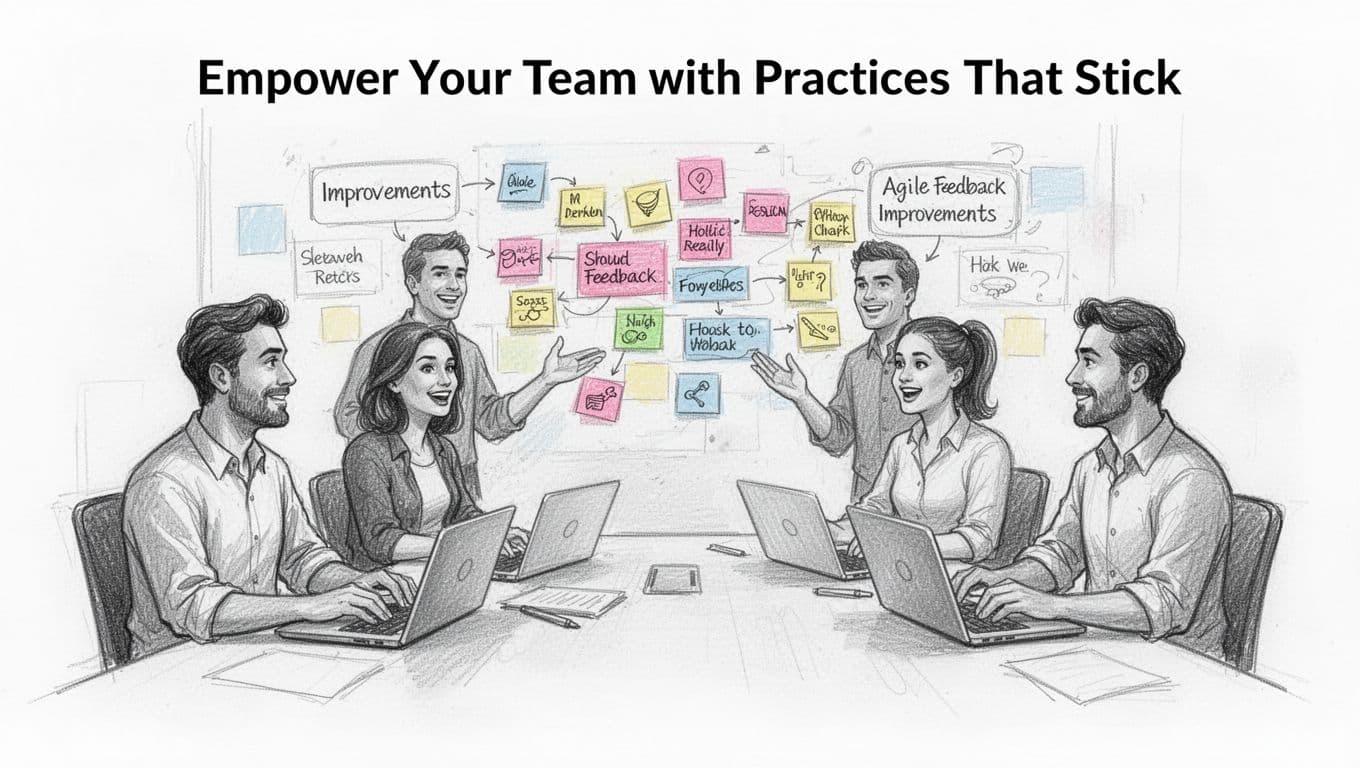
Good teams build feedback loops. They learn from defects, stop repeating the same mistake, and standardize what works. Also, they make sure suppliers play by the same rules.
A common approach blends agile thinking with Lean and continuous improvement.
That means short cycles, clear ownership, and fast root-cause work. Then you turn fixes into updated work instructions, training, and controls.
Agile Sprints and Feedback for Fast Fixes
Agile does not mean only software teams.
For quality, agile-style sprints can help when you need quick learning and shared priorities. Instead of waiting for a monthly review, you run short improvement cycles.
Here’s what it often looks like:
- You pick one quality problem (for example, a recurring defect type).
- You collect data from QMS records and inspection logs.
- You test a change in a small way.
- You measure the outcome.
- You roll out the result if it works.
Because teams focus on one issue at a time, decisions speed up. Also, improvements feel less disruptive. Workers don’t need to relearn everything at once.
Agile also improves communication. Quality, production, purchasing, and maintenance can review the same data. When the whole group sees one picture, you cut blame and shorten investigations.
Kaizen and Lean for Non-Stop Tweaks
Kaizen means continuous improvement through small changes. Lean focuses on removing waste, such as delays, rework, and unnecessary steps.
Together, they help quality stay consistent by reducing process variation.
In practice, teams use Kaizen-style routines to tighten daily work. A defect loop can trigger a short improvement session. Then the team updates the standard and trains everyone.
Lean adds structure. You map where time and effort get wasted. After all, a rushed step can create defects.
Also, don’t ignore supplier monitoring. When you track supplier performance in your QMS, you can spot patterns early. You can then adjust incoming inspections, request corrective actions, or update supplier requirements.
If you want a straightforward explanation of Kaizen methodology, see Kaizen methodology and continuous improvement basics.
When your culture supports small daily fixes, quality becomes part of the job. That’s how consistent product quality survives busy seasons and staffing changes.
Tailor These Strategies for Manufacturing or Services
Not every business should implement the same quality stack.
Manufacturing often needs strong process control, machine monitoring, and inspection automation. Services often depend on customer feedback data, ticket history, and consistent delivery steps.
Here’s a simple way to match strategies:
| Area to manage | Manufacturing focus | Services focus | Typical win |
|---|---|---|---|
| Detect defects early | CPS sensors, AI vision checks, real-time dashboards | Complaint analysis, call notes, ticket tags | Fewer repeat issues |
| Test process changes | Digital twins, virtual trials, parameter testing | Pilot programs, controlled rollouts, service playbooks | Faster learning |
| Drive fixes | Root-cause workflows tied to lots and tools | Root-cause linked to teams and customer journeys | Less rework |
| Standardize work | Updated SOPs, training records, release controls | Updated service standards, QA rubrics, coaching logs | Fewer “varies by rep” cases |
| Supplier input | Incoming checks, supplier scorecards | Vendor quality, onboarding checks, document control | More stable inputs |
Manufacturing teams lean on CPS, digital twins, and defect prediction. Services teams lean on AI feedback patterns and complaint data. Still, the core idea stays the same: keep the data clear, keep the workflow repeatable, and keep improvement cycles running.
Also, fix silos. Quality fails when one group acts on partial information. When purchasing sees risk signals and quality sees customer outcomes, the full story appears.
Conclusion: Consistent Product Quality Comes From One System
The brands that keep customers trust one thing above all: a quality system that stays consistent. A cloud-based QMS gives you a reliable hub for evidence, workflows, and audit-ready records. Then AI and smart tech help your team catch defects sooner, not later.
Finally, improvement routines matter. When agile sprints, Kaizen, and Lean turn lessons into standards, quality stops depending on memory.
If you want to start today, pick one weak spot, connect it to your QMS, and run a short improvement cycle. What’s the first process you’d rather make more stable this month?