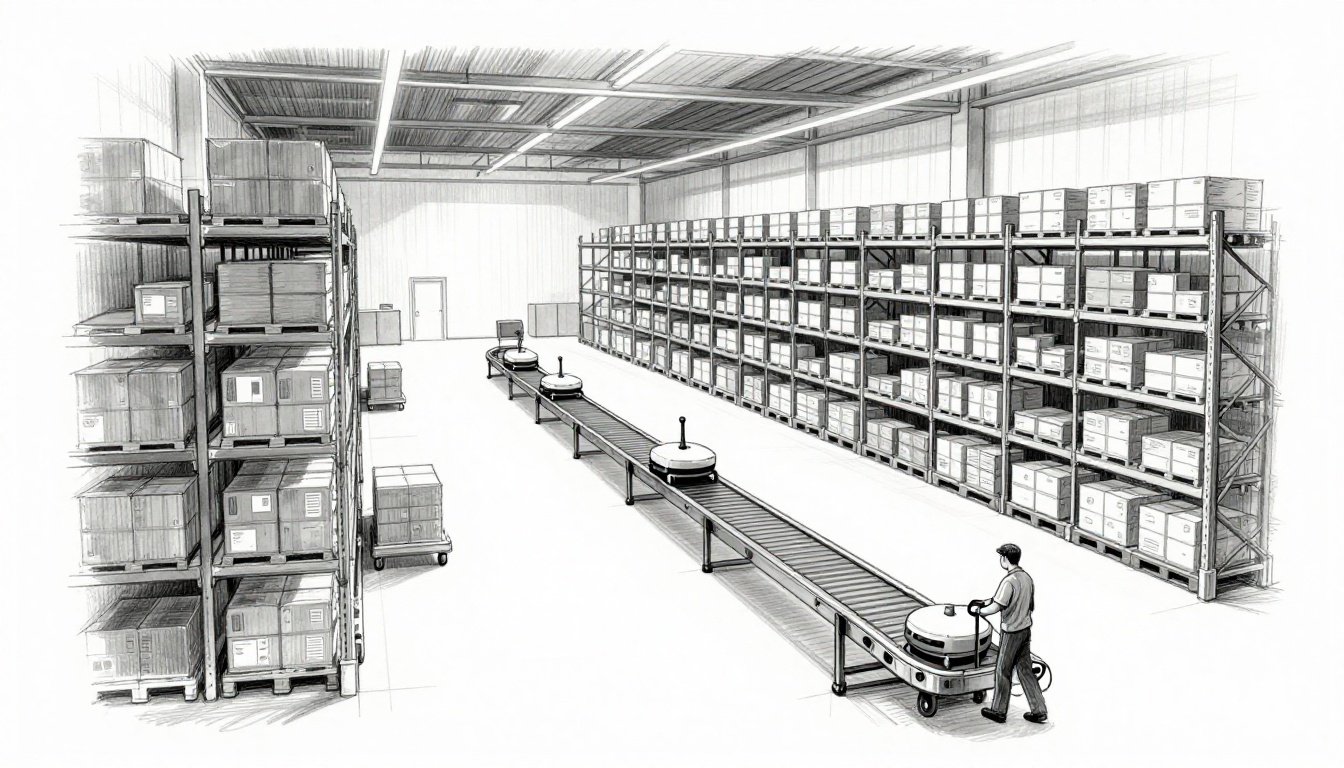
A busy warehouse at night looks like controlled chaos. Boxes move, bins get restocked, and thousands of orders need to ship on time. The difference between “chaos” and “flow” is how warehouses store and organize products.
When storage and organization work together, you lose less time walking, searching, and fixing mistakes. You also protect products better, which cuts damage and shrink. Most importantly, smart warehouse organization methods help you pick faster, pack cleaner, and ship quicker.
So how do you build that kind of system? You’ll see how warehouse layouts guide movement, how warehouse storage systems maximize space, and how zoning and inventory rules prevent mix-ups. Then you’ll get a quick look at warehouse management systems and automation trends for 2026, including how teams keep inventory lean during busy seasons.
Let’s start at the foundation: the layout that decides whether your day feels smooth or stressful.
What Warehouse Layouts Do to Keep Products Flowing Smoothly
Warehouse layouts decide where every action happens. They also decide how much workers walk, how often forklifts cross paths, and how easily inventory moves from receiving to shipping. Put zones in the wrong place and you create backtracking. Put them in the right place and the whole site acts like a well-run kitchen.
A smart layout usually follows a simple promise: inbound goes one way, outbound leaves the other. Receiving sits near the trucks. Shipping sits near the loading docks. Between them, picking and packing zones sit where orders need to be built fast.
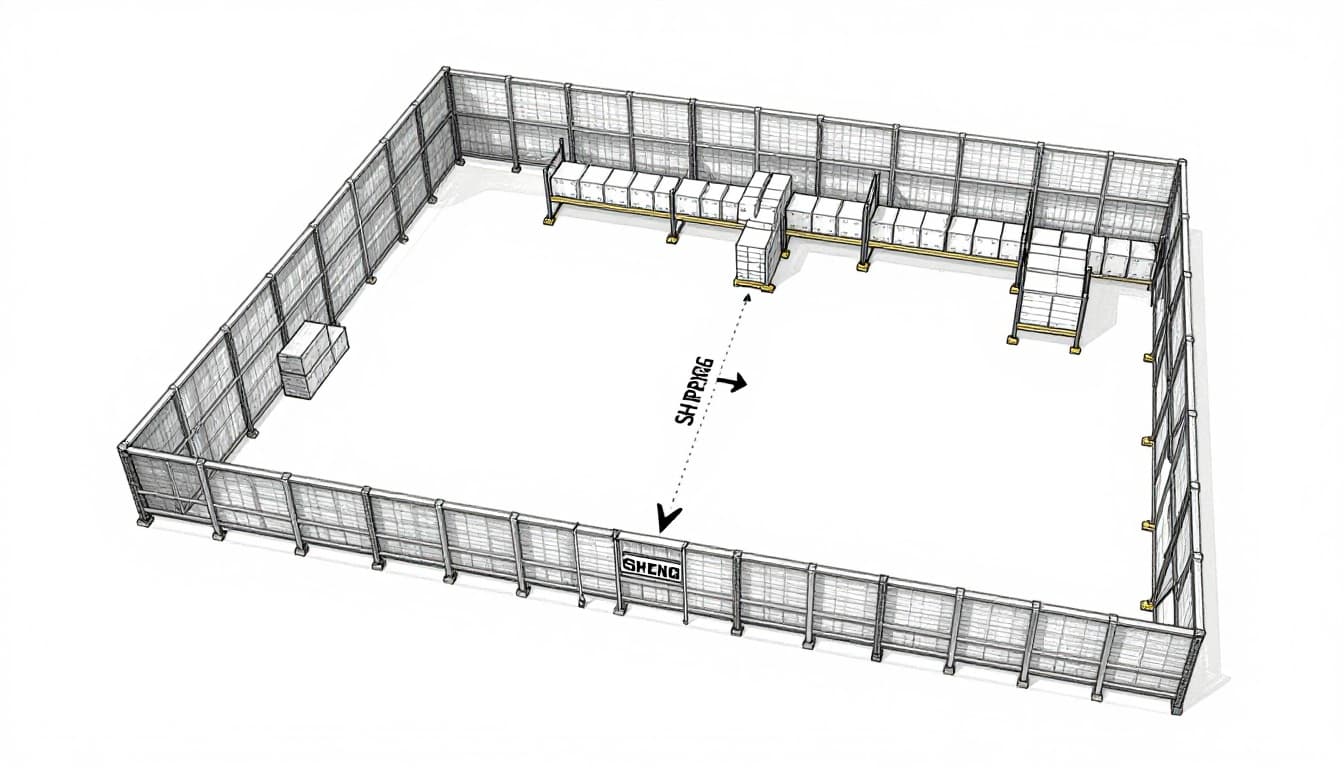
Most warehouses also design around travel time. High-speed picking and packing areas land closer to the products people grab most often. That way, fast movers don’t force long trips.
For a deeper look at layout choices and tradeoffs, see Step-by-Step Guide to Warehouse Layout Design for Maximum Efficiency.
Key Zones That Speed Up Every Step
Think of a warehouse like a restaurant line. You don’t send every dish back to the prep table after it’s plated. You keep steps moving.
A common layout zone set includes:
- Receiving: where pallets and cases arrive and get counted
- High-speed picking: where fast movers live near the pick face
- Packing: where items get matched to orders and staged
- Shipping: where packed orders go to load
- Bulk storage: where slower-moving or overflow inventory waits
When each zone has a clear purpose, workers don’t hunt for parts. They just follow the path. That cuts confusion and improves throughput.
Going Vertical to Fit More Without Expanding
If you only build outward, you pay for more building. Instead, many warehouse layouts use height. Tall racks, mezzanines, and vertical storage systems keep inventory off the floor.
This approach works especially well when you need density. It also pairs well with automation that can move goods without constant forklift travel.
There’s another benefit too: separation. If you place bulk stock higher and keep pick faces low, you reduce clutter at hand level. That makes aisles safer and easier to navigate.
Dynamic Slotting: The Smart Way to Adapt Locations
Product demand changes. Winter sales rise, summer promos fade, and new SKUs appear. If you keep the same locations year-round, your “prime spots” get wasted.
That’s why dynamic slotting matters. Slotting rules shift inventory toward better locations based on velocity, seasonality, or order frequency. In practice, your system can move items closer to picking when they surge, then push them back when demand cools.
The result is simpler: less searching, fewer wrong picks, and smoother flow when volume spikes.
The best layout doesn’t just store inventory. It guides the shortest path to the next step.
Storage Systems That Pack Warehouses Full Efficiently
Layouts control movement. Storage systems control space. Together, they decide how many units fit, how fast access works, and how stable inventory stays.
When teams pick storage systems, they match equipment to product needs. Small parts need shelving and bins. Heavy pallets need racking that handles weight safely. High-volume sites often use automated systems so goods come to workers.
Here’s a quick way to think about it: the right storage method reduces “distance between touch points.” That distance adds up over a shift.
Shelving and Pallet Racking: The Classics Done Right
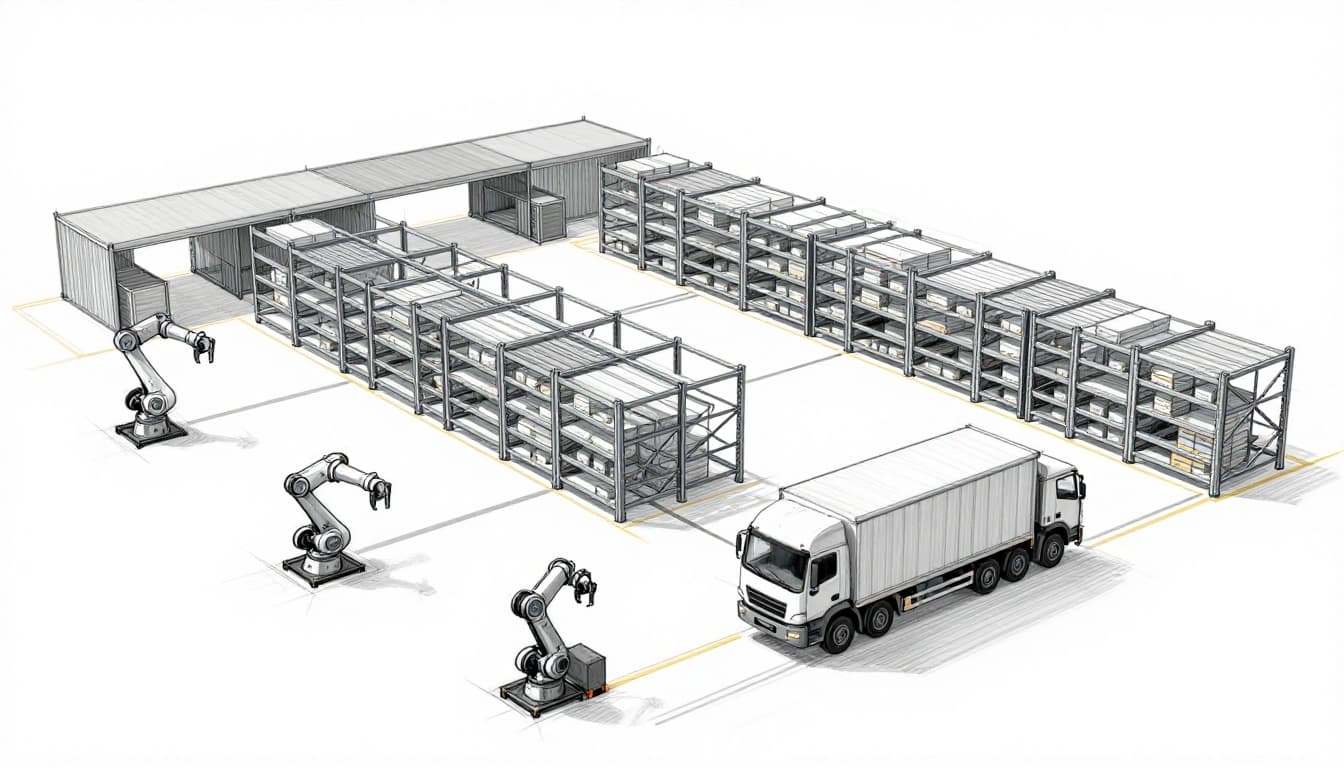
Shelving and pallet racking still dominate because they’re flexible. Adjustable shelving works well for mixed small goods. It lets you group items by size, protect fragile products with the right bins, and keep pick faces organized.
Pallet racking handles bulk quantities. It supports tall stacking so warehouses gain density without expanding floor area. Many modern setups also integrate racking with automation, so robots or shuttles can retrieve pallets more quickly and with fewer errors.
If your warehouse is planning automation, it helps to understand how pallet AS/RS fits. One overview is AS/RS for Pallets – AR Racking.
AS/RS: Robots That Fetch Items Automatically
AS/RS stands for Automated Storage and Retrieval System. In simple terms, it’s a robotic “inventory elevator” that puts items away and brings them back precisely.
Instead of sending workers deep into aisles, AS/RS retrieves goods and delivers them to a pick face or station. That reduces mispicks from rushed travel. It also helps keep inventory accuracy high because each move gets logged.
This matters most in dense warehouses where floor space is tight. It also fits well when you run many SKUs and need fast, repeatable retrieval.
Carousels and Auto-Traying for Special Needs
Not every warehouse can justify full pallet automation. Some operations handle tons of cases in tight spaces. Others store items that need protection and quick access.
That’s where carousels and auto-traying help. Carousels rotate shelves to bring the right bin into view. Auto-traying systems can bring trays straight to a station, reducing manual handling.
In other words, these tools shorten the time from “order says pick” to “order is packed.”
Clever Ways Warehouses Organize Products to Avoid Chaos
Storage systems give you space. Organization rules keep that space from turning into clutter. Without clear methods, you end up with misplaced inventory, slow picks, and repeat counts.
Most warehouses rely on rules that reflect how products move. Some items need to leave first. Some items need the closest access. Some items must stay protected from air or moisture.
So instead of “put it anywhere,” you assign locations with purpose. That’s where product organization methods earn their keep.
A practical guide to warehouse organization decisions is A Practical Guide to Organize a Warehouse for Peak Efficiency. It focuses on repeatable setup patterns rather than one-time fixes.
ABC Analysis: Putting Top Items Front and Center
ABC analysis sorts SKUs by importance. Typically, A items are small in count but high in value or fast movement. B items fall in the middle. C items are usually slower and take more space.
A common example looks like this:
| Category | Approx. SKU share | What it means for placement |
|---|---|---|
| A | 20% | Prime pick locations, fastest access |
| B | 30% | Secondary zones, moderate access |
| C | 50% | Bulk or back-of-warehouse storage |
When warehouses place A items near picking, workers stop wandering. At the same time, you avoid over-investing prime space on C items.
FIFO and LIFO: Rotating Stock the Smart Way
Not every product follows the same “leave first” rule.
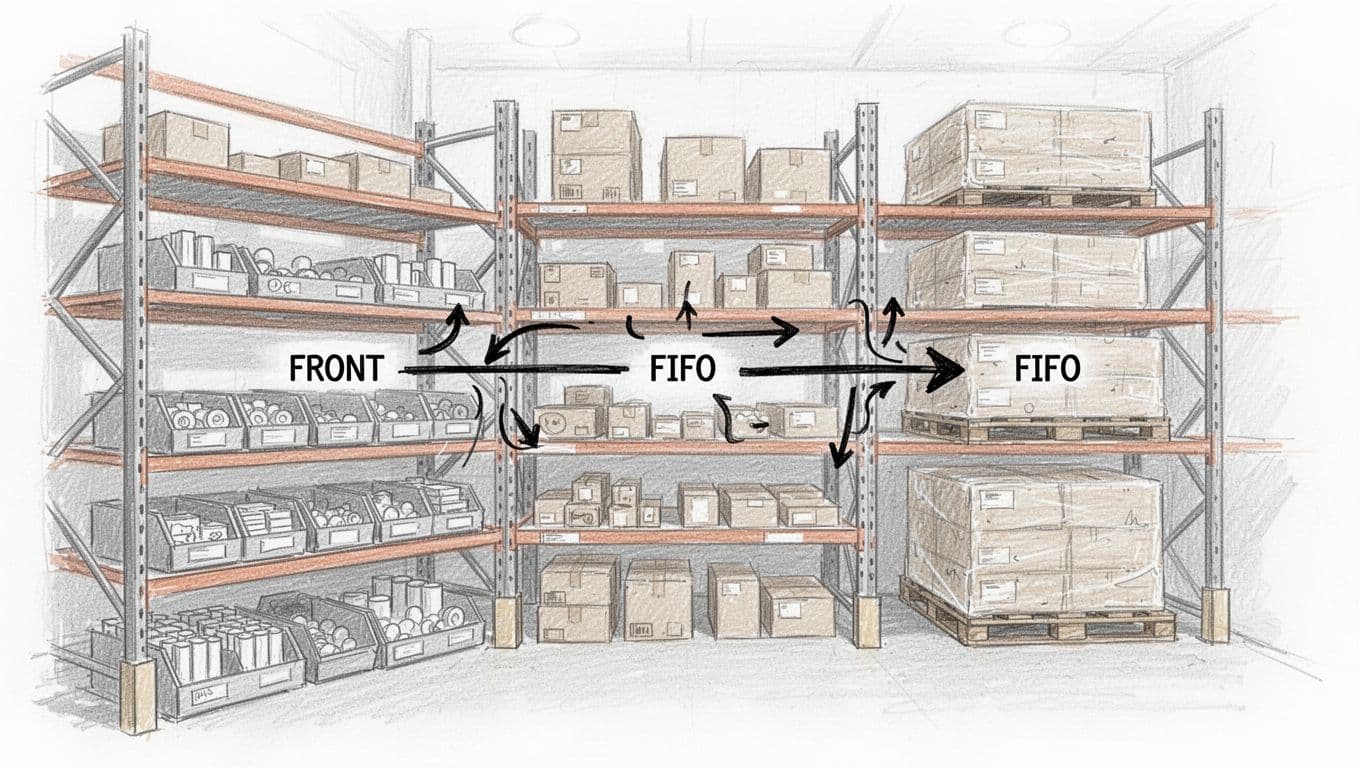
FIFO (First-In, First-Out) suits items where age matters, like food and many medical supplies. The goal is simple: the oldest inventory ships first. Software can track dates and lot numbers to support FIFO.
LIFO (Last-In, First-Out) can fit certain non-perishable items where you don’t care about aging. Some warehouses use LIFO for specific demand patterns or when restock order matches consumption.
The key is consistency. One random override can break the entire inventory story.
Zoning and Containers: Grouping for Quick Picks
Zoning is where organization becomes physical. You group products by type, size, speed, or handling needs. Fast movers go where picks happen most often. Bulks stay farther back. Fragile items get dedicated zones and safer storage.
Containers matter, too. If an item needs protection, you use the right bin or box. For powders, you might pick airtight options. For small parts, you might use bins with dividers so mixes don’t happen.
When containers match product needs, picking gets faster and damage drops.
Organization isn’t about looking tidy. It’s about making the next pick obvious.
Tech That Makes Warehouse Magic Happen in 2026
Warehouse tools get smarter every year. But the biggest change in 2026 is how teams connect systems. Instead of managing storage, picking, and shipping separately, modern warehouses coordinate them.
That’s why warehouse management systems (WMS) matter. WMS tracks inventory moves in real time, assigns locations, and routes orders to the right workstations.
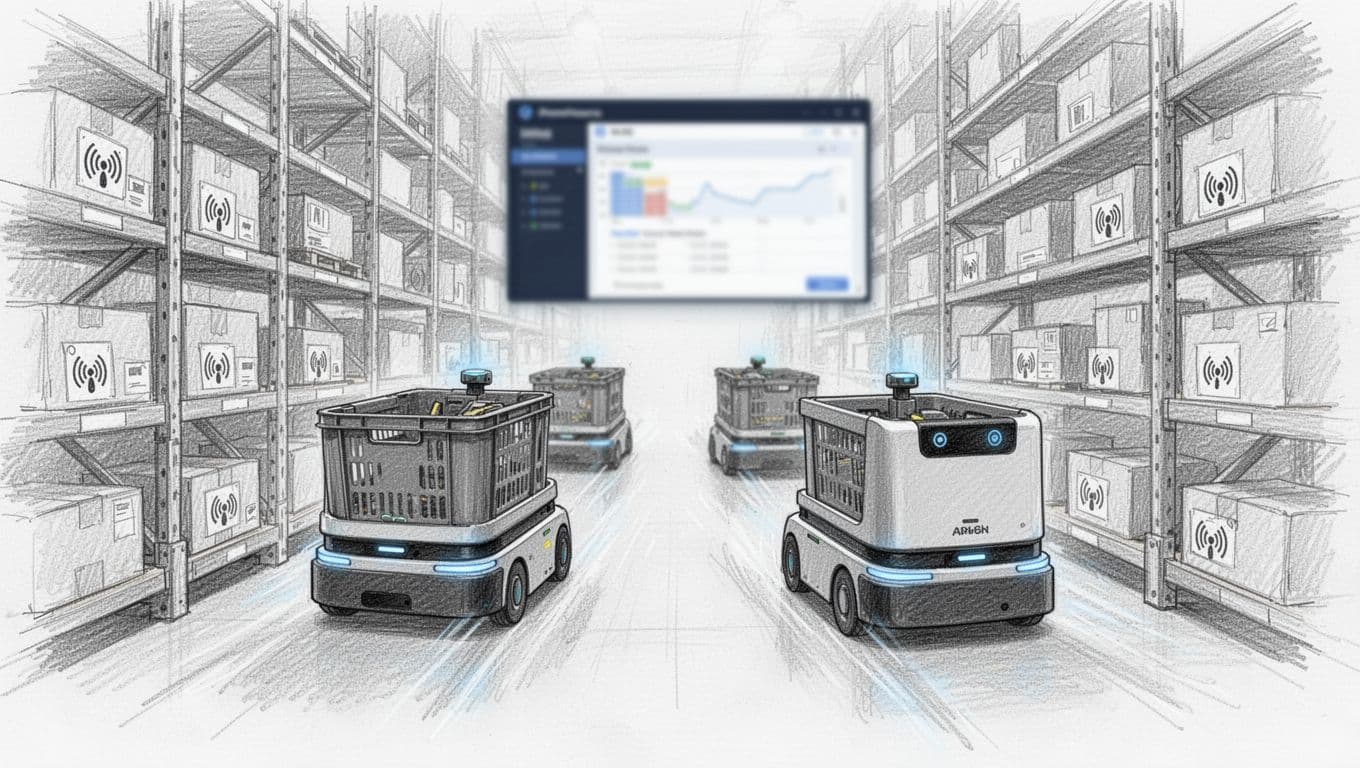
Then come the “eyes” and “muscles.” RFID helps capture inventory events quickly. Automation handles repetitive motion and heavy lifting.
In fact, reports suggest many warehouses use at least some automation, and leaders see major gains in accuracy and labor efficiency. One realtime industry summary notes savings of 25% to 30% on labor costs and fulfillment improvements paired with high accuracy.
WMS and RFID: The Brains and Eyes of Operations
WMS orchestrates daily execution. It can direct where items should go, what to pick next, and how to stage orders for packing.
RFID takes tracking further. With RFID, systems can scan inventory quickly as goods move through the flow. When RFID integrates with WMS, teams reduce slow manual counts and cut “unknown location” issues.
In a busy warehouse, that matters. A single misread can turn into a missed order.
For a practical view of WMS capabilities, check 15 Top Warehouse Management System Features for 2026 – AtomIQ.
Robots and Automation Taking Over Heavy Lifting
Automation doesn’t replace all work. It shifts the hard parts.
Autonomous mobile robots (AMRs) and AGVs move totes or bins between zones. They keep forklifts busy and reduce walking time. High-throughput sites also use sorters and conveyors for fast order building.
Robots can also help with end-to-end flow. Some systems fetch inventory, bring it to stations, and support “goods-to-person” picking. That reduces travel and helps reduce mispicks caused by rushed movement.
In realtime summaries, robot adoption is rising fast, with millions of warehouse robots already operating worldwide. Even when you don’t go fully automated, smart automation usually pays off in safer, steadier output.
Cross-Docking and JIT: Keeping Inventory Lean
Not all inventory needs deep storage.
Cross-docking lets shipments move through the warehouse with minimal or no storage time. Goods move from inbound trailers to outbound trucks more quickly. That cuts handling and can speed delivery.
JIT (Just-in-Time) keeps inventory levels lean. Instead of overstocking, the warehouse orders or receives only what’s needed for near-term demand. This pairs well with dynamic slotting and real-time tracking, since you need confidence in stock visibility.
When inventory stays lean, you also reduce storage strain. Fewer stale items means less waste and fewer “why is this here?” moments.
Best Practices and Trends Shaping Tomorrow’s Warehouses
Warehouses don’t get better once and then stay perfect. They improve by repeating what works and adjusting what doesn’t.
A few warehouse best practices show up again and again. They focus on minimizing travel, matching storage to demand, and training people on the system, not just the task.
At the same time, warehouse trends 2026 point toward more software control, more modular automation, and more focus on speed from inbound to outbound. Automation is growing, especially for e-commerce where order volume can change by the hour.
Habits That Keep Warehouses Running at Peak
Strong warehouses build habits, not exceptions. For example:
- Separate fast and slow movers: put high-velocity SKUs near picking
- Use vertical space fully: tall storage helps you scale without extra floor
- Train on location logic: workers follow slots, not memory
- Run inventory checks on a schedule: fewer surprises later
- Protect product while moving: better packaging reduces damage
Even small fixes reduce rework. Over time, that turns into measurable savings.
2026 Trends: Software, Robots, and E-Commerce Focus
In 2026, more warehouses focus on connected workflows. The goal is simple: orders should drive decisions, not spreadsheets.
Many teams also move toward flexible automation. Instead of building one rigid system, they add modules as demand grows. That can include forklift-free setups, faster inbound sorting, and more robot-heavy work for peak seasons.
Finally, e-commerce keeps pressure high. Returns, small parcels, and frequent updates demand tight control. So WMS, automation, and scanning become part of daily rhythm, not special projects.
If your warehouse feels slow during peaks, these trends offer a path forward. They help you handle more orders with less stress.
Conclusion
How warehouses store and organize products comes down to one theme: flow. Good warehouse layouts reduce wasted movement. The right storage systems increase space and access speed. And smart product organization methods prevent mix-ups that cost time.
Then tech ties it together. WMS helps you track inventory and route work correctly. RFID and automation reduce manual steps and keep accuracy high. As a result, warehouses can ship faster without burning out their teams.
If you work in logistics, take a moment to look at your current storage and location rules. Where do workers walk the most? Which items sit too far from picking? Those two answers often point to the biggest wins.
What’s one change you’ve made that improved your picking or packing speed?