Last month, a friend of mine ordered a cheap gadget online from overseas. The tracking showed it was moving fast, then it suddenly stalled at customs, and the bill landed after delivery. She learned the hard way that customs duties shipping costs can change the total price, even when the item feels “small.”
Customs duties are taxes governments charge on goods when they cross borders. They help protect local businesses, but they also add extra charges and can slow down your package. In the U.S., the rules changed in 2026, including a 10% import surcharge on most goods coming in. On top of that, many shipments still face extra country-specific rates, especially for some items from China and Hong Kong.
So what happens to your order when customs takes a closer look? First, duties add to what you pay (sometimes at checkout, sometimes after the fact). Next, the paperwork gets reviewed, classified, and cleared, which can add days, especially for e-commerce shipments that start out as smaller parcels.
Ready to ship smarter? Keep reading to see what customs duties are, how they turn into higher costs and longer delivery times, what changed recently for online orders, and a few practical ways you can reduce surprise fees before you place the order.
What Are Customs Duties and Tariffs in Shipping?
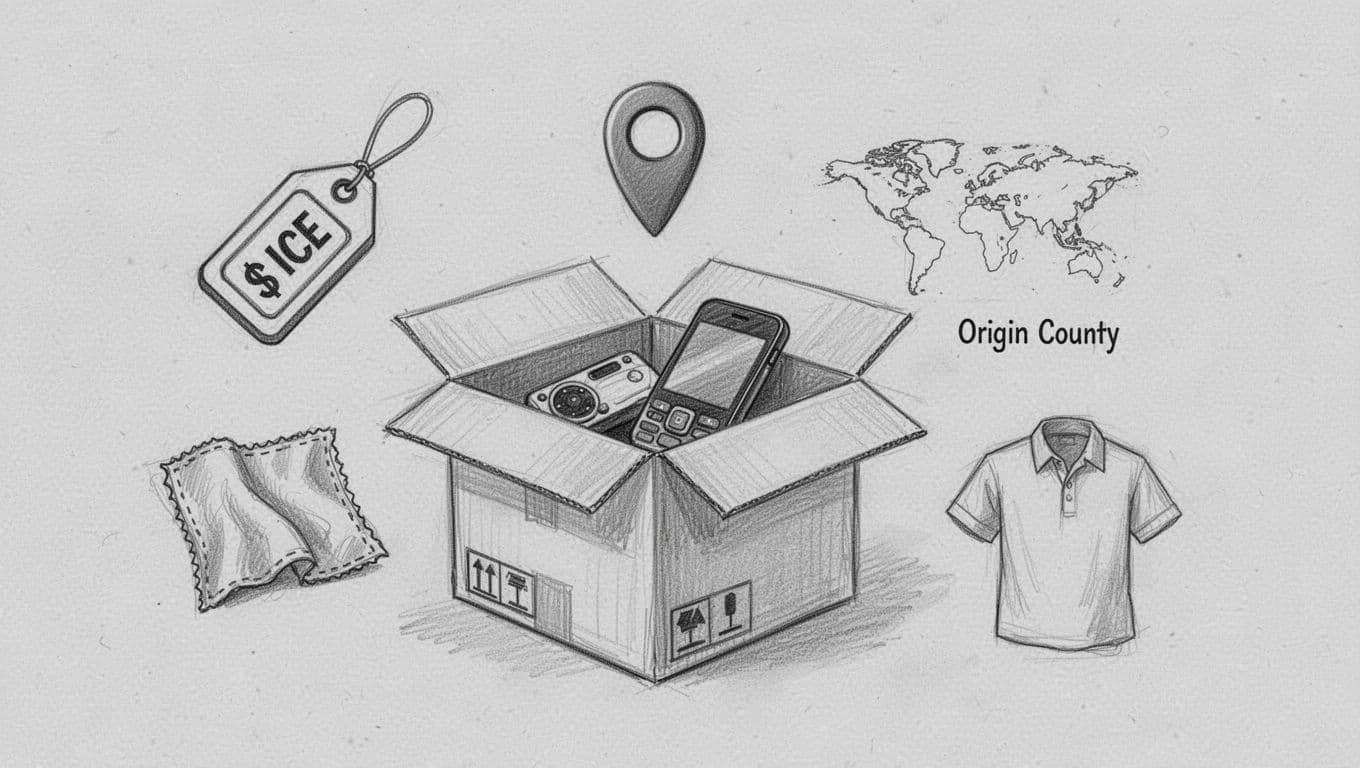
Customs duties and tariffs are fees governments charge when goods enter a country. In the U.S., these charges depend on three big things: the value of what you’re importing, where it comes from, and what type of product it is. Think of it like a toll booth at the border. If your vehicle is worth more, comes from a higher-risk route, or falls under a more restricted category, the toll goes up.
In simple terms, a shipment like clothes, shoes, or a small electronics gadget can trigger customs charges because it crosses an international boundary. For many imports in 2026, buyers may also see higher baseline costs due to newer tariff requirements that apply to a large share of goods.
Duties vs tariffs (and how HTS codes set the rate)
Both terms sound similar, but they work slightly differently.
| Charge type | What it does | Common reason it applies |
|---|---|---|
| Customs duty | A tax on imported goods | Based on product category and import rules |
| Tariff | A type of duty | Often used to protect local markets or respond to trade issues |
Next, the system needs a way to identify products. That’s where HTS codes (Harmonized Tariff Schedule codes) come in. An HTS code is like a product ID for customs. It tells customs which rules apply and helps determine the rate for duties and tariffs.
Because customs duties and tariffs are import charges, people often mix them up with sales tax. Sales tax usually gets collected after a purchase inside a state, at checkout or delivery. Customs duties and tariffs get assessed at the border, when the shipment enters the U.S.
If you want to understand how tariff rates can be calculated and structured, U.S. Customs and Border Protection shares guidance on tariff breakdowns in its resources, like the Unstacking Certain Tariffs Chart.
How these fees hit international shipping by air, sea, or mail
Customs charges can apply whether your goods arrive by air freight, ocean freight, or postal mail. The carrier might collect some fees upfront, or customs may assess them after the shipment lands. Either way, the importer or recipient typically sees the impact as part of “landed cost.”
Here’s how it usually plays out:
- Air and express shipments: Faster transit, but customs still reviews the paperwork and can demand duties and brokerage fees.
- Sea freight: Often handled through formal entry, so duties and tariffs show up as part of the clearance costs.
- Postal mail (including small parcels): In 2026, many packages can no longer count on the old “small package” shortcut, so charges are more common.
Also, the product type matters. For example, electronics and textiles often fall into categories with specific HTS-based rules. If you’re shipping from a country with added measures, rates can stack, which increases the chance you pay more than expected.
For a useful starting point on classification, see CBP’s Tariff Classification guidance.
How Customs Duties Drive Up Your Shipping Costs
Customs duties can turn a “good deal” into a surprise bill. They add to your landed cost because customs charges usually land on top of the item price and shipping cost.
At a high level, duties work like this: customs looks up your item, finds the duty rate, then taxes the import value. In 2026, many shipments also face an extra temporary 10% import surcharge, which can raise the total even when your product seems inexpensive.
Step-by-Step: Calculating Your Duty Fees
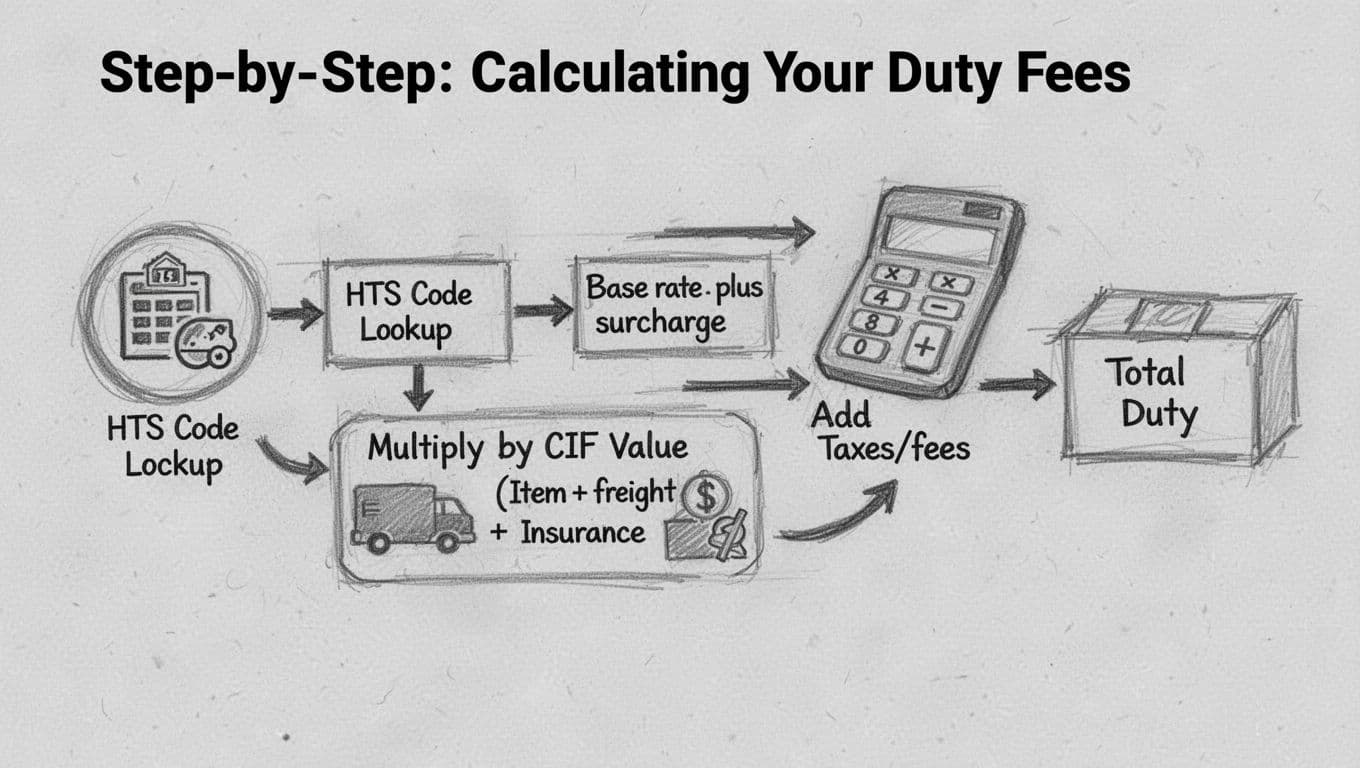
When you want to estimate duties, treat it like math with a few moving parts. Most of the time, the key is getting the correct HTS code and using the right “import value” for the calculation.
Here’s a practical step-by-step method you can follow:
- Find the right HTS code
- Start with a free lookup tool like the USITC HTS search page.
- Then confirm the code matches the product description (material, use, and form matter).
- Find the duty rate and any extras
- Your HTS code points to a base duty rate (often an ad valorem percentage).
- Also check for surcharges tied to 2026 rules, plus any product-specific duties.
- Compute the customs “value” using CIF
- Customs often uses CIF value, which means cost plus insurance plus freight.
- A common formula looks like:
- CIF value = item price + freight + insurance
- Then duties are calculated as:
- Duty = duty rate × CIF value
- Add taxes and carrier/broker fees
- Depending on shipment type and importer setup, you may also see entry fees or sales tax-related charges, plus brokerage charges.
To see how the numbers move, use a simple example:
- Item price: $100
- Freight + insurance (combined): $20
- CIF value = $120
- Base duty rate: 10%
- Base duty = 0.10 × $120 = $12
Now add the 2026 temporary 10% import surcharge (where it applies):
- Surcharge = 10% × $120 = $12
- Total duties (rough estimate) = $12 + $12 = $24
So even on a $100 item, your landed cost can jump fast once you apply CIF value and layered charges.
A few real-life factors change the outcome:
- Product value: Higher CIF value means a bigger duty bill.
- Origin (country of manufacture): Goods from certain countries can face different rates. For example, Section 301 measures on China can keep duties higher for many categories.
- Product type via HTS: The HTS rate is not “whatever fits.” A classification mismatch can change the rate a lot.
- Shipping method: Express vs. postal vs. freight affects how value is presented and whether duties get assessed smoothly or collected later.
One more point people miss: who pays. Usually the importer of record pays the duties and fees. In many online purchases, the carrier or seller covers the cost first, then you pay at checkout or on delivery, depending on the billing model.
Finally, protect yourself with accurate valuation. Under-declaring can trigger penalties, delays, and reassessments. If you see unclear invoices, wrong freight charges, or missing insurance amounts, that’s your warning to fix it before customs does.
For official context on how CBP ties duty rates to the HTS system, review CBP guidance on determining duty rates.
Factors That Make Duties Higher or Lower
Customs duties aren’t one single flat fee. Instead, they shift based on how customs classifies and values the goods.
Start with value, because ad valorem duties act like a percent-based toll. If customs uses a higher CIF value (item plus freight plus insurance), your duty rises even if the product stays the same.
Next comes origin. Country of origin can change which rate applies, and it can also affect whether trade agreements provide relief. For instance, qualifying goods under trade programs may reduce or eliminate certain duties, but you must meet the rules and provide the right paperwork.
Then there’s product type through the HTS code. Two items that look similar to shoppers can land in different HTS categories. As a result, one shipment might face a modest rate, while another gets a much higher one.
Also watch de minimis rules, especially for low-value shipments. In 2026, the U.S. continues tightening access to duty-free treatment for small parcels. That means fewer “low-value” orders escape charges, and more shipments require full customs processing.
Finally, e-commerce shipment handling has changed. When de minimis relief is limited, customs receives more complete declarations, and that increases the chance that duties and the 2026 surcharge are assessed correctly (and sometimes more often).
To ground it with a scenario, imagine two parcels of the same size and weight. If the one from a country with higher applicable measures gets classified to a rate like 25%, while the other fits a lower rate category, your duty difference can dwarf the shipping cost itself.
As a quick mental model, think of customs duties like a thermostat. The duty rate sets the temperature, and CIF value is how much heat you feed into the system. Origin, HTS classification, and small-parcel rules decide the settings. {“generateImage”:{“sectionTitle”:”Why Customs Holds Up Your Shipments and Causes Delays”,”imageIntent”:”Illustrate customs inspection steps (value/origin/compliance checks) that can pause a shipment at a port or airport.” ,”prompt”:”hand-drawn graphite sketch style, customs inspection scene at a border warehouse, shipping box on a table with three check marks shown as simple icons for value, origin, and compliance, background shows a port gate and a shipping container, clean white paper background, light shading, no readable text, no logos, no watermarks”} },”getRelevantLinks”:null}## Why Customs Holds Up Your Shipments and Causes Delays
When your tracking stops moving, it usually isn’t because your package “got lost.” It’s often stuck in the customs inspection window, where officials confirm what you’re importing, whether the charges look right, and whether the shipment meets the rules.
Think of customs like a busy airport security line. Even when most travelers pass quickly, every once in a while, someone gets pulled aside. Your shipment can be next.
The inspection process: value, origin, and compliance checks
Customs teams run several checks before they let a shipment move to delivery. First, they confirm value. That means they review the invoice or sales receipt and also look at shipping and insurance amounts.
Next comes origin. Customs verifies where the goods were made. If the origin looks inconsistent with the paperwork, the shipment may wait while they reconcile details.
Then they check product and compliance. Common examples include:
- Correct product description for the category
- Required permits or standards for certain items
- Matching labels, materials, and intended use
Even small paperwork issues can trigger extra review. A missing invoice page or a vague description like “accessory” can slow things down.
Why delays happen at ports and airports (and why they can be long)
A customs hold doesn’t always mean someone found a serious problem. Sometimes it’s just the workload. Ports and air hubs get heavy volumes, so inspections queue up.
Also, errors can force rework. If the importer of record listed the wrong HTS code, customs may pause the shipment to correct it. Similarly, if the declared value seems low or doesn’t line up with typical pricing, the shipment may need a second look.
In 2026, low-value e-commerce scrutiny has increased in practice for many lanes. That means more parcels get full checks instead of quick processing. The result can be longer pauses for online orders, even when the item is inexpensive.
Here’s what commonly adds days:
| Delay trigger | What it causes |
|---|---|
| Paperwork mismatch | More time spent correcting entries |
| Random audit risk | Shipment moves into a slower review queue |
| Higher-risk product category | Extra compliance review before release |
| Value questions | Recalculation or request for proof |
What this means for businesses and consumers
For consumers, the impact feels personal. You see “held by customs,” then you wait longer than expected. Worse, you may still get hit with extra duties, taxes, or brokerage fees after delivery, depending on the billing setup.
For businesses, delays can ripple outward. Inventory sits longer in the wrong place, and customer orders get pushed back. That leads to cancellations, refund requests, and angry emails.
If you want to reduce surprises later, it helps to prepare for customs up front. You can’t control how long inspection takes, but you can reduce the odds of a hold triggered by avoidable issues.
2026 Changes Shaking Up Global Shipping Rules
In 2026, customs rules feel like they tightened their grip at the same time. As a result, your shipping quote might look “fine” at checkout, then land-cost math changes mid-route. For cross-border e-commerce, that shift hits fast, because small changes in duty rules affect even small packages.
Below is what’s changing across the U.S., EU, and China-related imports, and why it can mean higher costs or longer waits.
US-Specific Rules and Their Shipping Ripple Effects
The U.S. brought multiple moves together in 2026, and they stack in a way shoppers notice. First, there is a temporary 10% import surcharge that runs Feb 24 through Jul 24, 2026 (on most goods). Then, a big friction point landed for online orders: the end of de minimis for low-value postal e-commerce from China. If you used to see duty-free, budget-friendly China shipments, that safety net has narrowed.
At the same time, Section 301 and Section 232 pressures still matter. Section 301 tariffs on many China-made goods keep costs high, while Section 232 remains in place for steel, aluminum, and related categories. Even if the 10% surcharge does not stack with every other tariff program, the overall landed cost often still rises because duties and compliance checks keep moving together.
Here’s the key practical effect: low-value packages get hit hardest now. They used to pass through with fewer duty hurdles, especially via postal lanes. Now they face more formal processing, more chances for paperwork review, and more situations where the recipient ends up paying at delivery.
If you sell or ship cross-border, plan like customs is less forgiving. Think of it like driving on a road where speed bumps got closer together. Your vehicle still moves, but you slow down more often.
The biggest surprise for many buyers is timing, not just the bill. Duties can show up at delivery because customs clearance has to happen before final release.
Global Shifts for E-Commerce Sellers
E-commerce rules are tightening beyond the U.S., and sellers feel it in three places: paperwork, duty handling, and delivery speed.
First, cross-border sellers face stricter documentation expectations. If invoices look incomplete, descriptions feel vague, or the declared value seems off, customs holds become more likely. Second, duty-free “loopholes” tied to low-value treatment have shrunk. That forces more shipments into normal duty and VAT logic.
Third, carriers matter more. When you use prepay options through services like UPS or FedEx, the shipment often moves with clearer billing up front. That does not eliminate duties, but it can reduce “bill later” moments and keep the clearance path smoother.
EU changes add another cost layer for low-value imports. Starting July 1, 2026, the EU adds a €3 fee on small packages under €150, intended to apply even when duty-free treatment previously helped cheap parcels move. The European Commission describes this as a new approach for low-value e-commerce packages, aiming to level the playing field for sellers outside the EU (EU introduces customs duties on low-value e-commerce packages).
China-related imports still face Section 301 rates in 2026, and new investigations can add pressure later in the year. At the same time, sellers are reacting by choosing production and shipping routes that reduce tariff risk, which supports nearshoring trends.
To see how the impact can look side by side for an e-commerce store, use this quick comparison:
| Region / origin factor (2026) | What changes | Likely cost impact | Likely delay impact |
|---|---|---|---|
| U.S. imports (most goods) | 10% temporary import surcharge (Feb 24 to Jul 24) | Higher landed cost for many orders | More review time during surcharge window |
| U.S. postal e-com from China | End of de minimis for low-value postal shipments | Fewer duty-free budget parcels | More formal clearance steps |
| EU low-value e-commerce | €3 fee on packages under €150 | More charges on cheap shipments | More duty processing load |
| China-made goods (broadly) | Section 301 stays, with ongoing probes | Higher tariffs on many categories | More friction if paperwork or values draw review |
If you sell internationally in 2026, the takeaway is simple: you can’t manage customs by hope anymore. Instead, you manage it with accurate product classification, clean invoices, and smart billing options before the box leaves your warehouse.
Pro Tips to Cut Customs Costs and Avoid Delays
Customs is where small mistakes turn into big bills and long waits. If you handle duties like you handle shipping labels, you will save money. And if you treat paperwork like a checklist, you will reduce holds.
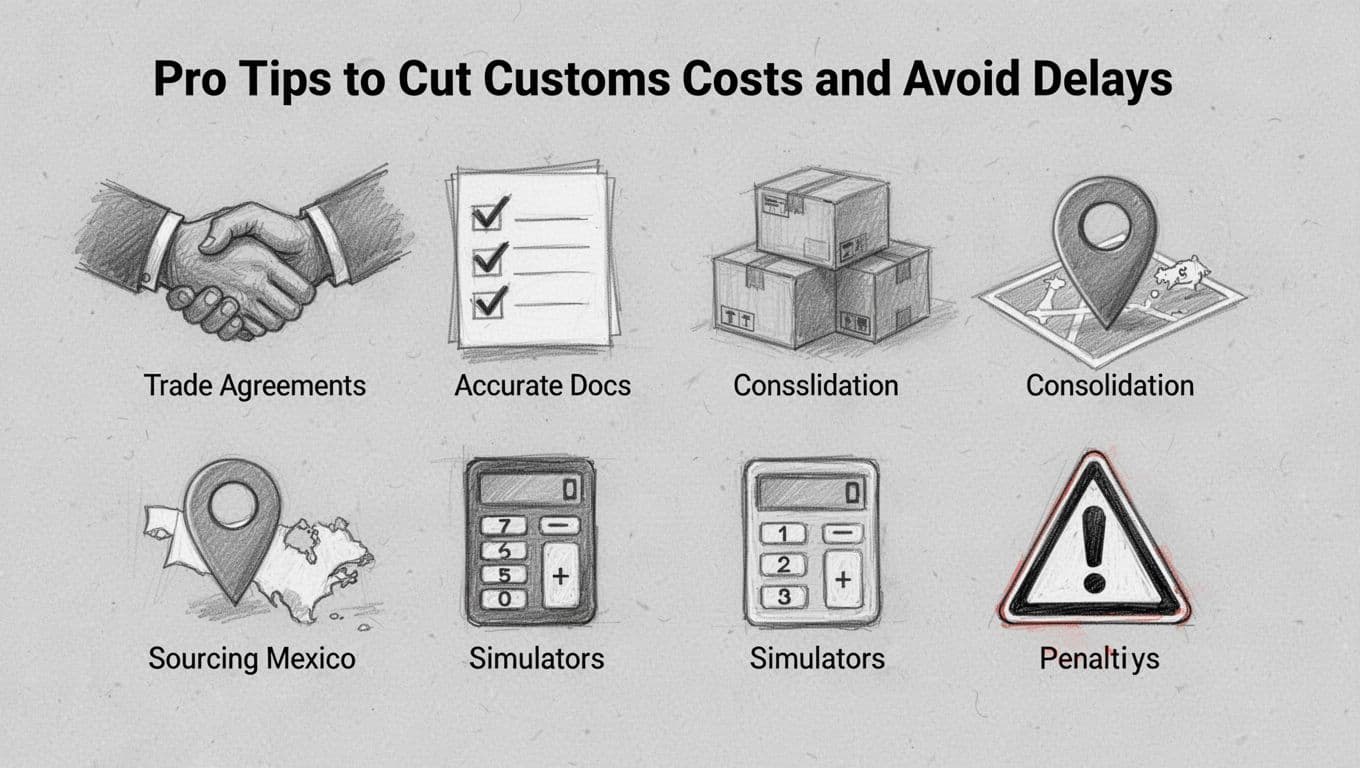
Use FTAs and USMCA correctly (not “close enough”)
Free Trade Agreements can cut duties fast, but only if you qualify. USMCA can mean 0% duty when your goods meet the rules of origin and you keep the right proof.
Treat USMCA like showing a ticket at the door. You can’t just say you have one, you need to present it when asked. For a practical look at how qualification works, see USMCA tariff exemption qualification.
Quick moves that help:
- Match origin to your supply chain (not a guess).
- Keep a certificate of origin and supplier paperwork ready.
- Confirm each SKU, not just the product line.
Also, do not assume “made in Mexico” automatically means USMCA. The origin rules can get specific.
Nail HTS codes, customs value, and paperwork every time
Wrong classification is one of the fastest ways to pay more than you should. So is bad valuation, like inflating freight or including costs that don’t belong in the customs value.
Here’s the simple mindset: customs needs an accurate “story” for the box. It starts with the right HTS code, then moves to the invoice details, and then to the declared value.
Use these pro habits:
- Audit HTS codes at launch, after supplier changes, and when product specs shift.
- Keep invoices consistent (same description, same quantities, same unit price).
- Use a strong broker who does more than file forms.
If you want a baseline for duty rate determination and classification context, start with CBP’s Determining Duty Rates. If you’re troubleshooting your own HTS path, also check CBP’s Harmonized Tariff Schedule help.
Reduce delays with better shipping choices and smarter ordering
Delays often begin before the shipment reaches the border. That means your prep matters, especially for e-commerce.
Do this before you ship:
- Consolidate shipments when it makes sense. Fewer entries can mean fewer chances for rework.
- Bundle over thresholds carefully. If small parcels trigger more scrutiny, consolidating can lower risk. Just stay honest with quantities and values.
- Source lower-tariff options when it fits your product. Mexico often plays well for US buyers under USMCA.
- Use express carriers for e-commerce when you need more predictable clearance. They usually handle brokerage and data flow better than slow postal lanes.
Also, simulator tools are your pre-flight check. Model duties before you send inventory, so you don’t guess at landed cost.
For delay-reduction ideas, review avoid U.S. customs delays before shipping.
Finally, a hard rule: don’t try to “fix” the numbers. Under-declaring value or misclassifying goods can lead to penalties, seizures, and account problems.
Conclusion
Customs and duties affect shipping more than most people expect, because they change your landed cost and they can add clearance time. As the 2026 updates show, higher duties, tighter low-value rules, and extra reviews mean the bill can arrive at checkout or even after delivery. Still, you can reduce the hit by planning early, since correct classification and clean paperwork help customs move faster.
The strongest takeaway is simple: when duties rise, your total cost rises with them, and timing can shift too. That’s why good prep matters, especially if you ship small parcels or buy online across borders. If you want fewer surprises, review your HTS code, confirm your customs value, and pick the billing option that matches how you want duties paid.
Before your next order or shipment, use a duty calculator (or the method in your workflow) so you can estimate landed cost before the box ships. Then share what you’re seeing in the comments, where it gets held, and what fee shows up last.
Also, subscribe for shipping updates so you don’t miss changes that can hit your next delivery. What’s the biggest duty surprise you’ve had, the cost or the delay? Ship confidently across borders.