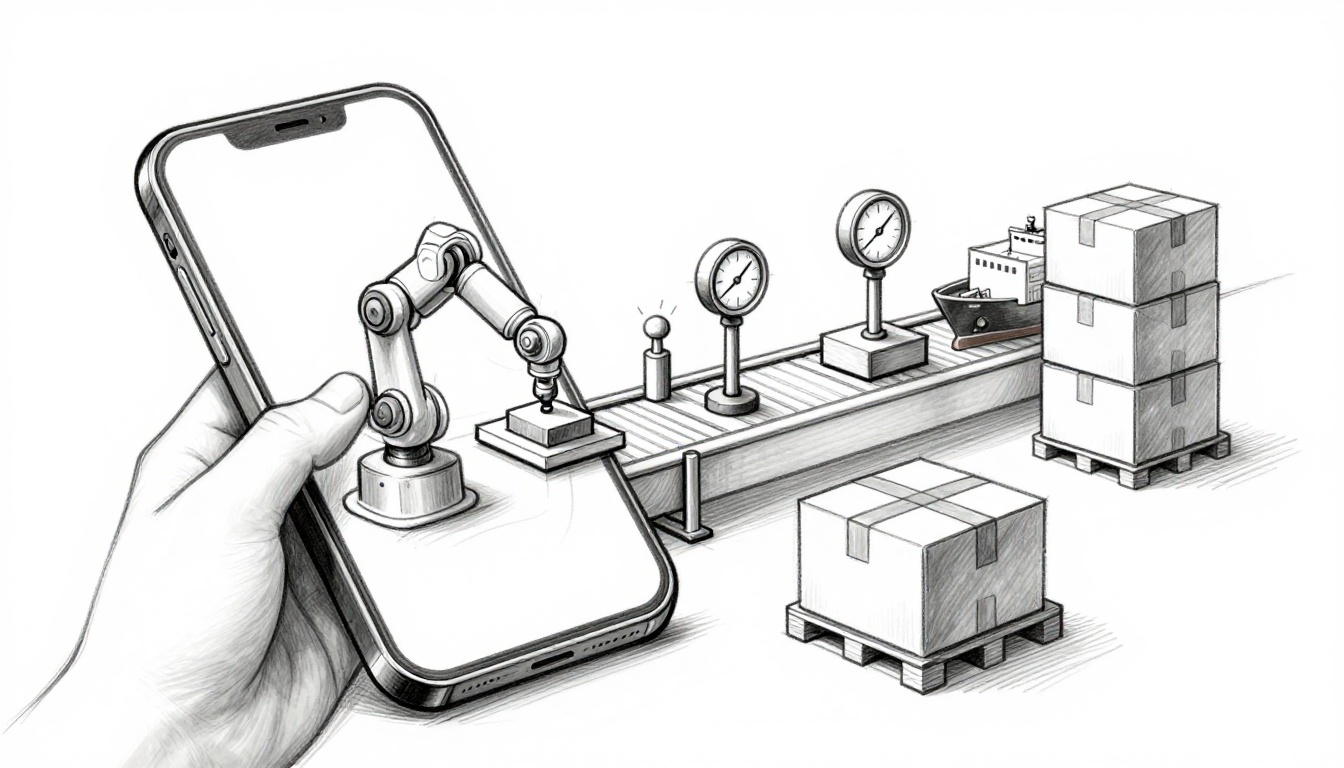
A smartphone involves over 1,000 steps from idea to store shelf, with parts coming from dozens of countries and teams across the globe. That’s what products manufactured at scale looks like in plain terms, making huge numbers of identical items quickly and at a cost that makes sense.
If you’ve ever wondered why some batches are consistent and others aren’t, the answer comes down to control at each stage, from materials and machines to testing and packaging. You’ll also see how automation, quality checks, and supply chain planning work together to keep output steady even when schedules get tight.
Ready to peek inside a real factory?
The Step-by-Step Journey from Design to Delivery
This journey has a clear path. First you build an idea, then you prove it, then you make it at scale, and finally you ship it without surprises. Each step reduces risk, because mistakes caught early cost far less than fixes after thousands ship out.
Crafting the Perfect Design and Prototype
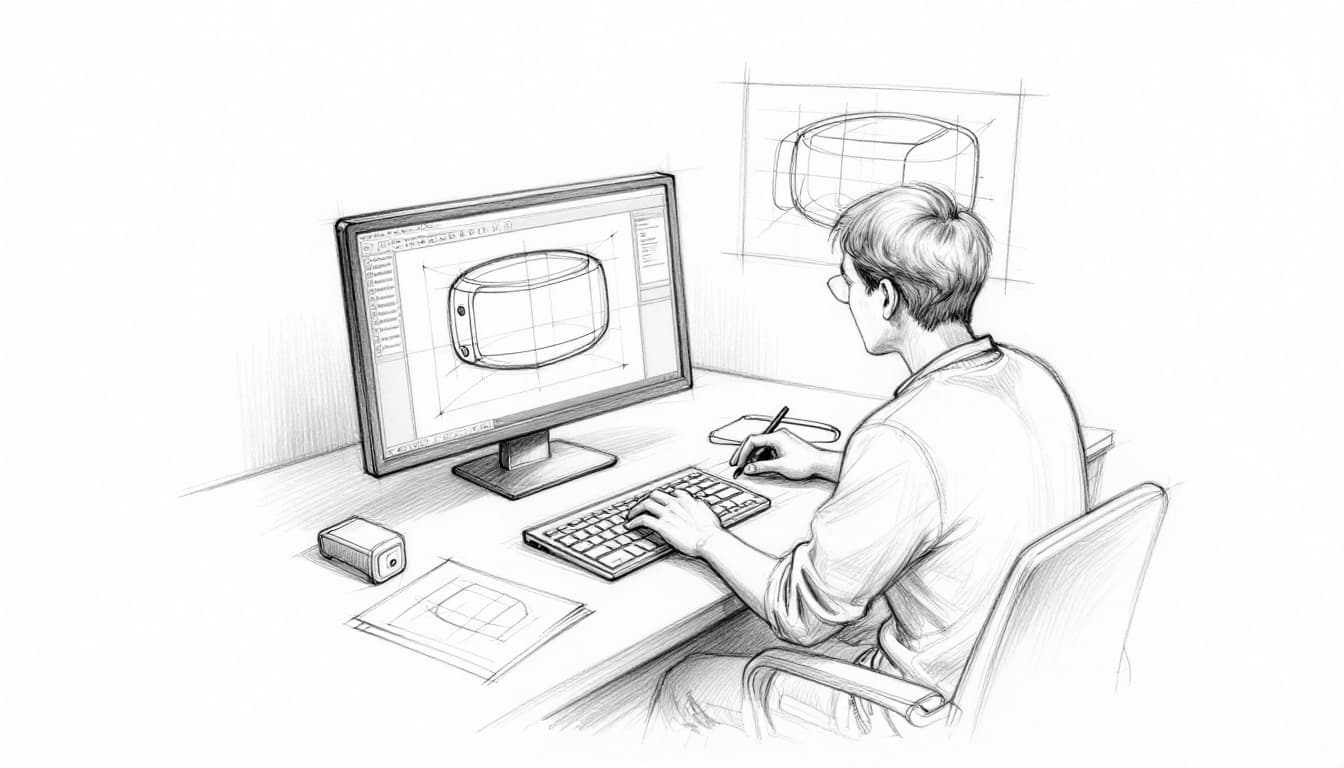
Design starts with blueprints and 3D software. Teams map the shape, fit, and function, then they turn those files into a physical prototype fast. Next, they test it in the real world. If something rubs, bends wrong, or looks off, they fix it right away. It’s like sketching a cake before baking it.
For quick tests, many teams use 3D printing because they can go from file to part in days. That means more tryouts, fewer delays, and smoother changes before tooling locks in. For background on why rapid prototyping matters, see benefits of 3D-printed prototypes.
Sourcing Materials Without the Headaches
Once the prototype works, you need the real stuff: plastics, metals, electronics, and coatings. This part is all about finding suppliers who can hit the same specs every time. It also means planning lead times early, so parts arrive before production ramps up.
Many companies reduce headaches with nearshoring, which brings key suppliers closer to the factory. When shipping times shrink, schedules hold better. As a result, factories waste less time waiting, and buyers get more predictable delivery dates.
Here’s the supply chain basics idea in plain terms: if one key ingredient is late, the whole “recipe” slows down. You want a steady flow, not surprises. When materials arrive on time, the line stays busy.
Mass Production on Assembly Lines
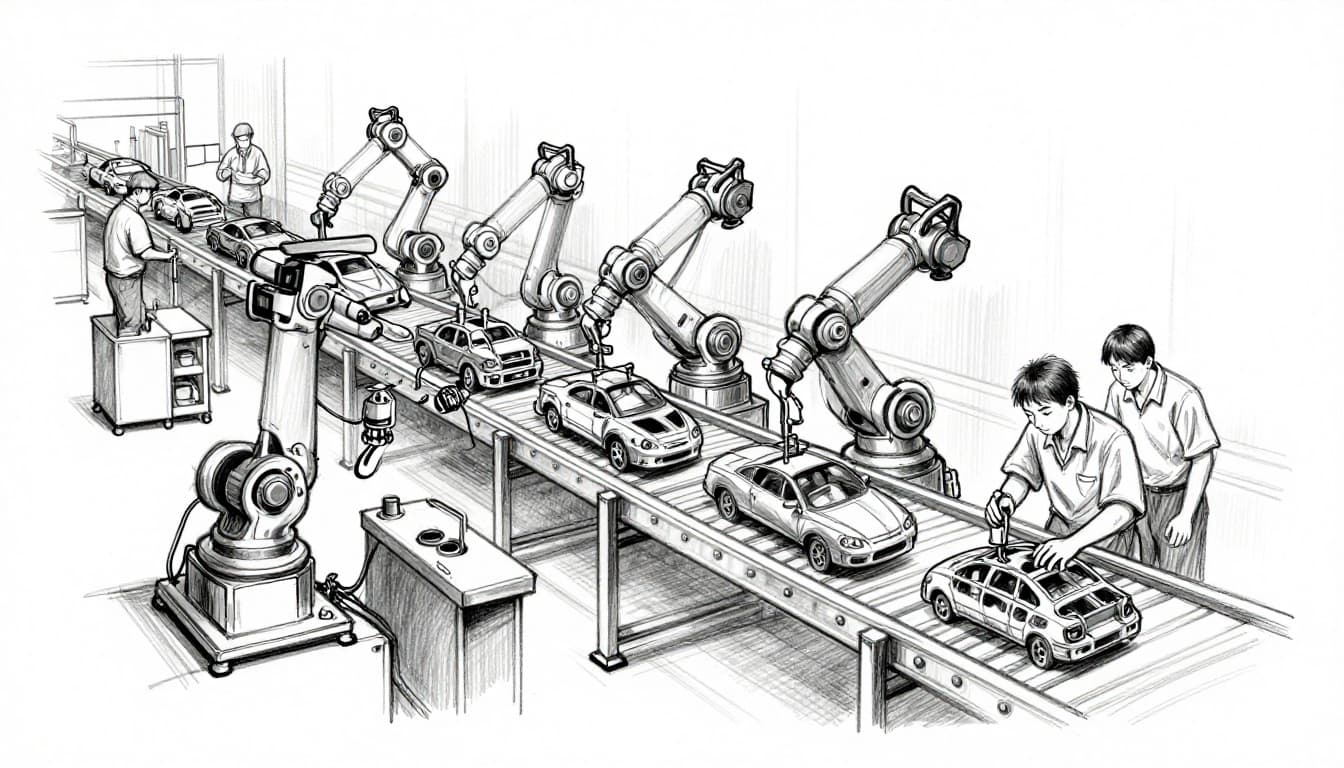
Now the design becomes a repeatable process. Factories set up machines and assembly lines so each step happens the same way, unit after unit. Robots handle the repeats, while workers manage setup, safety, and variations.
Think of it like a kitchen relay race. One person does prep, then hands off to the next station. The baton moves fast because each station has a job. Cars parts and other products often zip along belts, getting assembled in a set order.
This step gives you the real payoff: scale. Millions can be made quickly, with cost per unit dropping because the process runs in a tight loop.
Quality Checks and Getting Products Out the Door
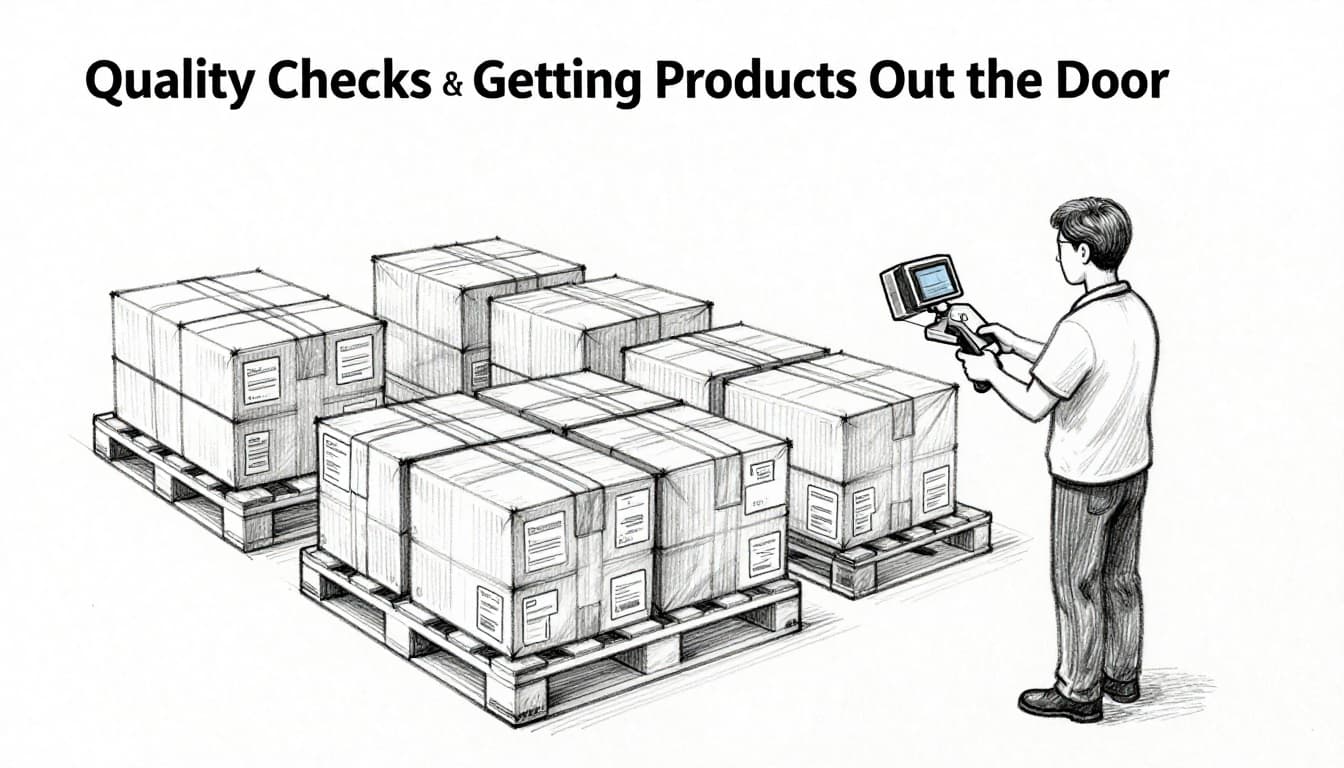
Before anything ships, quality checks verify the product meets spec. AI-enabled inspection can catch defects at line speed by comparing items to expected patterns. Meanwhile, packaging teams protect the product, label it correctly, and prep it for transport.
Then tracking kicks in. Digital records show where each shipment goes and when it should arrive. If something looks off, teams can trace the batch faster and reduce returns.
The benefit is simple: fewer bad units reach customers, and more orders arrive on time. Happy customers mean fewer complaints, fewer refunds, and less rework.
Tech Making Factories Smarter and Faster
Smart factories don’t just run equipment. They also watch it, predict it, and fix it before it turns into downtime. Think of it like adding a super-smart boss to every production line. It keeps an eye on every machine, checks the plan, then speaks up the moment something drifts.
That shift comes from three big tools: robotics for repetition, sensors and AI for real-time visibility, and agentic AI that takes action based on what it sees.
Robots and Automation Taking Over Repetitive Tasks
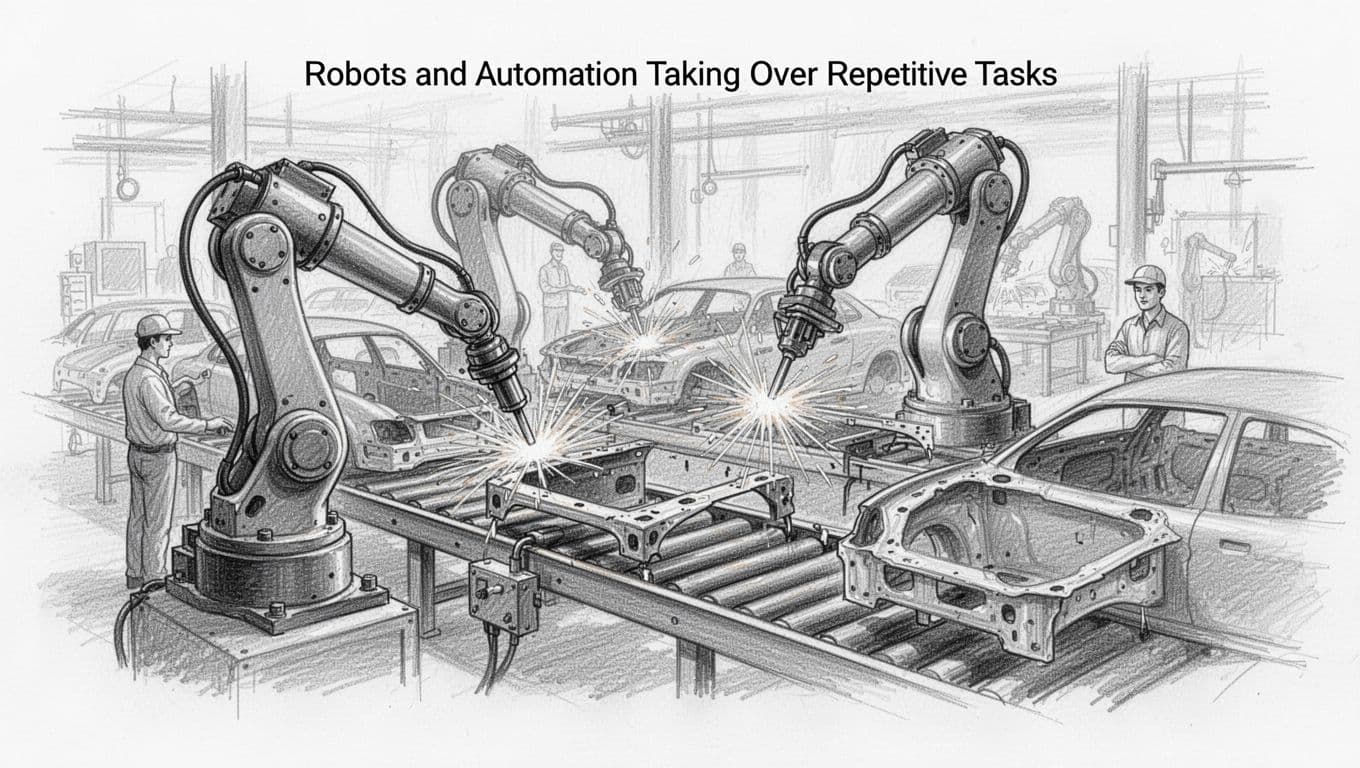
Robots handle the jobs that wear people out, not the ones that need judgment. They weld, cut, place parts, and move items with steady speed. Because they don’t get tired, they keep output consistent shift after shift.
When a robot runs tasks like automated metal cutting, the process gets tighter. You also reduce scrap, since the cut stays within the same tolerances every time. In turn, you often need less buffer inventory, because the line hits targets more reliably.
Safety improves too. Instead of having people in close proximity to hot metal or sharp tooling, you can fence off the danger zone and let robots do the risky work. Meanwhile, workers focus on setup, material loading, and quality checks where human eyes still matter.
Here’s what automation typically changes on the floor:
- Lower rework because welds and cuts follow the same pattern every run
- Less variation in fit and finish, since movements don’t “drift” over time
- More stable schedules, because the bottlenecks show up sooner and repeat less often
If you want real-world examples, see welding robots applications. For a wider look at robotics cases across industries, examples of industrial robots shows how companies apply automation beyond one task.
AI Turning Factories into Smart Hubs
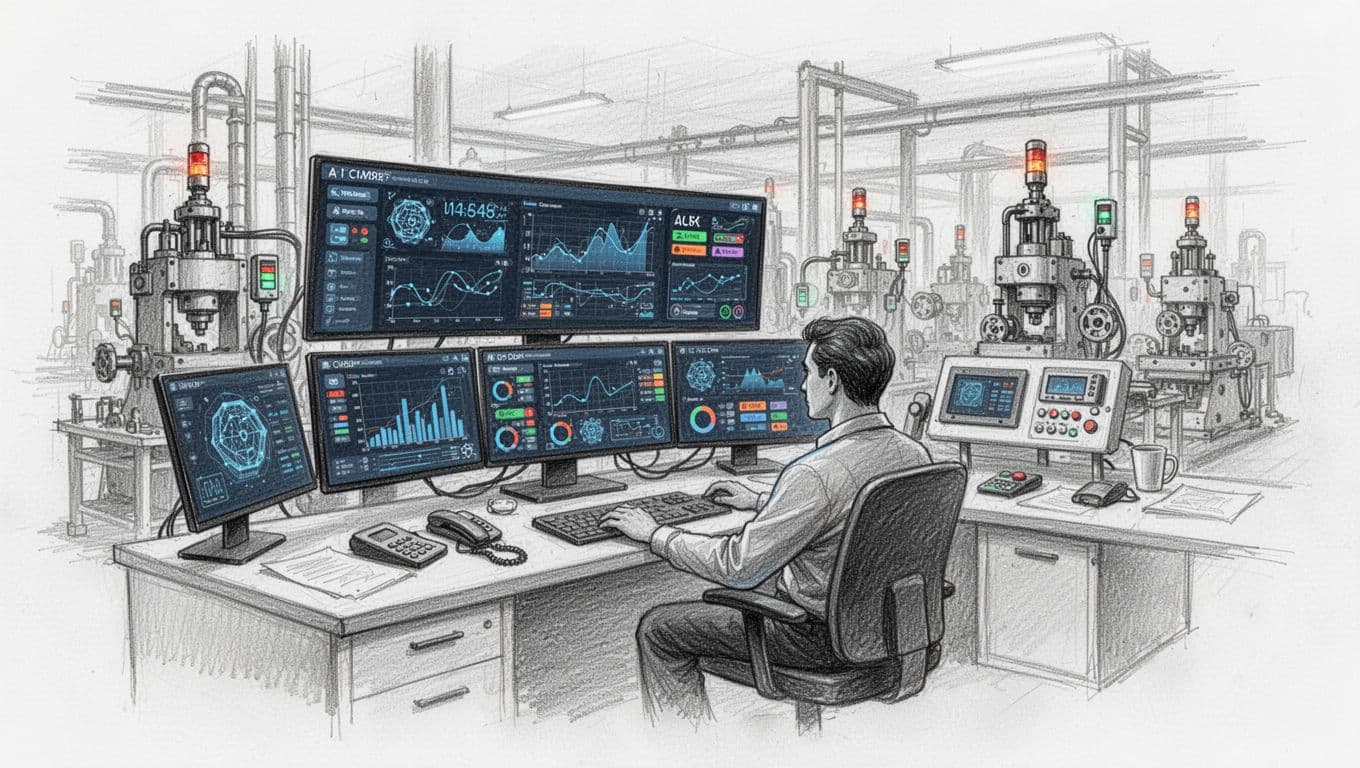
AI starts where traditional systems stop. Many plants track what happened, then report it later. Smart hubs do more, they predict what will happen next, then adjust plans in real time.
Picture the shop floor as a living body. Sensors report heartbeat signals from machines, and AI reads the patterns. When a tool starts to drift, temperature rises, or vibration changes, AI can flag the risk early. After that, scheduling tweaks happen before the line stalls.
This is where agentic AI helps. Agentic AI doesn’t just send alerts. It can also take actions within set rules, like pausing a batch, rerouting work, or requesting a maintenance task. You still keep human control, but the system handles the busy work. In other words, you get faster fixes without waiting for someone to notice the problem first.
AI also shines in end-to-end control. Microsoft has shared examples of companies building “autonomous factory” approaches, tying together models, digital twins, and AI agents for tighter operations. For context on how teams connect these pieces, read Kraft Heinz and Azure digital twins. You can also review Microsoft’s guidance on scaling AI agents through building and scaling AI agents.
Bottom line, AI reduces surprises. It cuts human error because fewer decisions rely on gut feel. It also shortens downtime because the warning arrives early, not after scrap piles up.
One more reason the shift keeps accelerating: manufacturers are already planning serious AI budgets. Realtime reporting shows 80% of executives say they plan to invest in AI by 2026, with many expecting meaningful spend. So if your plant isn’t building this kind of system yet, you’re likely falling behind on speed and consistency.
Overcoming Hurdles in High-Volume Manufacturing
High-volume manufacturing hates surprises. One late shipment can idle a line, and one cyber incident can freeze output. So manufacturers build fixes into the system, not just in crisis meetings. The goal is simple: keep parts flowing, people supported, and quality steady, even when the world gets messy.
Fixing Supply Chain Snags and Labor Gaps
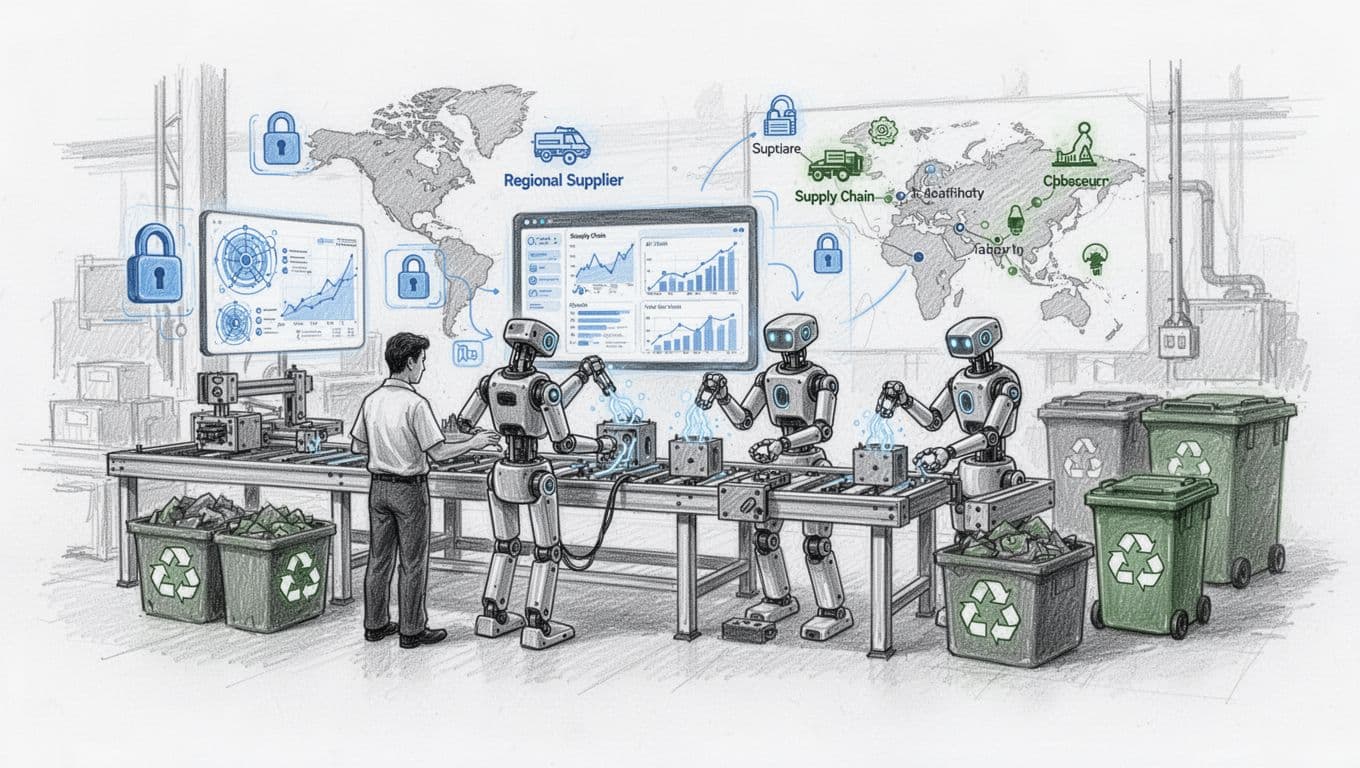
Supply chain snags show up fast in a high-volume plant. A component delay ripples through every station, like a domino line across the floor. Labor gaps hit the same way. When staffing dips, training time grows, and work slows.
To reduce both risks, teams use AI forecasts and tighter planning. Instead of relying on one long forecast, they update demand and supplier capacity more often. That helps them spot shortages early, then adjust builds, reorder sooner, or swap in approved substitutes.
Next, many companies move production closer to demand through nearshoring. Replacing long ocean lead times with regional routes can stabilize delivery windows. For a look at where planning is headed, see AI for supply chain optimization.
On the labor side, automation acts like a second shift. Robots handle repeats, while humans focus on setup and inspection. Still, machines need good people. So companies pair automation with short training cycles and clear work instructions. It’s like giving your team a smoother runway, not asking them to run through fog.
Balancing Costs, Security, and Green Goals
Now let’s talk about the balancing act. Cost pressure is real, but so are safety and sustainability goals. When factories scale, they often add equipment and data. That can raise both energy use and cyber exposure.
The winning move is tech that pays back long-term. For example, better maintenance planning cuts downtime and scrap. It also lowers the number of emergency buys, which usually cost more. On the operations side, efficient tools help reduce waste by using the right settings and cutting rework.
Security comes next. High-volume plants connect sensors, machines, and planning systems. That connection can also open doors to attacks. So you protect data with access controls, network segmentation, and routine patching. You should also train teams on phishing and suspicious logins, because humans are often the first target. For practical guardrails, review manufacturing cybersecurity best practices.
Finally, sustainability needs to show up in day-to-day decisions. Use data to optimize energy during runs, not just report emissions at year end. Also, reduce material waste by tightening process control and improving incoming inspection. When you do this together, you get lower costs, fewer disruptions, and progress toward green goals without slowing delivery.
2026 Trends Redefining Scale Manufacturing
In 2026, scale manufacturing isn’t just about running machines faster. It’s about making output steadier, closer to demand, and easier to fix when conditions change. Think of a factory like an orchestra. More sensors and smarter planning help the whole group stay in time.
That shift shows up in five places: smart factories, nearshoring and reshoring, sustainability in day-to-day runs, faster AI decisions, and additive manufacturing at scale. On top of that, the US chip boom keeps pushing manufacturers to rethink inputs and timelines.
Smart factories shift scale from “planned” to “predictable”
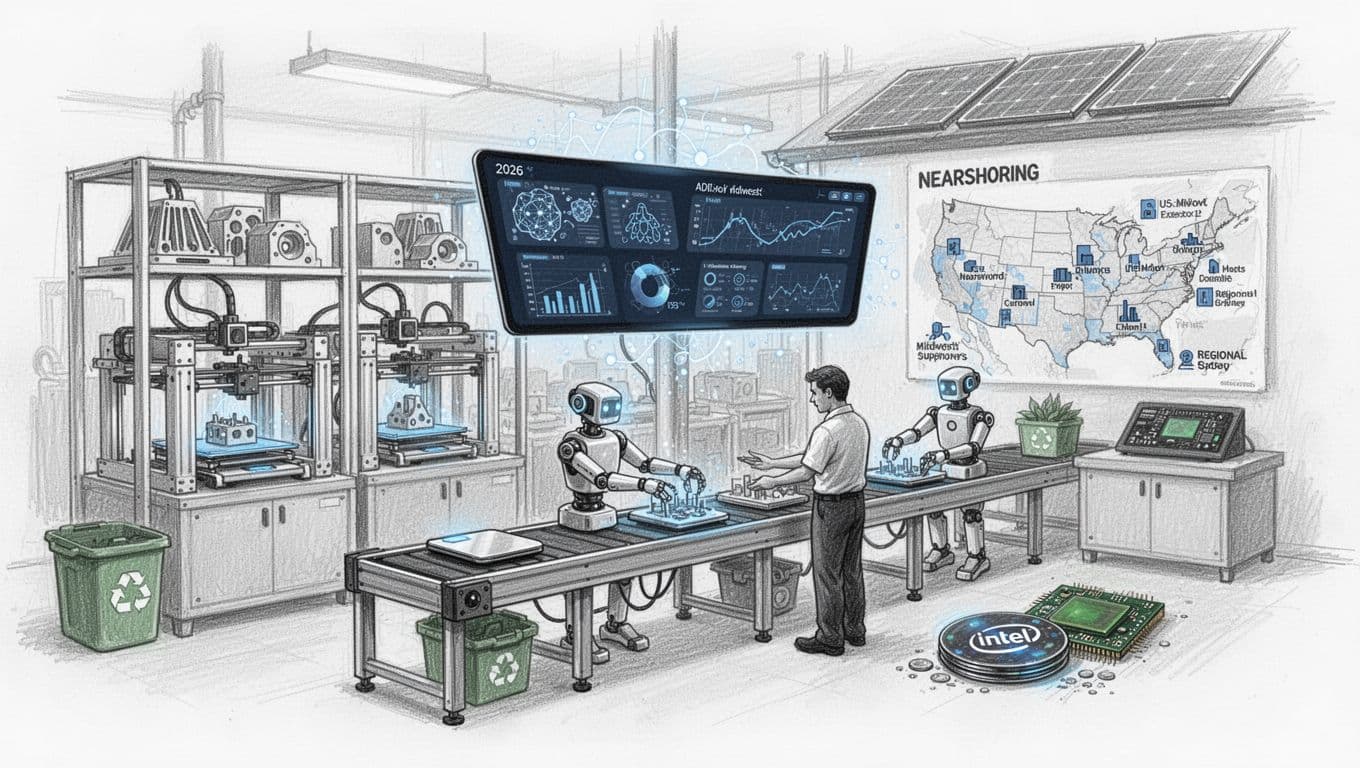
Traditional plants run a plan and react when reality hits. In 2026, smart factories aim to reduce surprises by watching the line as it runs. Sensors track heat, vibration, tool wear, and energy use. Then AI turns that stream into decisions you can act on quickly.
This matters at scale because small drift creates big problems. A tool that wears down a little can mean more defects, more rework, and slower output. With real-time signals, teams catch issues early, instead of after scrap piles up.
It also changes how leaders fund operations. In 2026, many executives plan to put serious money into factory tech. The data points to about 80% of executives planning AI-related investment by 2026, often tied to boosting output and worker productivity. For supply chain context, see the 2026 State of Manufacturing report, which connects AI to regional resilience and capacity planning.
The bottom line is simple: smart factories make scale feel less like gambling and more like control.
Nearshoring and reshoring shrink uncertainty, not just shipping time
Supply chains used to be a cost story. Now they are a risk story. In 2026, more manufacturers move production closer to markets or toward “friendly” regions. That reduces shock from long lead times, port delays, and sudden policy changes.
However, the win is deeper than logistics. Smaller chains give you faster feedback loops. When a part quality issue appears, you can fix it sooner. When demand shifts, you can change builds without waiting weeks for freight.
Nearshoring also pairs well with automation. When you have fewer variables in transport, you can plan production cycles with less buffer. That helps factories protect throughput while still allowing quality stops.
If you want a clear example of how this changes planning, the 2026 manufacturing trends coverage on AI and reshoring explains why agility in uncertainty is becoming a core operating goal.
In plain terms, it’s like shortening the fuse between a problem and the fix.
Faster AI decisions, humans + AI, and additive manufacturing at scale
AI decisions matter most when they happen faster than human reaction time. In 2026, that often means predictive maintenance, quicker quality holds, and tighter scheduling based on what the line will likely do next. Instead of waiting for end-of-shift reports, teams can adjust mid-run.
Yet AI works best with people in the loop. Humans handle judgment calls, exception handling, and safety decisions. AI handles routine pattern matching, data crunching, and recommended actions. It’s a partnership, not a replacement.
Additive manufacturing at scale pushes this further. Factories use it to produce custom parts and complex components without waiting for long tooling cycles. That reduces inventory risk because you can stock fundamentals and print variations when demand calls for it.
Also, the US chip boom feeds this shift. More US capacity for chips from companies like Intel and TSMC means manufacturing teams plan around more consistent inputs. For a look at how TSMC expansion ties to reshoring, check the US reshoring semiconductor boom update.
Finally, sustainability stops being a report at year end. Plants track energy, scrap, and waste during runs, then use AI to keep settings efficient. That helps both budgets and delivery timelines, because waste reduction usually means fewer stops.
In 2026, scale manufacturing rewards the factories that can decide faster, adapt sooner, and produce with less waste.
Real Factories Crushing It: Lessons from Leaders
When products move from design to delivery at scale, leaders do not rely on luck. They build repeatable habits into each stage, then they tighten the loop when reality changes. Think of it like a pit crew in racing: fast hands matter, but clear signals matter more.
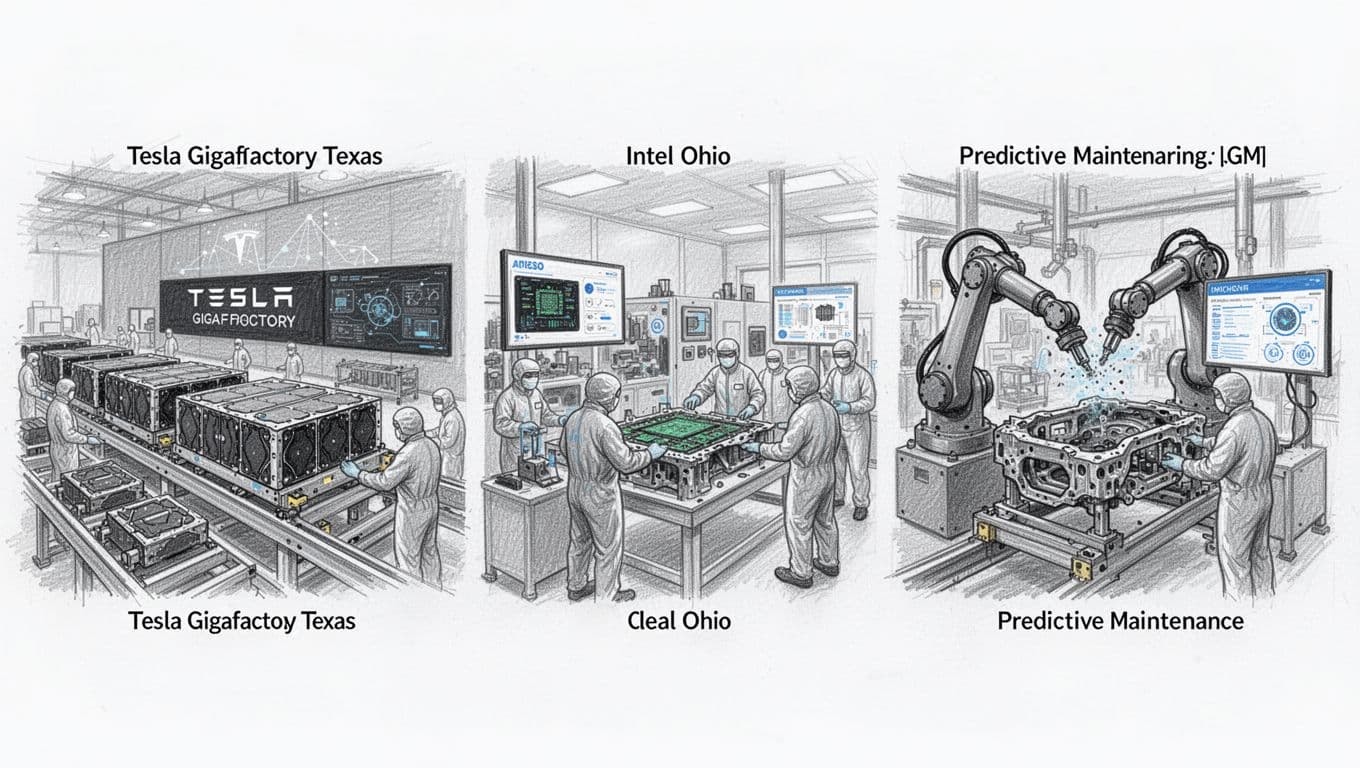
Tesla Gigafactory Texas: scale wins by controlling the battery cost curve
Tesla’s Gigafactory Texas is a strong example of how leaders connect engineering goals to factory output. The site has produced its 500,000th vehicle, showing the company can run large programs smoothly. Even more telling, Tesla’s in-house 4680 battery cells reached their low-cost position per kilowatt-hour within Tesla’s own output mix, and the plant has produced over 100 million cells by the end of 2024.
That matters for the stages in this article. First, better battery manufacturing makes design targets easier to hit later. Next, consistent cell quality reduces rework during assembly. Finally, steadier cell supply helps shipping plans hold up when timelines get tight.
If you want a real-world look at how Tesla builds the supply side too, see Tesla’s EV battery supply chain push.
Intel Ohio: reshoring works when planning and timelines stay disciplined
Intel’s Ohio build shows how reshoring reduces uncertainty, but only when leaders manage schedules hard. Recent reporting highlights Intel spending $1.53 billion in Ohio in 2025, plus updates on its path for starting operations. When a project shifts timeline, the fix must show up in procurement, staffing, and test ramp plans.
That’s the lesson for “design to delivery.” You can shorten lead times, but you still need tight stage gates: supplier readiness, equipment qualification, and quality checks that match the final spec. Otherwise, you simply move risk from shipping to ramp-up.
For a grounded timeline update, read Intel’s “Ohio One” completion plans.
GM Michigan: robotics and AI stay useful when they cut downtime and defects
GM’s manufacturing story shows a practical pairing: robotics for repeat work, and AI for what breaks patterns. GM has shared how it uses AI across manufacturing, including digital twins and AI-enabled tools that improve production across facilities. In other words, AI supports the factory’s day-to-day decisions, not just reports after the fact.
This directly ties back to the earlier stages. During production, robots hold tolerances and reduce variation. Meanwhile, predictive AI helps teams spot issues early, so testing and quality stops happen before scrap piles up. Then packaging and delivery feel calmer, because fewer defects escape the line.
When leaders do this well, scale stops feeling like a gamble. It becomes a system.
Conclusion
Manufacturing at scale works because the hard parts get handled in order. You start with design and prototyping, then lock in production plans, and finally run manufacturing with steady quality checks. Automation, robotics, and smart inspection help keep output consistent, while supply chain planning reduces delays that can stall whole lines.
The strongest takeaway is control, because it shows up in every stage. When teams standardize work, verify specs, and monitor issues early, ramp-ups feel less chaotic and delivery stays on track. Even common hurdles like supplier delays and labor gaps become easier to manage once the process is built for repeatability.
Want to see how this all fits together in real life? Watch a factory tour video, then subscribe for more clear breakdowns of manufacturing at scale. What step do you think matters most when products go from idea to millions of units? Next time you grab that gadget, you’ll know the epic journey it took.