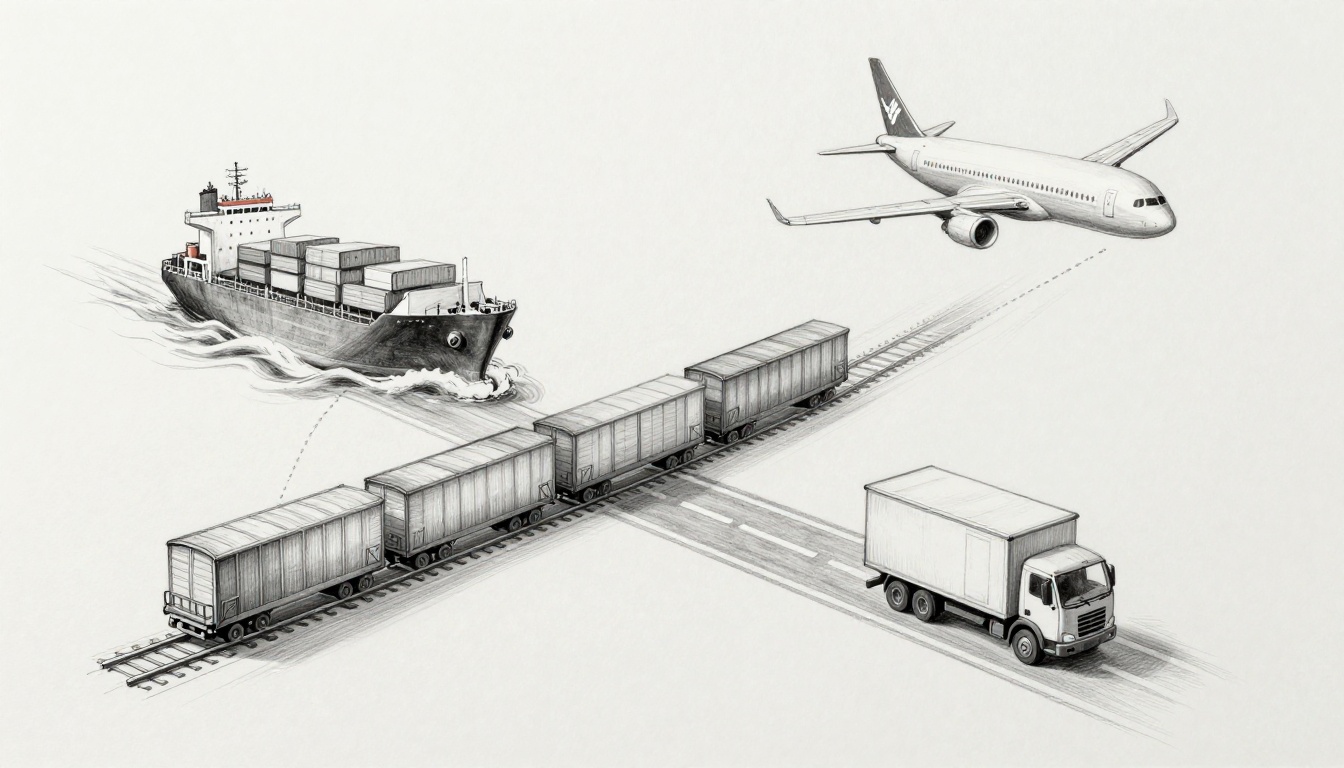
Shipping goods sounds simple until you’re trying to hit a deadline, control costs, and keep orders moving when demand spikes. In 2026, sea freight still carries about 80% to 90% of world trade by volume, mostly because it’s the cheapest option for big shipments. At the same time, road and last-mile costs are rising, driven by labor pressure, fuel swings, and stricter city rules for deliveries.
In supply chains, the job of each transport mode is straightforward: move products from makers to buyers, then keep them on schedule. Road moves parcels and time-sensitive freight fast over shorter distances, but it can get pricey in dense areas. Rail works well for longer inland routes, especially when you need steadier capacity across regions. Air plays a different role, carrying a small share of total volume, yet accounting for a large share of trade value because it’s ideal for urgent, high-value goods.
Next, there’s the rest of the lineup. Sea shipping handles bulk cargo and container loads across continents, while inland water can move heavy bulk at lower cost in the right regions. Pipelines stay common for liquids and gases where infrastructure already exists. Then you’ve got the newer players people keep an eye on, like drones for last-mile trials and autonomous trucks for parts of the network where rules and routes allow testing.
By the time you finish, you’ll see the pros, cons, common uses, and 2026 trends for each mode, so you can pick the best fit for your product, budget, and delivery goals. Next, let’s break down road transport and where it shines (and where it hurts).
Road Transport: Trucks That Deliver Right to Your Door
Road shipping uses trucks and vans to move goods for short to medium trips on highways and city streets. It’s the part of the supply chain that feels closest to customers, because it often ends at the front door.
Key Advantages and Drawbacks of Truck Shipping
Truck transport wins on speed and reach. A carrier can choose flexible routes, reroute around trouble, and still meet delivery windows. Also, because trucks can go door-to-door, you avoid extra handoffs that slow things down.
Here’s how it usually plays out in real life. Think about Amazon-style last-mile delivery. Orders move by regional trucking lanes, then vans handle the final miles to neighborhoods. That setup works well when people expect packages fast and predictably.
Still, the drawbacks show up fast when you watch costs and capacity closely.
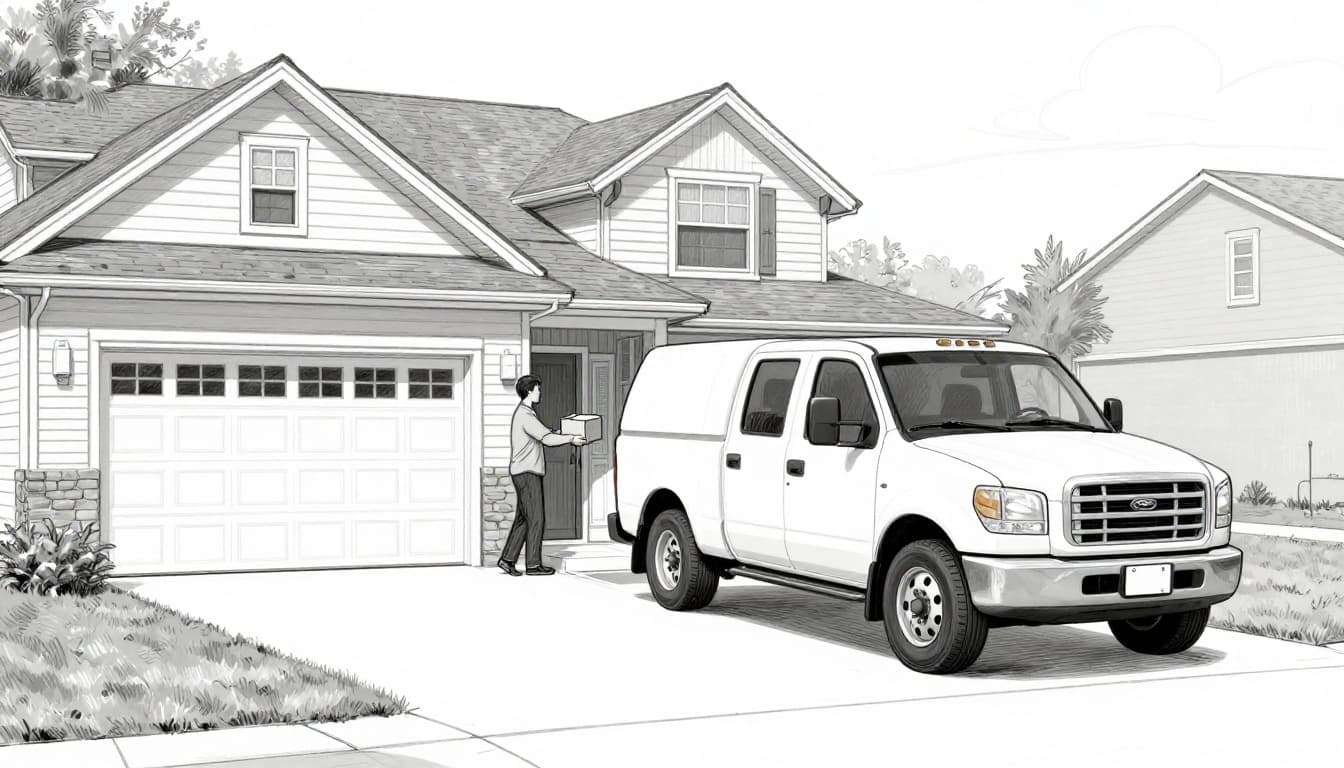
Pros of truck shipping
- Flexible routes that adapt to weather and road closures
- Easy scaling when volumes rise in peak season
- Door-to-door service that reduces delays between carriers
Cons of truck shipping
- Traffic and congestion that blow up schedules in cities
- Fuel costs that swing with market pressure
- Emissions concerns, especially for frequent stop-and-go routes
- Driver shortages that limit the number of available trucks
If you want a quick, plain-language comparison of truck pros and cons, see Union Pacific’s overview of truck shipping.
The best way to think about trucking is like a taxi for freight. It’s direct and convenient, but the bill rises when traffic gets worse.
When to Choose Road for Your Supply Chain
Choose road transport when you need regional freight or urgent local delivery. For example, a distribution center feeding stores within one or two states often benefits from trucking. Likewise, if a retailer needs items quickly before a promotion, trucks can usually move faster than rail or ocean lanes.
Road also fits products that can’t wait for long transit times, such as:
- E-commerce parcels that follow daily order waves
- Groceries and cold chain items needing frequent replenishment
- Replacement parts for field service teams
In contrast, rail and sea usually shine when you can plan ahead and move large volumes steadily. Air works for urgency too, but it’s harder to justify for everyday goods because the cost per shipment rises quickly.
Road Trends Shaping 2026 Logistics
2026 is pushing road carriers in three main directions: capacity, cost, and cleaner power.
First, capacity stays tight. Drivers remain hard to find, and that squeezes the available truck pool. Some carriers are using autonomy-adjacent tools to reduce workload, especially for repetitive tasks. Early automation can help “stretch” driver capacity by reducing manual driving time in certain routes, which helps offset parts of the shortage.
Second, last-mile pricing is rising. For 2026, expect about a 5.4% rise in last-mile rates, driven by more volatility and tighter planning windows. In addition, truck capacity tightness continues as fleets contract and operators exit lanes.
Finally, fleets are changing how they buy and operate. Fleet-as-a-Service is growing because it can cut empty miles and reduce the need to own every truck upfront. If you want a market read on the pressures shaping capacity in 2026, see FleetOwner’s 2026 survival guide on trucking capacity.
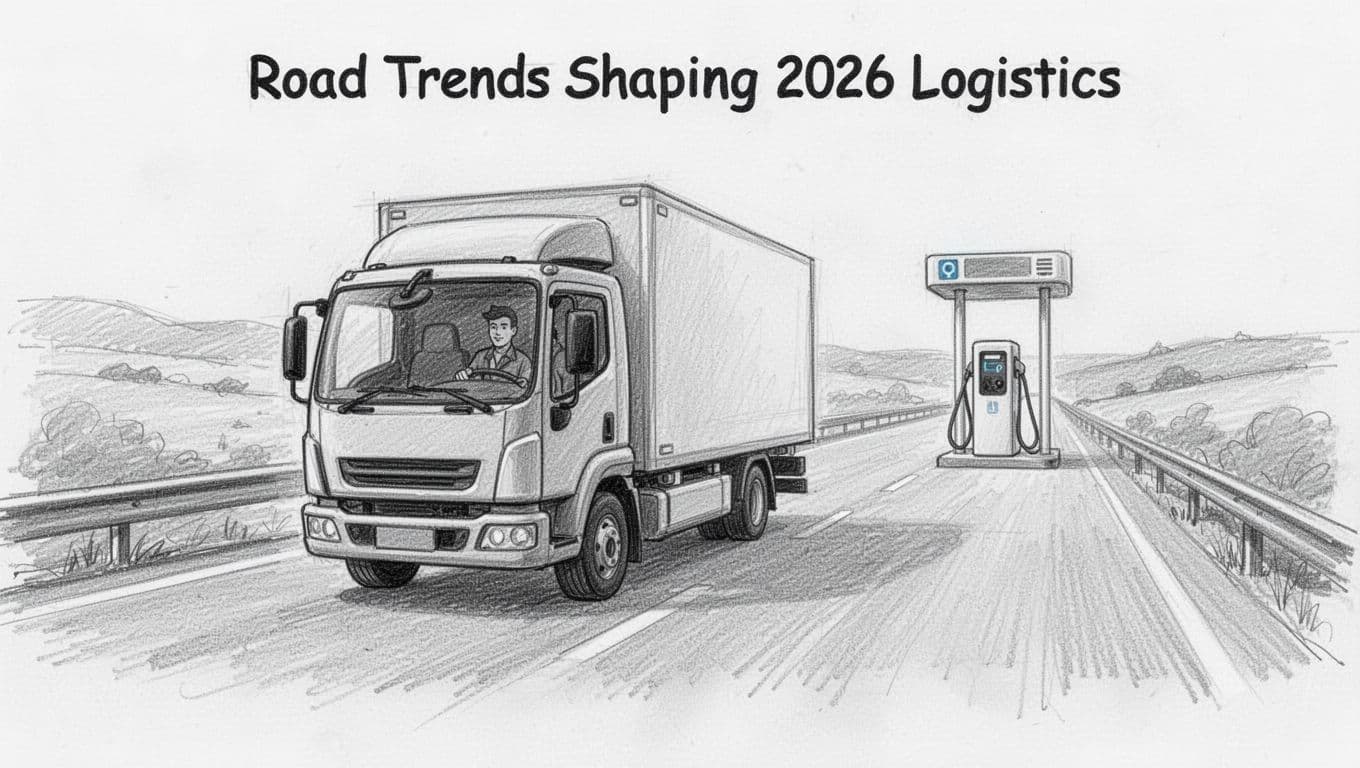
Electric trucks also keep gaining share, mostly in short-haul and last-mile work where charging and route lengths fit. For many fleets, the shift starts with local routes, then expands once charging performance and costs look predictable.
Rail Transport: Powering Long-Haul Bulk Moves Efficiently
Rail is built for long, heavy hauls. Picture a steel wheel set on fixed tracks, carrying big loads for hundreds of miles with steady momentum. Because railcars keep rolling and don’t need road traffic all the way, rail often wins when you move bulk freight and want predictable transit.
For supply chains, that predictability matters. When schedules hold, planning gets simpler, yard dwell time drops, and handoffs with other modes feel more controlled. In other words, rail acts like the middle spine in the network, while trucks handle the “last-mile nerves” at each end.
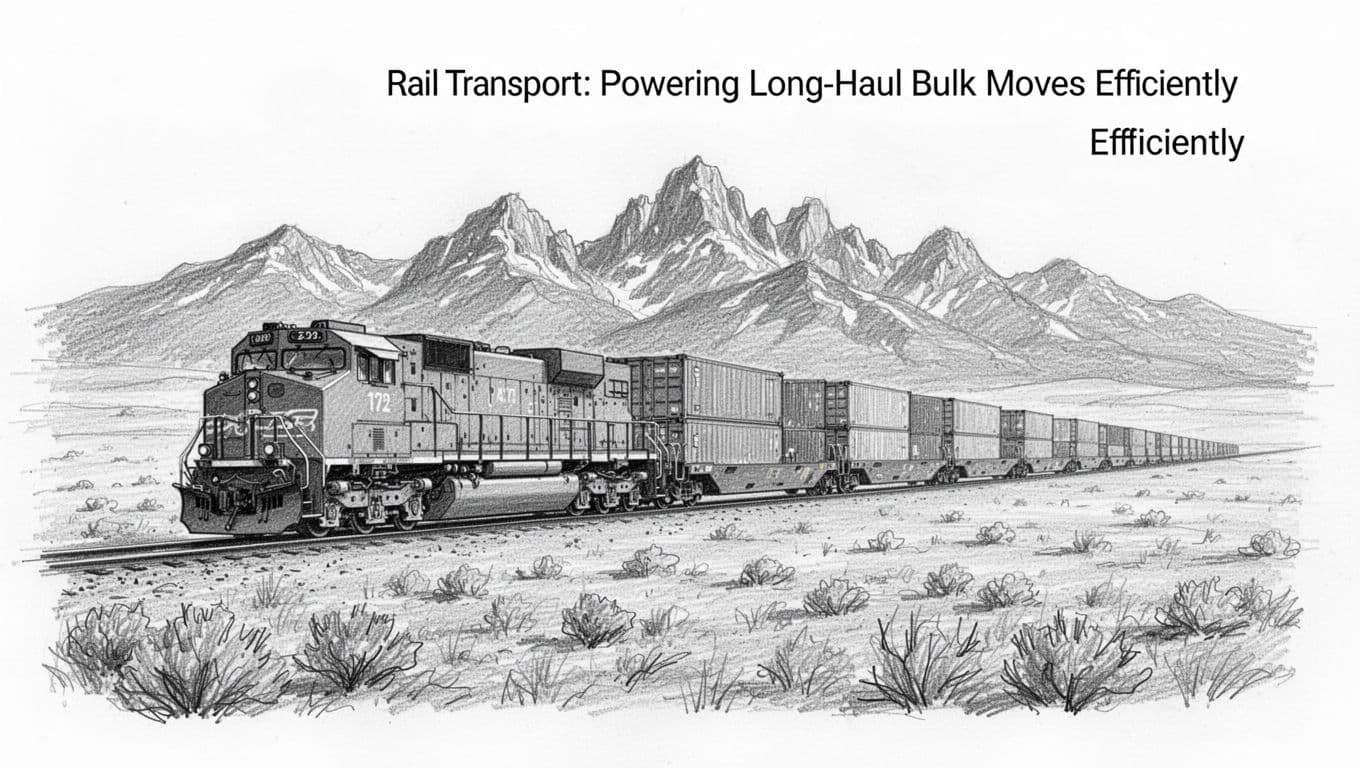
Why Rail Wins for Cost and Environment
Rail moves heavy freight on fixed tracks, so the energy cost per ton-mile tends to stay low. That fixed path also reduces rolling waste. Compared with rubber tires on highways, steel wheels face less resistance for long distances, especially when trains stay full.
On the cost side, rail often looks best when you ship large volumes over a mid-to-long lane. One train can haul the work of many trucks, so the cost per ton falls as the load grows. If you’ve ever watched a crowded highway, the same logic applies in reverse. Rail keeps the freight moving in a steady line, instead of splitting into scattered vehicles.
Now, let’s talk emissions. Rail also tends to produce far less greenhouse gas per ton-mile than trucks. For example, one commonly cited comparison found rail at about 0.048 pounds of GHG per ton-mile, while trucks came in around 0.465 pounds, which is nearly 10 times higher. Other figures show rail at about 7 times less than trucks for the same ton-mile unit.
Here are the practical reasons those numbers usually show up in real operations:
- Better fuel per ton-mile: Rail can move more goods per unit of energy, so emissions spread over more weight.
- Less stop-and-go: Trains keep moving for long stretches, unlike road traffic that forces frequent braking.
- Mode switching helps: Intermodal routes (rail for the long leg, truck for the ends) can cut emissions 30% to 60% versus trucks alone.
So if you’re trying to hit both goals, cost control and sustainability, rail freight often gives you the cleanest trade-off. For a shipper-focused comparison, see Truck vs. Rail switching factors.
Real-World Rail Use Cases in Supply Chains
In real supply chains, rail shows up where distance is long and volume stays steady. Think of it as the freight version of a freight elevator for highways: it carries a lot at once, then hands off to smaller carriers at the edges.
One common example involves auto shipments across the country. Automakers and suppliers need to move vehicles and parts efficiently from plants to distribution hubs. Rail can move vehicle loads over long distances, while trucks finish the trip from the rail ramp to nearby dealerships and service centers. This setup helps keep inventory cycles tight without paying for full highway mileage.
Another frequent case is port-to-factory logistics using intermodal. Containers land at a seaport, then move into the rail network for the long inland leg. From there, drayage trucks handle the short move between the port, nearby rail terminals, and the inland distribution center. It’s a practical rhythm: ship the boxes far, then switch to trucks when you need tight local reach.
You’ll also see rail used for bulk commodities where consistency matters, like:
- Coal and other mining products moving from extraction regions to power plants or processing sites
- Grain and feed inputs moving between farm regions and food or feed manufacturers
- Steel, aggregates, and chemicals where railcar types match load needs
In many networks, intermodal growth keeps accelerating because it balances two pressures: higher fuel and tighter road capacity. When truck lanes get crowded, rail gives shippers a second path. For current industry coverage on how rail can win back freight, read Reuters on U.S. rail opportunities.
To make this more concrete, imagine a container leaving a port, rolling on rail for days, and then unloading at an inland hub. Next, trucks distribute the containers to factories in the region. That mix turns one big, efficient movement into many smaller deliveries, without forcing every mile to rely on the same road constraints.
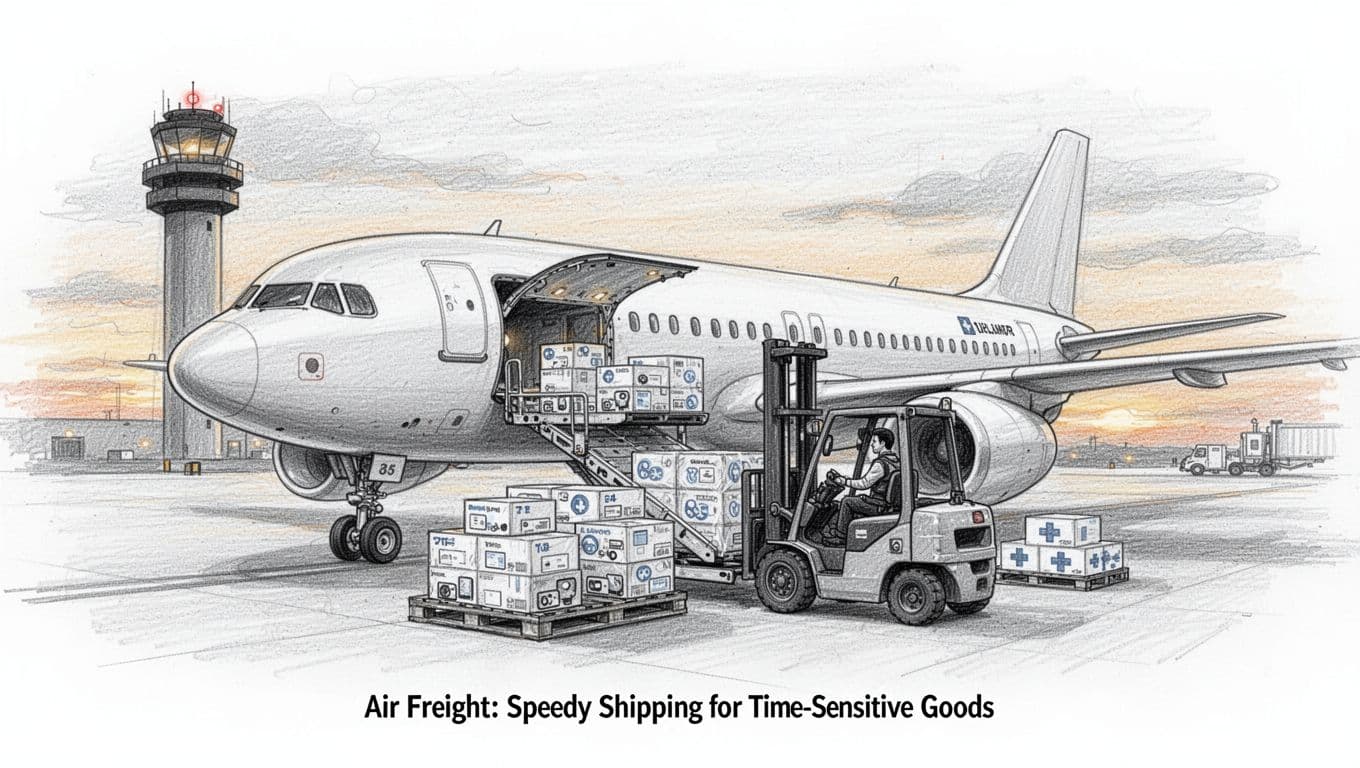
Air Freight: Speedy Shipping for Time-Sensitive Goods
Air freight is the shortest path between “we need it now” and “it’s in your warehouse.” When time is the enemy, planes turn logistics into a sprint, not a waiting game. That speed matters most for high-value, sensitive, or regulated products, where delays can cost more than the premium rate.
Pros, Cons, and Ideal Scenarios for Air Cargo
Air freight shines when you need fast movement from airports to customers, often across countries. Unlike ocean shipping, you do not wait on slow sailings or long consolidation cycles. Instead, you buy time with air schedules and a tighter network of airport-to-airport lanes.
Pros
- Speed you can plan around: Many shipments move in days, not weeks.
- Great for valuables: High insurance options and more controlled handling help protect costly cargo.
- Strong reliability on key lanes: Major routes often run on tight schedules.
- Better for time windows: If your production run or order cutoff has a hard deadline, air freight supports it.
Cons
- Higher cost per shipment: The rate rises quickly, especially for small loads.
- Weather and airspace risk: Storms, routing changes, and airport delays can disrupt plans.
- Weight and volume limits: Planes are fast, but they do not carry everything as cheaply as other modes.
- Less room for error: Late documents, wrong labels, or customs issues can erase the speed benefit.
So when should you choose it? Think of air freight as an express lane with tolls. You pay more, but you avoid the slow queues.
Here’s where the tradeoff usually makes sense:
- Electronics: Semiconductors, laptops, and spare parts lose value fast if inventory misses demand.
- Meds and healthcare supplies: Cold chain shipments often need quicker transit and tighter custody.
- Flowers and fresh goods: Even small delays can ruin shelf life.
- Pharma “overnight” lanes: A classic example is an overnight resupply from a distributor’s hub to a hospital pharmacy. The shipment may be small, but the cost of a stock-out is huge, and clinicians cannot wait for ocean transit.
Air freight also fits global “rush” moments. For example, when regulators approve a new product and sales start immediately, you ship early inventory by air to meet demand. Then, after the launch wave, you shift to sea for cost control.
Looking at 2026, the U.S. air cargo picture adds one more factor: volatility from trade issues. Shipments increasingly route through multi-hub networks rather than one straight connection, since one disrupted airport or lane can affect many origins. In practical terms, you may see more mid-network reroutes, more spot buys, and tighter planning cycles. That shift does not remove the speed advantage, but it changes how you plan it. For a broader comparison of how air and ocean choices stack up, see Air Freight vs Ocean Freight: Choosing the Best Option for Your Needs.
Air freight works best when the business cost of delay is higher than the business cost of the premium.
If you treat air like a tool for specific moments, you get the fastest transit without paying for speed on every shipment.
Sea and Ocean Shipping: The Giants of Global Trade
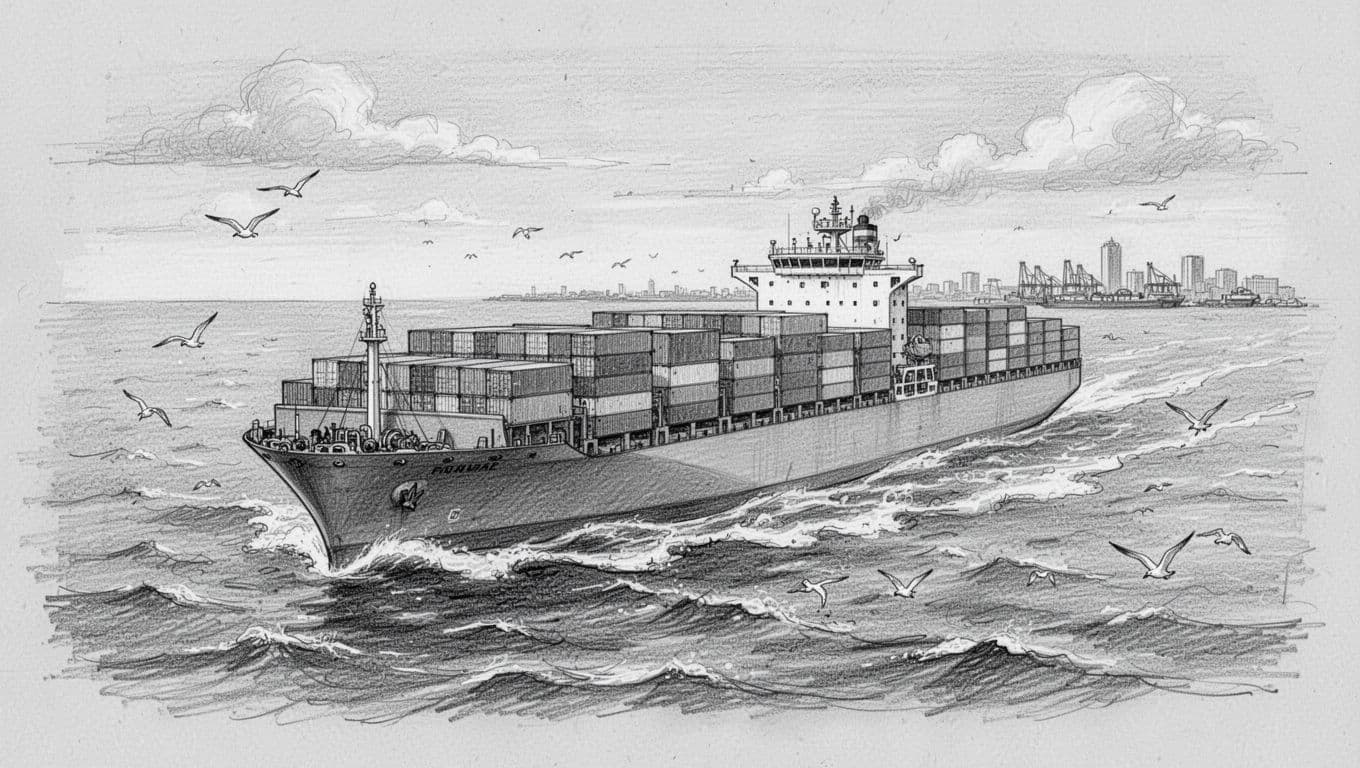
Ocean and sea shipping move the heavy backbone of global supply chains. When you picture the world trade system, you can almost hear the engines, see the container stacks, and feel how much cost pressure ocean carriers absorb for everyone else.
A big part of that power comes from one simple idea: ocean freight is built for volume. You don’t use it for a single urgent box. Instead, it shines when you can group shipments, plan ahead, and let large ships do the long-distance work.
Advantages That Make Ocean Freight Unbeatable
First, ocean freight delivers high capacity. Modern container ships carry thousands of containers, so you can move a huge volume in one go. For shippers, that means fewer shipments to manage, fewer booking decisions, and fewer handoffs across modes.
Second, ocean freight tends to win on low per-unit cost. When a single voyage carries so many units, the price per container (or per ton) drops. That’s why it supports everyday items like clothes, toys, and home goods that don’t need to arrive tomorrow.
Third, ocean shipping helps you smooth inventory. With the right lanes and schedules, you can plan production runs and inbound replenishment like a routine. It’s not always instant, but it’s dependable enough for many standard goods.
Here are the advantages most shippers feel right away:
- Economies of scale: The bigger the shipment, the better the unit cost.
- Global coverage: Major ports connect Asia, Europe, and North America with regular services.
- Ability to consolidate: You can wait for full container loads, then ship in bulk.
- Container-friendly operations: Standard sizes reduce “special handling” for many products.
If you want a quick refresher on why ocean freight remains a top choice for global trade, see ocean freight advantages for global shipping.
In 2026, ocean demand and pricing still depend on lane conditions. Early signals point to good rates on some routes, but they don’t stay good forever. Trade policy, route changes, and energy costs can shift the math fast, especially when ships detour around key straits.
Challenges and Tips to Avoid Delays
Ocean shipping has two main delay drivers: port bottlenecks and route disruptions. Port congestion can quietly reduce “effective capacity,” so even if ships sail, the network slows at terminals. Weather and rerouting add another layer, because longer routes mean more days at sea before cargo reaches the next handoff.
You can see this in recent market discussions where carriers react by changing capacity and buffer plans. One lesson stands out: if you remove too much slack, the whole chain starts to stretch.
To avoid delays, use buffers like you would in budgeting. You plan for a “bad weather day,” not just the normal week.
Practical steps that reduce risk:
- Build a time buffer into your booking plan
Add extra days for ocean transit variation and for port dwell time. - Watch the lanes, not just the origin and destination
Transit routes can change quickly, especially during regional disruptions. - Confirm port cutoff timelines early
Documentation and appointment windows can miss you, even when the ship is “on schedule.” - Use backup options when you can
Consider alternate ports or transshipment strategies if your primary lane tightens. - Track bookings like a living schedule
Update your downstream plans as soon as you see changes in expected arrival.
For a sense of how disruptions can push delays and rerouting decisions, check SeaRates on 2026 transit disruptions.
Finally, think about 2026’s risk mix. Tariffs can alter trade flows, and geopolitical issues can keep specific routes under pressure. So yes, ocean freight can stay cost-effective, but only when your plan respects how unpredictable ports and routes can get.
Other Key Modes: Inland Water, Pipelines, and More
Not every supply chain move happens on trucks, rail lines, or cargo ships. Some lanes run through rivers and channels, others run underground through pipe networks. When you match the mode to the cargo, you often cut cost and risk at the same time.
Inland Waterways for Eco Bulk Hauls
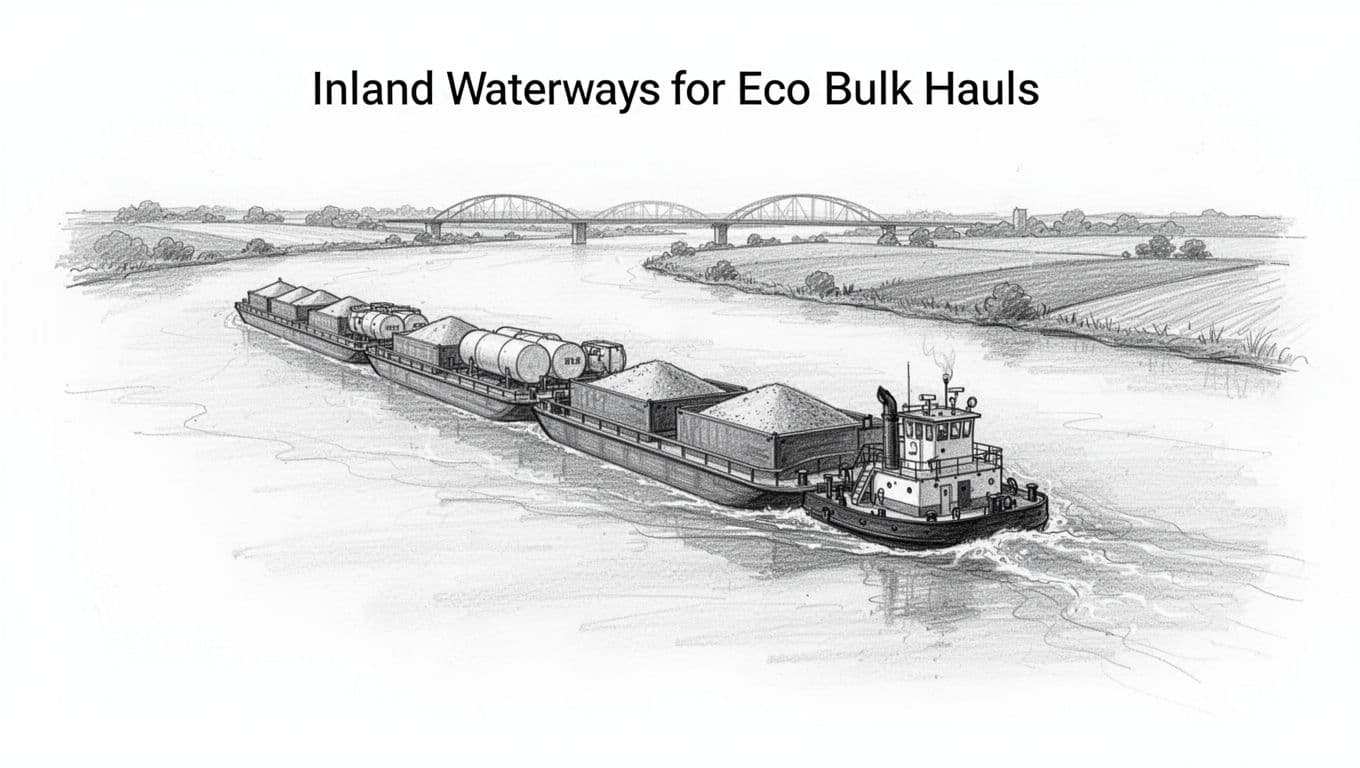
In the U.S., inland water transport mainly means barges on rivers and waterways. This mode works best for bulk cargo that can move at a slower pace, like grain, coal, aggregates, and fuel products. Because barges carry so much, they can move big loads with fewer trips, which keeps the logistics machine from overheating.
The Midwest is a strong example. When grain season hits, barges on the Mississippi River system help move large volumes toward export points. Fuel and refined products also move this way in many networks. According to a U.S. wheat logistics write-up, about 31% of exported U.S. wheat uses barge transport to reach Gulf and Pacific Northwest gateways (see U.S. wheat logistics on barge moves).
Why do shippers like inland water so much? Think of it like hauling a heavy couch on a moving dolly. You move slower than a truck, but you can take a lot more at once. That matters when you ship the same product repeatedly and you can plan around river conditions.
What makes inland water a smart fit for bulk
Inland waterways tend to win when you control the planning window and you can route around typical constraints. Here are the common strengths:
- Low cost per ton for bulk loads because fewer vessels cover more cargo
- High capacity for heavy commodities that don’t need next-day delivery
- Often lower emissions per ton-mile than road transport on the right lanes
- Better fit for steady demand like grain marketing and fuel replenishment
The real tradeoffs: speed, weather, and locks
Still, inland water is not a magic wand. River height changes, lock schedules, and weather can slow movement. Also, you usually need trucking or rail for pickup and final delivery, so you plan that “first mile” and “last mile” carefully.
One reason pricing and service can swing is that barge rates respond to conditions like drought, fuel cost changes, and water levels. Research on recent spikes in grain barge rates points to how quickly weather and fuel pressure can shift outcomes (see grain barge rate spikes on the Mississippi).
Inland water feels “slow” until you remember the cargo is heavy, and the cost savings matter.
As inland waterways become more important for bulk movement, investment focus and network planning also grow. The goal stays simple: move more tonnage with fewer trips, while keeping the system reliable when conditions change.
Pipelines: The Unseen Heroes of Energy Transport
Pipelines rarely get attention because you do not see them moving product every day. Yet, they do a lot of work quietly. For liquids and gases, pipelines can deliver continuous flow across long distances, day and night.
This is why pipelines often support oil and gas distribution, refinery feeds, and certain chemical and fuel movements. The key point is consistency. When you need steady supply, pipelines behave like a dedicated conveyor belt, not like a truck that starts, stops, and reroutes.
At the same time, pipeline risk is real. Any leak can trigger safety, environmental, and regulatory issues. That means pipeline operators carry heavy responsibility for monitoring, maintenance, and emergency response.
Why pipelines earn their place in supply chains
Pipelines offer a few advantages that other modes struggle to match:
- Reliable throughput for steady-demand products
- Lower handling steps since product travels without frequent loading
- Predictable scheduling for refineries, storage, and distribution points
- Efficient long-haul movement where truck or rail would add cost
In practice, pipelines also reduce congestion at bottlenecks. Rail yards and road routes can become crowded, especially during peak demand. Pipelines keep part of the network moving without competing for the same lanes.
Leak risk and the safety systems that manage it
Now for the downside: pipelines are expensive to build, and failures can be severe. That is why operators rely on layered safety measures. You will typically see:
- Regular inspections using sensors and field checks
- Pressure monitoring to detect abnormal changes
- Valves and isolation points to limit the spread of a problem
- Maintenance schedules that keep equipment in safe operating condition
However, the operational risk does not disappear. Pipeline constraints and throughput limits can also appear, especially when demand rises or parts of the network face bottlenecks. Industry coverage has highlighted how pipeline constraints can affect energy security and industrial recovery (see pipeline constraints and U.S. energy security).
Trends that keep pipelines relevant
Pipelines tend to evolve more slowly than trucking or ocean shipping. Still, change is happening. Operators modernize monitoring, update safety systems, and adjust flow management. In supply chain terms, the main “trend” is steady: shippers want dependable supply at a predictable cost.
Meanwhile, shippers also watch broader risk patterns in 2026 planning. Supply chain risk content continues to emphasize that energy flow problems can ripple into inventory, production schedules, and downstream costs (see biggest supply chain risks of 2026).
If you treat pipelines as a background utility, they make more sense. You get steady energy flow, and you build the rest of the network around that constant supply.
Emerging Transport Tech Set to Transform Supply Chains
New transport tech is starting to show up in real schedules, not just pitch decks. If you care about supply chains, this matters because these systems attack the same pain points every planner feels: traffic delays, labor limits, and high costs for fast delivery.
Think of it like adding new “gears” to your logistics machine. Drones add speed on the last mile. Autonomous trucks add uptime between hubs. Hyperloop ideas (and electric air pilots) aim to shrink long-distance travel time.
Drones and Self-Driving Trucks Taking Off Now
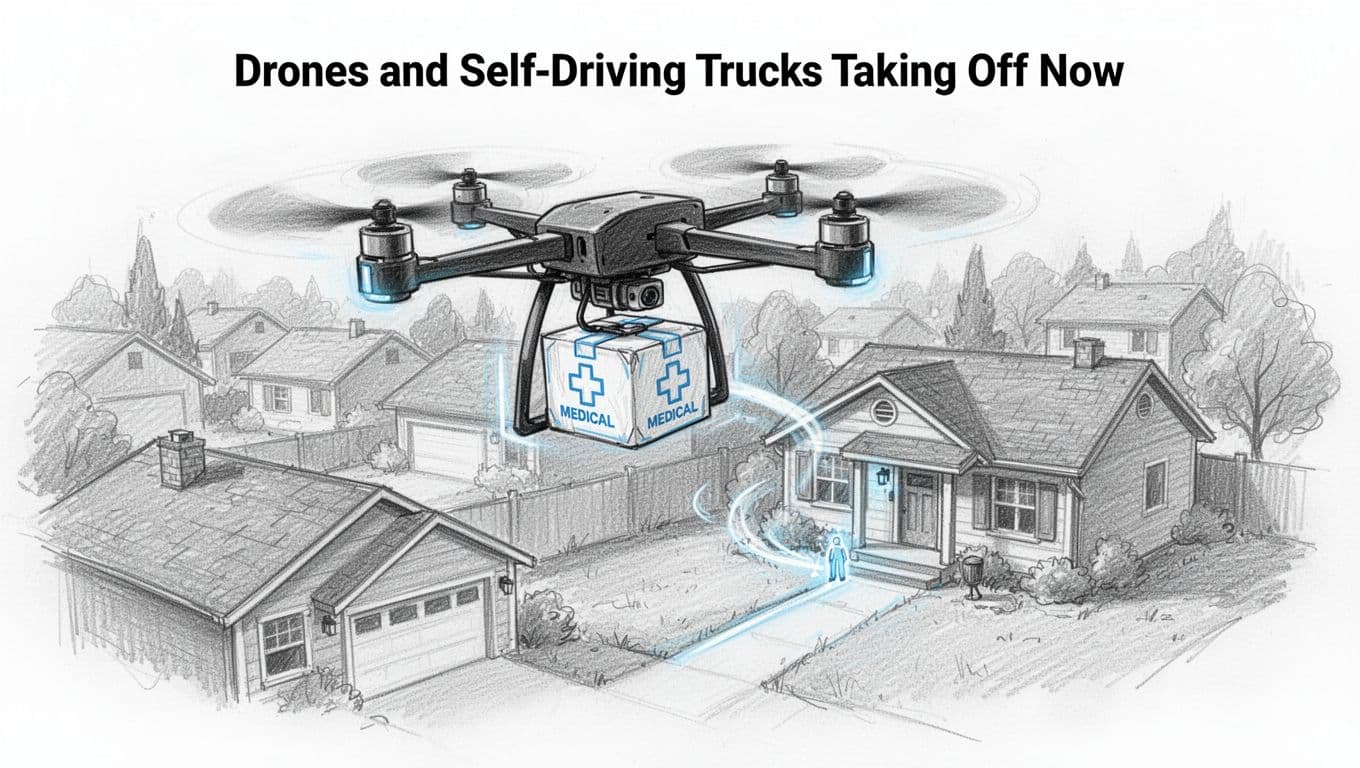
Drones are moving beyond the novelty stage. In the U.S., drone delivery has been expanding for last-mile packages, groceries, and meds, with some rollouts targeting delivery in minutes for small items. For example, Wing has been adding drone service to more Walmart stores in 2026, including a start in Houston in January, then expanding to additional cities afterward. Amazon Prime Air also has plans in motion for summer 2026 in the Chicago suburbs, focused on lightweight packages delivered close to distribution centers.
What’s the real benefit for supply chains? Drones skip the messiest part of delivery. They do not sit in the same traffic queues. They can also reduce “stop-and-wait” time when demand spikes or when streets get congested.
Meanwhile, self-driving trucks are turning another bottleneck into a work zone. The goal is not sci-fi driving, it’s predictable freight movement on defined routes. In March 2026, Aurora and Einride announced milestones and launches tied to Texas highways, which shows how fast autonomy is shifting from pilot to operational runs.
For drones, the early “sweet spot” looks clear:
- Last-mile meds and essentials when waiting can hurt customers
- Lightweight, high-frequency drops where speed beats bulk cost
- Busy urban routes where road traffic slows everything down
For autonomous trucks, the sweet spot is just as practical:
- Overnight lanes and steady corridors where traffic stays simpler
- Defined routes with clear rules that reduce edge-case surprises
- Parts and repeatable freight flows where timing needs consistency
The fastest tech is the one that fits your real routes, not the one with the flashiest demo.
If you want a grounded look at how autonomy is landing on real roads, see driverless trucking in Texas highways.
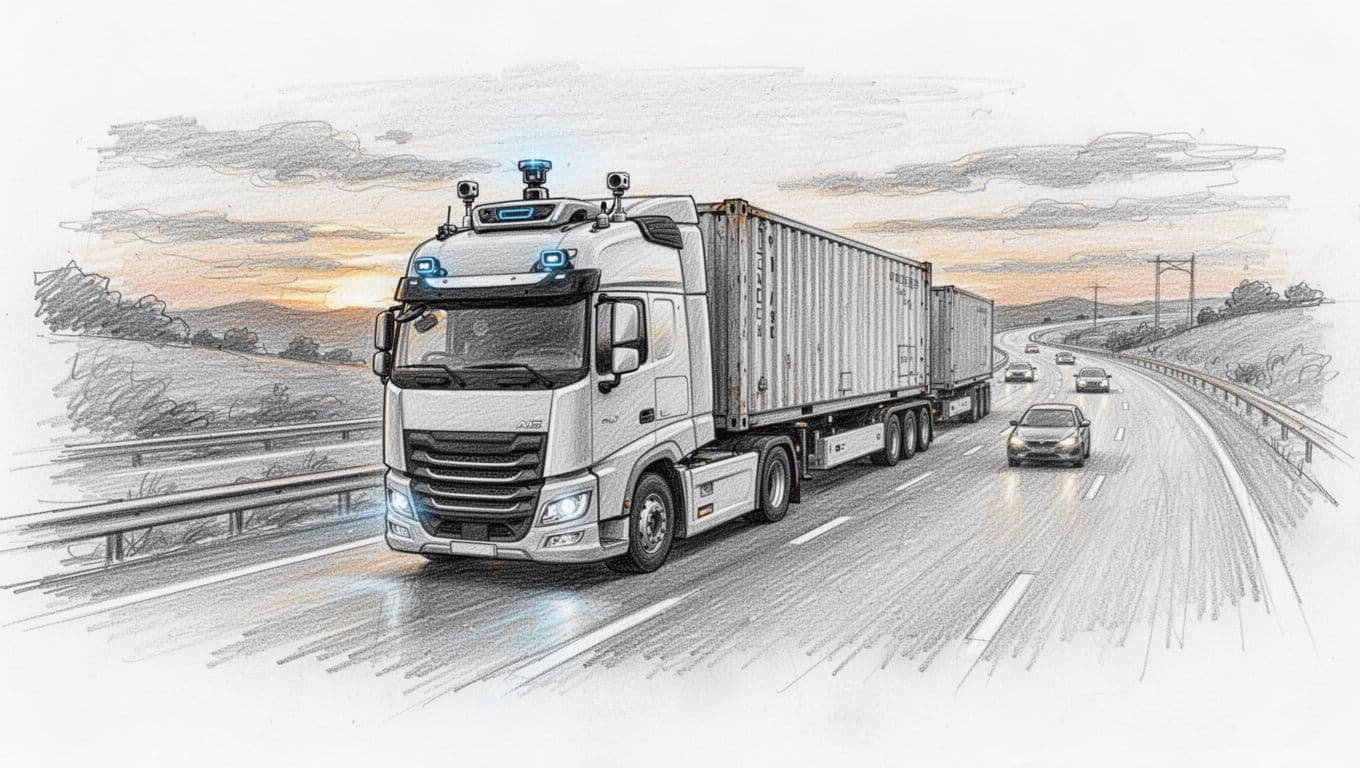
Still, expect a “hybrid” pattern. Drones handle the final drop, autonomous trucks move the long blocks, and traditional teams fill gaps when routes, weather, or approvals limit operations.
What’s Next with Hyperloop and Electric Cargo
Hyperloop usually lives in the future column. Still, the idea matters now because it pushes a bigger question: what if long-distance cargo did not feel like a multi-day wait?
Hyperloop’s concept centers on super-fast pods moving through near-vacuum tubes. If that vision ever becomes real at scale, it could change how warehouses are placed. Instead of building buffers for slow transit, companies could design networks around faster hops between major hubs. In short, you could shrink inventory time in transit, which helps cash flow and reduces the “what if” planning burden.
However, let’s keep the focus on what’s actually moving in the U.S. today. Electric cargo momentum is showing up through aviation pilots, especially in air routes that planners struggle to serve with trucks.
One major milestone came from the U.S. FAA and DOT, which launched an eVTOL pilot program starting March 9, 2026. It includes eight projects across 26 states, built to test electric vertical takeoff and landing aircraft for cargo and other uses. The program, called the Advanced Air Mobility and eVTOL Integration Pilot Program (eIPP), plans real flight work that can inform safety rules and commercial rollout timelines. Some projects focus on moving cargo for energy and industrial sites, where skipping roads and cutting transfer time could help supply reliability.
You can see how this links to supply chains by imagining the middle-mile. Trucking gets expensive when roads are slow or when sites sit off main corridors. Electric air cargo aims to act like a shortcut for specific lanes.
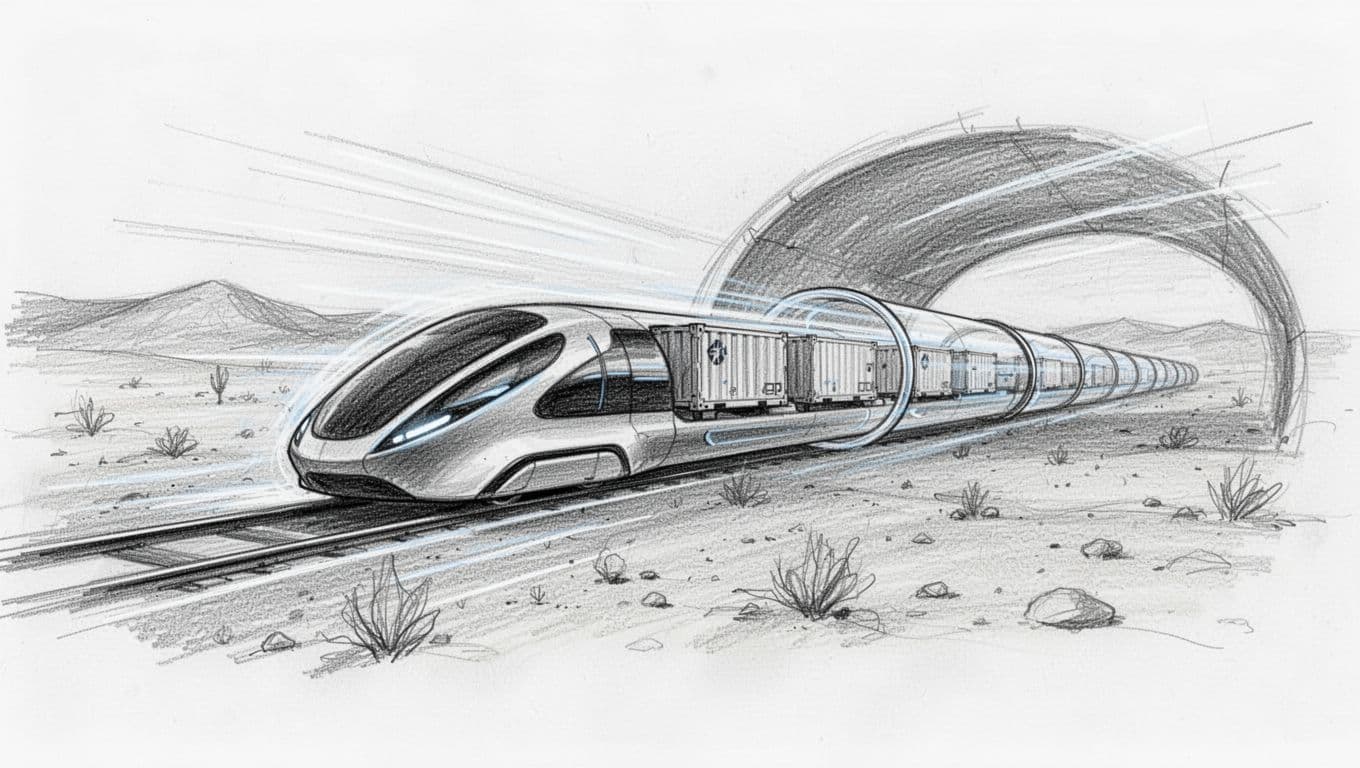
For electric cargo, the “green shift” is also practical, not just marketing. Electric platforms can reduce noise and tailpipe emissions compared with many current alternatives, and pilots focus on how battery limits, charging, and route planning affect real operations.
If you want the logistics angle on the eIPP rollout, read FAA eVTOL integration pilot program cargo air taxis.
So what comes next? Expect three phases:
- Targeted pilots for defined cargo lanes
- More automation where labor is tight
- Network redesign once travel time becomes more predictable
Hyperloop may still be a long road. Electric cargo pilots already show the direction: fewer road miles, fewer handoffs, and faster movement where the math finally works.
Conclusion
Transport in supply chains comes down to fit, not habit. Road handles fast regional moves, rail carries heavy loads over longer runs, and sea still anchors global volume. Air earns its keep when the cost of delay is higher than the premium, while inland water, pipelines, and new tech fill in the gaps when the lane math works.
The strongest takeaway for 2026 is that intermodal planning (truck plus rail plus ship, or air plus local delivery) keeps service steady while costs stay under control. Companies are also building regional networks to cut the hit from tariffs, labor gaps, and route shocks. As automation spreads in trucking and warehouses, plus drones and eVTOL pilots for tighter last-mile work, networks can move faster without leaning on one fragile link.
Next step, audit your lanes. Map where you rely on one mode, then test one small change, like shifting a mid-haul leg to rail or adding a second port or hub option. After that, keep an eye on which automation tools reduce handoffs and delay time in your actual flows.
What would happen if your next shipment plan assumed disruption as normal, then designed around it from day one? When transport types work together, the future looks less risky and more efficient for every order that needs to land on time.