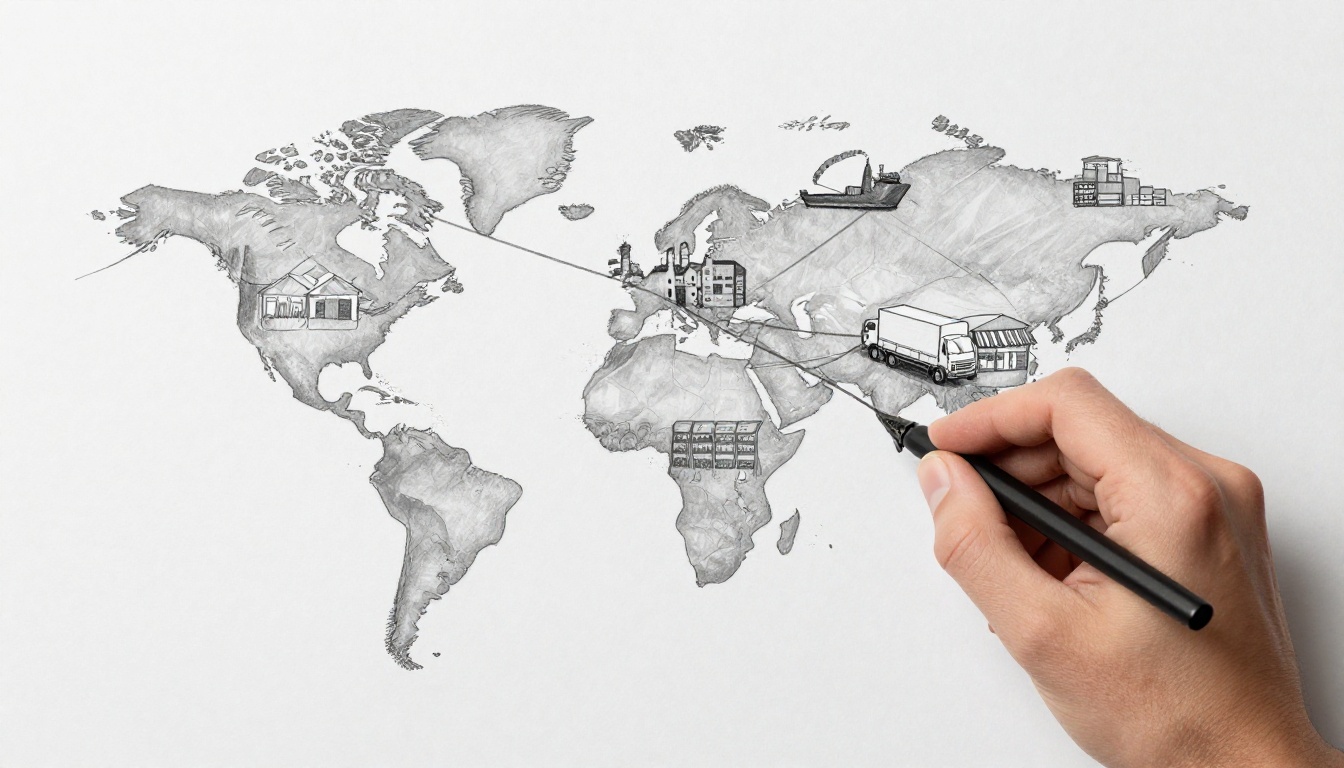
Supply chain problems jumped to 68% of top business concerns in 2025-2026, up from 35% the year before. That shift isn’t random. It’s the result of global events impact supply chains in ways you feel at checkout and at the worst possible time.
Think of your supply chain like a web that connects farms, factories, ports, trucking, warehouses, and stores. If one strand gets pulled, the whole web changes shape. That’s why your phone might cost more, your favorite chocolate bar might arrive late, or both happen in the same season.
And it’s not just one event. Tariffs, wars, disasters, and hacks stack up. So you need clear examples of what changes, who it hits, and what companies do to keep goods moving.
How New Tariffs Are Driving Up Costs and Forcing Big Changes
Tariffs can act like a surprise tax on imports. They raise the cost of components and materials fast, even when your product plan stays the same. In 2025, tariffs topped the list for 72% of trade pros, and that concern roughly doubled from the prior year.
Here’s the supply chain logic. A tariff is set by policy, but the bill shows up in day-to-day operations. Companies pay more for parts at the border, and that squeezes margins for manufacturers. Then they either raise prices, change suppliers, or slow production until they can recalibrate.
Tariff swings also create headaches for procurement. Rules can change quickly, and sourcing decisions might be tied to things like where a product or input is designed or originates. Even when companies avoid a full slowdown, costs still rise.
In practice, many businesses respond with major moves. One survey-based look at 2026 sourcing trends found plans to switch suppliers or countries (65%), renegotiate contracts (57%), and nearshore production (51%). Those moves help, but they also bring tradeoffs, like less scale and fewer options when demand shifts.
For a deeper look at how this plays out in procurement, see how tariffs impact procurement and supply chains.
Quick reality check: if your supply chain depends on one lane or one country, a tariff can break your math overnight.
- Higher landed costs for imported inputs
- Contract renegotiations (or delayed orders)
- Supplier switching under deadline pressure
- Nearshoring that reduces long-term flexibility
Also, the ripple effect matters. When tariffs stay unpredictable, manufacturers often redesign networks, shifting from global “just in time” thinking to regional reset models. That’s a big reason analysts call 2026 a turning point for sourcing patterns in the US. For more context on that shift, read tariff volatility pushes regional reset.
Real Examples of Tariff Hits on Everyday Products
Tariffs rarely hit one product. They hit the inputs behind many products. When a tariff lands on imported parts, the price pressure spreads through the bill of materials.
For example, if imported components used in electronics become more expensive, prices can rise across multiple product lines. That can show up as higher sticker prices, smaller discounts, or delayed releases until the pricing model updates.
It also affects “quiet” parts of supply chains. Packaging, tools, small hardware, and raw materials can all carry tariff costs. Those costs might not sound huge per unit. Still, when volumes are high, it adds up fast.
Meanwhile, volatility forces teams to revise plans more often. Instead of negotiating once, they negotiate repeatedly. Instead of ordering a predictable mix, they look for alternate sources and accept short-term tradeoffs. That’s why you may see product availability change even when factories keep running.
And because tariffs can be linked to origin or classification, the same item can be treated differently depending on paperwork. That means compliance work grows, too. More time spent sorting documents means less time spent fixing actual delivery risks.
Proven Strategies Companies Use to Fight Back Against Tariffs
You don’t fix tariffs by wishing them away. You fix them by reducing “single point of failure” risk.
The most common tactic is supplier diversification. Companies split orders across multiple suppliers and regions. That lowers the chance that one tariff change kills a plan.
Next comes contract flexibility. Firms renegotiate terms so they can adjust pricing when policies shift. Some build tariff clauses into pricing and delivery terms so the cost passes through more cleanly.
Many also move toward nearshoring or “close-to-market” sourcing. That can reduce exposure to cross-border tariff swings. Still, nearshoring doesn’t remove risk. It can reduce scale, increase unit costs, and strain new capacity while relationships mature.
If you’re a small or mid-sized importer, cash flow can be the real pain point. In 2026 reporting tied to small business survey results, average tariff-related costs climbed sharply, and many firms delayed investment decisions due to uncertainty. The broader theme is simple: tariff risk turns into cash flow risk, then into planning risk. One summary of these 2026 resilience approaches is in supply chain resilience in 2026.
Finally, teams build scenario playbooks. They map what changes under different tariff outcomes. Then they prep alternate supplier lists and compliance steps ahead of time.
The strongest tariff plans don’t react in panic. They switch options in minutes, not weeks.
Geopolitical Clashes and Material Shortages Creating Worldwide Bottlenecks
Wars and political tensions don’t just disrupt roads and ports. They disrupt planning, energy prices, and access to raw materials. In 2025, “events” tied to geopolitical tension rose 54%, pulling supply chains into rival blocs and pushing companies to add backup lanes.
The bottleneck effect can be fast. A conflict can pause shipments from a region, raise insurance costs, or force route changes. Even if goods still move, they often move slower and cost more.
Then comes the material shortage layer. When a country controls a key input, political decisions can turn into global price shocks. It’s like one factory in the web suddenly can’t produce, so every other factory tries to fill the gap. Not everyone can.
That’s why you’ll see companies talking about “key commodities” with more urgency in 2026. It’s also why production planning gets more conservative. When uncertainty grows, buyers hesitate, then shortages worsen.
Finally, these pressures hit together. Tariffs can raise import costs, while conflict can delay transit, while minerals restrictions reduce supply. The result is a supply chain that feels unstable even when each individual part “technically works.”
Wars Disrupting Shipping Routes and Raw Goods Flow
Conflicts can shut down specific routes and raise risk costs for shipping. Even when shipments still move, carriers may avoid certain areas. That forces longer paths and adds time.
Volatility also changes behavior. Companies order less when risk feels high. Then demand drops in the short term, but stock-outs appear later. That’s when you see the worst delays, because replacements aren’t ready.
Energy-linked impacts can be just as serious. If conflict raises fuel or power costs, transport and production costs follow. Then manufacturers cut orders, slow output, or switch to substitutes. Those substitutes rarely arrive with perfect fit, which adds more adjustment time.
So even if you’re not shipping directly from a conflict region, you can still feel it. Your supplier might. Your supplier’s supplier might. Eventually the pressure reaches your product.
Critical Minerals Crunch and Why It Hits Tech Hard
Critical minerals are the metal backbone of modern tech. They go into magnets, batteries, electronics, and defense systems. In 2026, export controls from China have become a major supply chain constraint.
China restricted exports of key inputs, including graphite, antimony, rare earths, tungsten, and other related materials, with staged controls starting in 2024-2025 and expanding again in 2025. That creates uneven availability for downstream makers.
One reason this hits so hard: China has strong control over mining and refining capacity. In policy terms, it can slow or reshape global supply. In operations terms, shortages appear, prices rise, and qualified alternatives take time to scale.
For broader background on why this reshapes geopolitical risk, see critical minerals and geopolitics in 2026. For more on how dominance still disrupts US supply chains, this piece is also useful: critical mineral dominance disrupting US supply.
Here’s what companies face:
- Materials availability shifts from month to month
- Compliance and sourcing verification becomes heavier
- Downstream production schedules get pulled forward or paused
Separately, US demand pressure on metals is rising. For copper, forecasts point to a deficit in 2026, with estimates like 330,000 metric tons short (J.P. Morgan) or 150,000 metric tons short (ICSG). Analysts also expect higher prices, with forecasts around $12,500 per metric ton in 2026’s second quarter. Copper matters for power grids and AI data centers, so shortages ripple into infrastructure schedules.
Climate Disasters and Cyber Threats Adding Unpredictable Twists
Global events don’t stop with politics. Natural disasters and cyber incidents also disrupt logistics and production.
On the climate side, events tied to extreme weather rose 33% in 2025, with floods up 34%. In Asia, cyclones caused damage that reached the hundreds of millions in reported cases. Even when damage doesn’t fully destroy a facility, it can delay roads, ports, and repair timelines.
On the cyber side, logistics and related systems faced a sharp threat rise in 2025. Reported estimates show attacks up around 61% to 64% across logistics areas like ports, trucking, and warehouses. When systems get hit, companies lose visibility and slow down confirmation of shipments, which turns small delays into week-long gaps.
Cyber risk also hits decisions. If you can’t trust shipment data, you can’t confidently plan production. You either hold inventory longer or you accept higher uncertainty.
Supplier risk adds another twist. Some suppliers fail financially or can’t recover quickly after disruptions. So the “problem” may not be a port or a storm. It could be a tier-2 provider with poor visibility.
If 2025 showed how fast risks stack up, 2026 shows something even harder. Risks keep changing, so a fixed plan doesn’t last.
Weather Events Turning Ag and Manufacturing Upside Down
Weather disruption reaches into both food and manufacturing inputs. When typhoons, floods, or heat affect farms, it limits raw supply. When storms damage ports or roads, it also slows movement.
Then the pricing problem spreads. Higher commodity costs move from growers to processors to brands. You see it in groceries, but also in ingredients for medicines, packaging, and industrial materials.
For example, cocoa and other crops can swing when weather hits growing regions. Even without one “headline spike,” the bigger issue is instability. Buyers hesitate, contracts tighten, and lead times stretch.
On the manufacturing side, storms can delay repairs and parts restocking. A factory might restart quickly, then find it can’t get the right component in time. That turns a short weather event into a longer production slowdown.
The Growing Cyber and Supplier Risks No One Saw Coming
Cyber attacks don’t always steal money. Often they steal time. A ransomware event can lock shipping records, block order confirmations, and slow warehouse pick-and-pack.
Then there’s the knock-on effect. If carriers or ports can’t validate shipments, trucks wait. If ports wait, containers pile up. If containers pile up, inventory breaks, and companies rush for replacements.
Meanwhile, supplier risk can be harder to detect. Some suppliers don’t share full financial health. Others rely on one backup supplier for a critical component. If that backup fails, orders fail too.
This is why visibility matters. If you can’t see tier-2 and tier-3 fragility, you only discover problems after delays show up. By then, mitigation costs more.
Finally, uncertainty changes demand patterns. Buyers order cautiously. That can help in the short run. However, it often leads to uneven production cycles later. So cyber and supplier risks can look “random,” but they actually follow predictable weak points.
Steps Companies Take to Build Tougher Supply Chains Ahead
You can’t control global events. You can control how exposed your supply chain is. The goal for 2026 is simple: reduce surprise and shorten recovery time.
Here are practical moves that work across industries:
- Diversify suppliers and lanes so one tariff or shutdown doesn’t break everything.
- Use contract flexibility (tariff clauses, change-of-law terms, clear cost sharing).
- Nearshore where it makes sense, but also plan for new capacity constraints.
- Map your critical inputs (especially minerals, metals, and key electronics components).
- Improve visibility and fallback plans, including manual order paths if systems fail.
Also, treat global risk like business risk, not just logistics. That means monitoring geopolitics, tariff policy updates, and cyber threat trends on a regular schedule.
Stockpiling can help for a short window. Still, stockpiling everything is too expensive. Instead, focus on a small list of inputs that would stop production.
The most useful mindset is scenario-based planning. For example: What happens if a lane closes for two weeks? What if a critical material becomes scarce for a quarter? Then prep supplier backups and purchase approvals in advance.
In other words, you’re building options, not hope.
Conclusion: A 2026 Supply Chain Built for the Next Shock
Supply chains feel fragile right now because global events hit from multiple directions. Tariffs raise the cost of moving goods. Wars disrupt routes and planning. Climate shocks scramble timing. Cyber attacks slow visibility and execution.
In 2026, the hardest part is not one crisis. It’s the combo. Policy risk and physical risk and cyber risk can land in the same quarter.
That’s why your next step should be concrete. Audit your supply chain like you expect change, then diversify the weakest links. If you do it now, you’ll recover faster when the next shock hits.
If global events impact supply chains the way the data suggests, the best move is to get ahead of the next disruption. Which part of your network would hurt most if it stopped for two weeks?