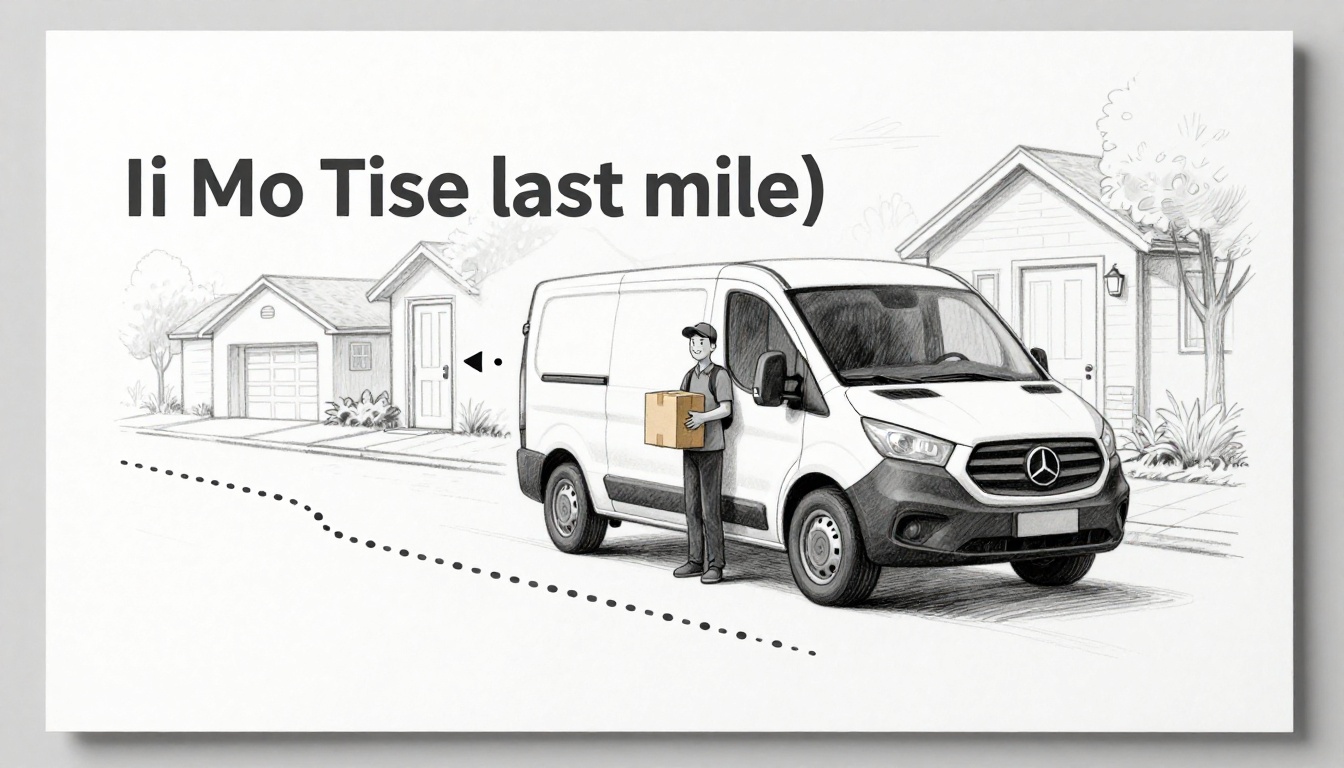
Ever track a package and swear it’s “almost there,” only to watch it miss delivery again? That last, annoying stretch is last-mile delivery.
Last-mile delivery is the final short trip from a local warehouse or hub to your door (or pickup point). It’s the shortest distance in the shipping chain, yet it often takes the most time, costs the most, and causes the most problems. In fact, last-mile delivery can account for about 53% of total shipping costs, which is why businesses obsess over it.
This guide breaks down why last-mile matters for loyalty, where things go wrong, what it costs, and which tech trends are already helping.
Why Last-Mile Delivery Can Make or Break Customer Loyalty
Last-mile delivery is where expectations meet reality. Customers don’t care how well items moved earlier. They care about the moment a box lands safely, on time, and without a headache.
That’s why last-mile service drives customer loyalty. When delivery is fast and predictable, shoppers feel respected. They plan around it. They reorder. They also forgive small mistakes more easily when the rest of the experience feels smooth.
Many shippers want strong performance targets like high on-time delivery and low damage rates. At the same time, shoppers are getting less patient. They want speed, they want updates, and they want accuracy. If those things slip, a cart can turn into a “never again” in one bad delivery.
One reason this part of the chain is so sensitive is simple: last-mile touches people. It touches traffic, weather, building access, and human schedules. So even minor delays can feel huge to the customer.
For a cost and responsibility breakdown, see last-mile delivery cost breakdowns. It helps explain why the “final trip” deserves so much attention.
How Speed and Reliability Win Over Shoppers
Speed gets attention, but reliability earns trust. Lots of customers check tracking before they even plan their day. If the estimate changes often, customers start to doubt it.
For example, a 2026 industry write-up notes that 80% of consumers expect same-day delivery, and 77% want orders within two hours. The same piece also points out that speed alone isn’t enough if the experience feels expensive or unpredictable. That’s a key last-mile lesson: shoppers compare the whole deal, not just the promise.
Real-time updates help in a practical way. When you get a clear ETA and status messages, you can decide what to do next. You might wait at home, meet the driver, or switch to a pickup option. Without that visibility, customers feel stuck.
Here’s a common scenario: you order food, your driver loops around the block, and nobody tells you why. The food is cold, the app feels unclear, and the brand loses goodwill fast. Meanwhile, a tight last-mile setup with better routing and accurate timing can turn that same delivery into a “that was easy” moment.
Turning a Cost Center Into a Profit Booster
Last-mile delivery isn’t just an expense. It’s a sales tool in disguise. When deliveries work well, customers reorder sooner. They also buy with fewer doubts.
A strong delivery experience improves repeat purchase behavior because it reduces friction. If a customer knows the next delivery will arrive when promised, they spend less time worrying and more time using the service.
It also gives brands a competitive edge. In many markets, products are similar. Delivery becomes a differentiator you can’t easily copy with marketing alone. You need operations that support it.
In addition, better last-mile performance can reduce hidden costs. Failed delivery attempts, re-routes, and customer service calls can add up quickly. Even if those issues seem small one at a time, they stack across thousands of orders.
So yes, last-mile can drain margins. However, when companies treat it like a core product experience, it can drive higher retention and better profits.
The Tough Realities and Headaches of Last-Mile Trips
Last-mile delivery is hard because it runs into real life. The shortest distance doesn’t mean the easiest route.
A local hub might be a few miles away, but the journey still includes frequent stops, tight time windows, and unpredictable access. You also hit traffic patterns that don’t care about your schedule. Add weather, and delays can snowball.
Then there are the customer-side surprises. People aren’t always home. Addresses can be wrong or incomplete. Drivers face gates, tight apartments, and buildings with rules that slow entry.
And sometimes it’s just logistics reality: a vehicle breaks down, a courier gets stuck in congestion, or an entire route needs a last-minute change.
For more on the operational pain points, this overview of last-mile delivery challenges in 2026 is a good reality check.
Urban Traffic Nightmares Versus Rural Long Hauls
Cities can feel like a maze. Drivers deal with parking limits, confusing entrances, one-way streets, and stop-and-go traffic. Even a great route plan can fall apart during peak hours.
Meanwhile, rural deliveries bring a different kind of problem. Homes are spread out. That means more driving time per stop. Fuel costs climb, and route efficiency drops.
Both scenarios can create the same outcome: the day ends late, and the next shift starts behind schedule. Still, the root cause differs. Urban routes suffer from delays between stops. Rural routes suffer from distance between stops.
The big point is this: last-mile is not just about miles. It’s about time. When time slips, customer trust slips with it.
Dealing with Picky Customers and Unpredictable Weather
Last-mile depends on small details that can break plans. A customer might request a change at the last minute. Maybe they want the package left somewhere safer, or they want to switch to pickup.
Bad weather is another huge factor. Rain makes foot traffic and visibility worse. Snow and ice increase driving risk. In many cases, delivery teams still need to meet deadlines, so delays can become “exceptions” they must handle on the fly.
Then there are the classic “failed delivery” moments. The customer isn’t home. The door entry code doesn’t work. The package gets left in a spot that feels risky.
When these issues pile up, the customer experience becomes inconsistent. And inconsistent experiences are the fastest route to churn.
How Much Does Last-Mile Delivery Really Cost Businesses?
The cost story is blunt: last-mile delivery takes a big share of the shipping bill.
For many e-commerce teams, last-mile delivery is around 53% of total shipping costs. On top of that, prices and labor costs don’t sit still. That means last-mile becomes more expensive as operations scale and networks grow busier.
To understand where money goes, it helps to look at the split between areas and delivery density. Costs rise when homes are far apart and each stop takes more time.
You can also see pressure in postal pricing. The USPS raised rates in January 2026 (including 7.8% for Ground Advantage and 6% to 6.6% for Priority Mail). Then, in March 2026, USPS announced an additional 8% surcharge effective April 26, 2026. For high-volume shippers, that can add up fast.
Breaking Down Urban Versus Rural Price Gaps
Urban delivery can still be expensive, but rural delivery is often the bigger shock. One reason is density. More stops per mile can mean better route efficiency. Fewer stops per mile can mean more time spent driving between deliveries.
Here’s a simple look at the gap mentioned in delivery cost breakdowns: urban packages might cost about $10 each, while rural routes can be closer to $50 each.
| Area type | Typical per-package cost (example) | Why it differs |
|---|---|---|
| Urban | ~$10 | Higher stop density, more frequent routing options |
| Rural | ~$50 | Longer travel between homes, fewer stops per route |
The takeaway: last-mile cost isn’t only about labor. It’s about time per delivery stop.
Why Costs Keep Climbing Year After Year
Costs climb for a few steady reasons.
First, labor and driver-related expenses keep rising. Even small wage increases affect every route and every attempt.
Second, operations become harder as demand shifts. Peak seasons add pressure, and last-mile networks feel it first. When volume jumps, each delivery gets squeezed into tighter windows.
Third, carrier pricing and surcharge changes can hit quickly. USPS rate updates are one example, but it’s not the only one companies watch.
Finally, exceptions cost money. Re-deliveries, address fixes, and customer service time all add overhead. Those extra steps can turn a “normal” last-mile day into a costly one.
If you want more 2026-specific stats and benchmarks, this roundup on last mile delivery statistics for 2026 is worth scanning for context.
Game-Changing Trends and Tech Fixing Last-Mile Woes
Last-mile delivery is getting better, and it’s not just hype. Companies are using new tools to plan routes better, shorten the distance to customers, and reduce failed delivery attempts.
The improvements aren’t only for big companies. Smaller carriers and shippers can use parts of the tech stack too, especially around routing, tracking, and pickup options.
Also, delivery teams increasingly blend different methods. Some orders go by truck. Some shift to lockers. Others move through local micro-centers that cut travel time.
You can see this shift in 2026 trend roundups like last-mile delivery trends for 2026. They highlight how networks and technology changes are shaping the final trip.
AI and Smart Tech for Smarter Routes and Tracking
AI helps in two big ways: it reduces wasted driving, and it improves communication.
Route optimization can cut miles driven and improve delivery timing. In 2026 reporting, AI route planning can save 15% to 30% on costs, depending on the network. That matters because every extra mile in last-mile delivery is repeated thousands of times.
AI also helps with real-time tracking and smarter ETAs. When systems account for traffic, weather, and service disruptions, customers see more accurate estimates. That reduces the “is it coming?” anxiety that fuels customer complaints.
On top of that, AI can support exception handling. If a delivery fails or a stop needs rework, smart systems can help drivers adjust without losing the whole route.
The best part is that these tools improve the customer experience while lowering operational waste.
Drones, Robots, and Electric Vehicles on the Rise
Automation is growing, but it’s still limited to the right situations.
Drones are being used in certain states for short deliveries. In 2026 reporting, drone programs have completed over 150,000 flights since 2021, with many deliveries happening quickly in test areas.
Robots are also showing up for sidewalk deliveries. Some ground robots can run continuously, which helps when routes get repetitive.
Then there are electric delivery vehicles. In recent 2026 plans, 87% of companies aim to switch to electric within five years. The cost angle matters too. EVs can reduce fuel costs and help cut emissions, especially when combined with smarter routing and local hubs.
Still, the main lesson is balance. Automation is one piece of the last-mile puzzle, not a complete replacement for human drivers.
Lockers and Local Hubs: Pickup Options Customers Love
Not every delivery needs to hit the doorstep. Pickup options can reduce failed attempts and make last-mile delivery more flexible.
Parcel lockers are a popular middle ground. Customers can collect packages at a time that works for them. Meanwhile, delivery teams avoid time loss from missed deliveries.
Store pickups also help. If customers can grab orders nearby, fewer routes need repeat visits.
Even better, micro-fulfillment centers can move inventory closer to customers. In 2026 reporting, micro-centers can cut delivery times by around 40% and reduce costs by 35% to 40% for same-day services. That’s because the final trip gets shorter and more predictable.
When pickup options are easy, customers win. Businesses win too, because fewer deliveries depend on perfect home access.
What’s Coming Next for Last-Mile Delivery?
The next phase of last-mile delivery focuses on reliability, not just speed. Expect more networks designed for short hops and predictable timing, especially in late 2026 and beyond.
Many market forecasts point to same-day growth. One estimate suggests same-day delivery could reach about 35% by 2027. That’s driven by customer demand, but it also depends on better execution behind the scenes.
Green delivery efforts will keep moving forward. More electric fleets, more optimized routes, and more local staging locations can reduce both costs and emissions.
At the same time, visibility will matter more than ever. Customers want tracking that stays accurate. They want updates that match reality. If a delivery system can’t explain delays clearly, customers assume the worst.
Finally, businesses that win will likely combine several approaches, not just one. They’ll use AI routing, closer fulfillment, flexible pickup options, and automation where it makes sense.
The companies that ignore those basics risk losing repeat buyers. The companies that invest in last-mile execution build loyalty one delivery at a time.
Conclusion
Last-mile delivery is the final trip that gets your order from a nearby hub to you. It’s short on distance, long on impact. That’s why it drives loyalty, shapes costs, and creates the most customer frustration when it goes wrong.
Right now, the strongest improvements come from smarter routing, better tracking, pickup options, and local fulfillment. With those tools, last-mile teams can deliver more reliably and manage cost pressure as pricing changes.
If you’re a business, treat the last mile like a core customer experience. If you’re a shopper, remember that every “doorstep drop” includes real planning, real driving, and real risk management. What’s the best delivery experience you’ve had, and what made it feel easy?