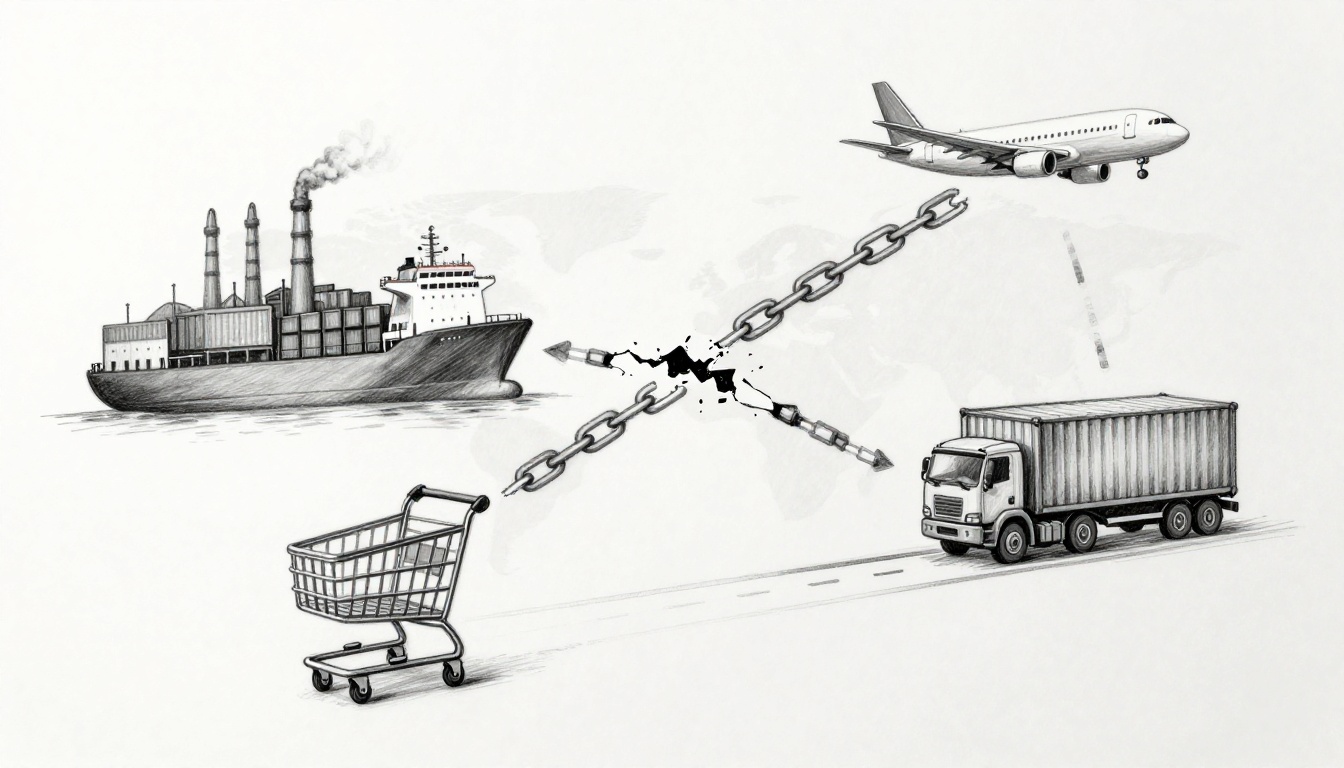
Have you ever placed an online order and watched the delivery date slide back day after day? Or noticed grocery prices jump even when your list did not change much? Most of the time, the cause is not one dramatic breakdown. It’s supply chain disruptions, meaning the flow from factory to store breaks in ways that trigger delays, shortages, and higher costs.
For businesses, that can mean missed sales and lost trust. For shoppers, it can mean empty shelves and slower repairs. In March 2026, multiple problems stack on top of each other, so the impact spreads fast.
So what actually causes these disruptions? Tariffs can raise costs and force sourcing changes. Shipping can get stuck because of attacks and crowded ports. Materials can run short when chip makers or food supply chains lose stability. Then geopolitics, labor gaps, supplier failures, cyber hits, and bad weather turn “local trouble” into network-wide delays.
Let’s break down the biggest causes and the chain reactions you can spot.
Why Tariffs Have Become Supply Chains’ Worst Enemy
Tariffs can disrupt supply chains because they act like a tax on moving goods across borders. When the tax changes, companies must rethink costs, contracts, and timelines. That creates churn, even if factories keep running.
In early 2026 reporting, 72% of trade experts pointed to U.S. tariff changes as the top disruptor. Many firms also face a hard trade-off: raise prices and risk demand drop, or absorb the cost to keep sales. In one survey, 39% said they absorb added costs rather than passing them on.
The ripple effect looks simple but hits hard:
- Higher import costs change product pricing math.
- Suppliers renegotiate terms or pause shipments.
- Inventory targets get rewritten to avoid surprise margins.
- Lead times grow while teams hunt for new sourcing options.
This is why you might see pricier phones, clothes, or parts tied to trade routes that used to be cheaper. Companies also start reworking global sourcing plans, sometimes shifting production closer to customers or adding alternate suppliers to avoid one country being a single point of failure.
When tariffs move quickly, decision cycles lag. Contracts and compliance steps can take weeks. That’s enough time for shortages to show up on store shelves.
For a snapshot of how widely tariffs are affecting operations, see 86% of supply chain leaders impacted by tariffs.
U.S. Tariffs Hitting Imports Hardest
U.S. tariff changes in 2025 and 2026 don’t just raise the landed price of a finished product. They also increase the cost of inputs, like components and raw materials, that flow into that finished product.
As a result, the squeeze often appears at multiple steps:
- Importers pay more upfront.
- Manufacturers see higher material costs.
- Distributors carry cost risk while they wait to sell.
- Retailers adjust prices, promotions, or ordering volumes.
Even when companies don’t raise prices immediately, profits can get trapped. Then they respond by reducing orders, delaying new product launches, or switching suppliers.
Those reactions slow the entire chain. If you order later because you’re waiting on budget, your supplier may also ship later because they are planning around uncertainty.
So, tariffs can create disruption without any factory “breaking.” The chain just becomes harder to plan.
Rethinking Routes and Suppliers to Dodge Tariff Pain
When tariff costs rise, companies don’t always change factories. Often, they first change sourcing, contracts, or shipping routes. Over time, though, many shift partners to reduce exposure.
In practice, that can look like:
- Adding alternative suppliers in different countries.
- Rerouting components through different import lanes.
- Using more local or regional manufacturing for certain parts.
- Negotiating new terms to share tariff risk.
The goal is to reduce the chance that one policy change wipes out a forecast. Still, these moves take time. Finding qualified suppliers takes audits, testing, and compliance.
Meanwhile, existing stock runs down. New stock arrives later. That’s how “tariff news” turns into empty shelves.
Shipping Nightmares from Attacks and Overloaded Ports
Transportation problems are a bottleneck because so many goods depend on tight scheduling. When ships take longer, ports get backed up, and trucks wait longer, delays multiply.
In March 2026, a major trigger has been security threats around key routes. Since 2023, Red Sea incidents linked to Houthi attacks have pushed many vessels to take longer paths around Africa. That means more days at sea, more fuel burn, and higher costs per container.
On top of that, ports can’t always absorb the shock. When arrival schedules shift, congestion rises. When congestion rises, truck capacity and warehouse space face pressure. If diesel prices spike, freight costs climb again.
The result is a classic chain reaction:
- Less reliable transit time makes planning harder.
- Planning errors cause faster sell-through or sudden shortages.
- Shortages create rush orders.
- Rush orders worsen congestion.
You may notice this in products that rely on imported parts, such as cars, electronics, and even some food items.
Red Sea Attacks Forcing Epic Detours
Red Sea route disruptions matter because they sit near major global shipping lanes. When attacks threaten commercial vessels, shipping companies reroute and slow down.
Detours can add weeks to delivery schedules, not days. Over a busy shipping calendar, that translates into missed stock targets. Meanwhile, carriers charge more to cover higher operating costs.
When transit time gets unpredictable, safety stock becomes more expensive. So many companies try to order closer to demand, which reduces flexibility. Then, any delay creates a bigger shortage window.
If you want context on why this chokepoint risk keeps returning, see Red Sea trade chokepoint at risk.
Port Jams, Driver Shortages, and Fuel Spikes
Even when ships arrive, the chain can still stall. Port congestion slows unloading and container pickup. Warehouses back up. Then trucks wait in line.
In 2026, labor constraints have also shown up across trucking, ports, and some factory roles. If fewer people run shifts, throughput drops even without a mechanical failure.
Meanwhile, fuel spikes push freight costs higher. Higher costs can reduce carrier capacity, because some routes become less profitable. That can lead to fewer sailings or fewer available trucks.
Put it together and you get a bottleneck effect. One week of disruption can turn into multiple weeks for retail replenishment.
Chasing Scarce Materials Like Chips and Beef
Not every disruption is about moving goods. Some come from the supply of the goods themselves.
In early 2026 reporting, semiconductors remain tight. These chips show up in phones, computers, appliances, and many car systems. When chip supply dips, production lines often pause, even if the rest of the parts are available.
Other shortages also show up in unexpected places. Beef and certain food supply constraints can hit farms, feed inputs, processing, and distribution. When food moves slower, the pressure builds in grocery supply chains.
Also, many materials depend on a small number of supplier regions. If those regions face strikes, policy changes, or damage, the shortage spreads globally.
So shortages don’t just mean “waiting longer.” They also mean “waiting for the missing part,” which can stop entire assemblies.
Semiconductor Crunch Shutting Down Tech Production
Semiconductor supply stays tight for two reasons. First, chip production capacity is limited. Second, demand can rise faster than new capacity comes online.
That combo creates a mismatch between what companies want to build and what chip makers can ship. Then customers compete for the same limited allotment.
In manufacturing, the chain reaction is brutal: missing chips can stop car assembly. Missing chips can also delay electronics refresh cycles, service parts, and repairs.
By 2026, many firms have learned to plan for volatility. Yet chips still behave like a critical organ. When one part fails, many products feel it.
Other Key Shortages Tied to Few Suppliers
Semiconductors are famous, but concentration risk shows up elsewhere too. Beef shortages can stem from tight processing capacity, disrupted inputs, or supplier limits.
The pattern repeats: if one supplier or region holds a major share of output, a disruption there can ripple through the entire category.
That’s why some companies look at second sources and alternate specifications. Still, switching isn’t instant. New suppliers require testing and ramp-up time.
So even when alternatives exist, the transition can take months, not weeks.
Geopolitical Clashes and Wars Jamming Trade Flows
Geopolitics disrupts supply chains in two ways. First, conflicts can physically damage infrastructure or routes. Second, they can scare buyers and suppliers into pausing or changing plans.
In 2026, the Russia-Ukraine war keeps affecting energy and commodity flows. The war raises costs that hit shipping and factory operations. It also disrupts grain and metals routes, which feed multiple industries.
Meanwhile, Middle East tensions can affect shipping and energy prices. Oil and gas price movement matters because fuel powers both ships and trucking. It also affects electricity costs for some manufacturing.
Then, governments can add rules suddenly, like sanctions, export controls, or import restrictions. Those moves can freeze planning across borders.
When this happens, companies avoid risk. They order less. That shortage can become real.
Russia-Ukraine War’s Ongoing Supply Ripples
The Russia-Ukraine war affects supply chains beyond the battlefield. Energy markets react. Grain and metals move differently. That changes availability and prices for materials used in factories and food systems.
In practice, energy cost spikes can increase overhead for logistics providers too. Then freight charges rise. Then delivery costs rise. Then budgets tighten.
Even if a specific product is not directly involved, the downstream price impact can still reach retailers and shoppers.
Middle East Tensions and Sudden Policy Shifts
Middle East instability links back to shipping lanes and energy chokepoints. If risk increases near major routes, carriers change behavior. Detours increase transit time. Insurance costs can rise too.
Policy shifts also matter. A new ban, tax, or export rule can stop shipments at the border. Companies then scramble to find alternate suppliers, which takes time.
In supply chains, surprise rules are often as disruptive as physical blockages.
Labor Shortfalls, Supplier Busts, Cyber Strikes, and Weather Walls
Some disruptions hide inside day-to-day operations. A shortage of workers can slow output. A supplier bankruptcy can cut off a key part. A cyber attack can freeze order systems. A storm can damage a factory or roads.
Together, these issues create “stop-and-go” flow. When one node stalls, the next node waits. Then that node can’t replenish either.
Not Enough Workers to Keep Things Moving
Labor gaps show up across ports, warehouses, trucking, and factories. When companies struggle to hire fast enough, shifts shrink and backlogs grow.
Hiring takes time because people need training and clear job placement plans. So output can remain tight even after demand softens.
Meanwhile, disruptions from other causes make labor strain worse. If one shipment arrives late, workers and equipment stand idle. Then the next delivery window becomes more crowded.
Suppliers Failing and Cyber Attacks Crippling Ops
Supplier failures can halt production. If a key vendor goes bankrupt or can’t meet terms, the entire line can wait for parts.
Cyber attacks are another major stopper. Many firms rely on shared systems for scheduling, inventory updates, and order processing. A successful attack can interrupt operations across multiple vendors.
For a look at cyber risk patterns in supply chains, see 2026 supply chain cybersecurity trends.
Natural Disasters Like Typhoons Trashing Factories
Weather disruption can feel sudden, but its impact can be long. Typhoons and severe storms can damage factories, ports, and transport links across parts of Asia.
When a plant goes offline, parts do not appear. Then production lines pause. Even if repairs start quickly, rebuilding supply chains takes extra time.
The chain stays weak until multiple sites recover.
Conclusion: The Pattern Behind the Chaos
Supply chain disruptions in 2026 usually follow the same pattern. Tariffs raise costs and force reroutes. Shipping chaos stretches timelines. Shortages stop production when a critical item runs out. Geopolitics adds risk and delays policy-free trade. Then internal surprises, like labor gaps, supplier failures, cyber attacks, and weather, turn slowdowns into full bottlenecks.
The strongest lesson is simple: treat these issues like core risks, not rare events. Businesses that add backup suppliers, plan around longer lead times, and monitor threats across regions recover faster.
If you’re trying to make your own purchasing or planning smarter, start small:
- Diversify where key items come from.
- Track logistics risks, not just product prices.
- Build buffers for known choke points.
And next time your order slides back, remember this: the delay rarely comes from one problem. It comes from the whole chain reacting at once.