Have you noticed how gas, food, or tech gear suddenly costs more, even when nothing “new” seems to happen? One month you’re paying a normal price, the next month it feels like everything is creeping up. That pattern shows up when supply chains get hit, especially in 2025 and 2026.
At the heart of it is a simple idea: less supply is meeting steady demand. When fewer goods arrive on time, businesses and shoppers fight over what’s left. Then prices rise, and the quantity people can buy drops.
So why does the price jump happen so fast, and why does it sometimes take months to calm down? Let’s break it into clear pieces, with real examples from chips, groceries, and energy. You’ll also see how markets settle back over time, even after rough disruptions.
How Less Supply Meets Steady Demand and Pushes Prices Up
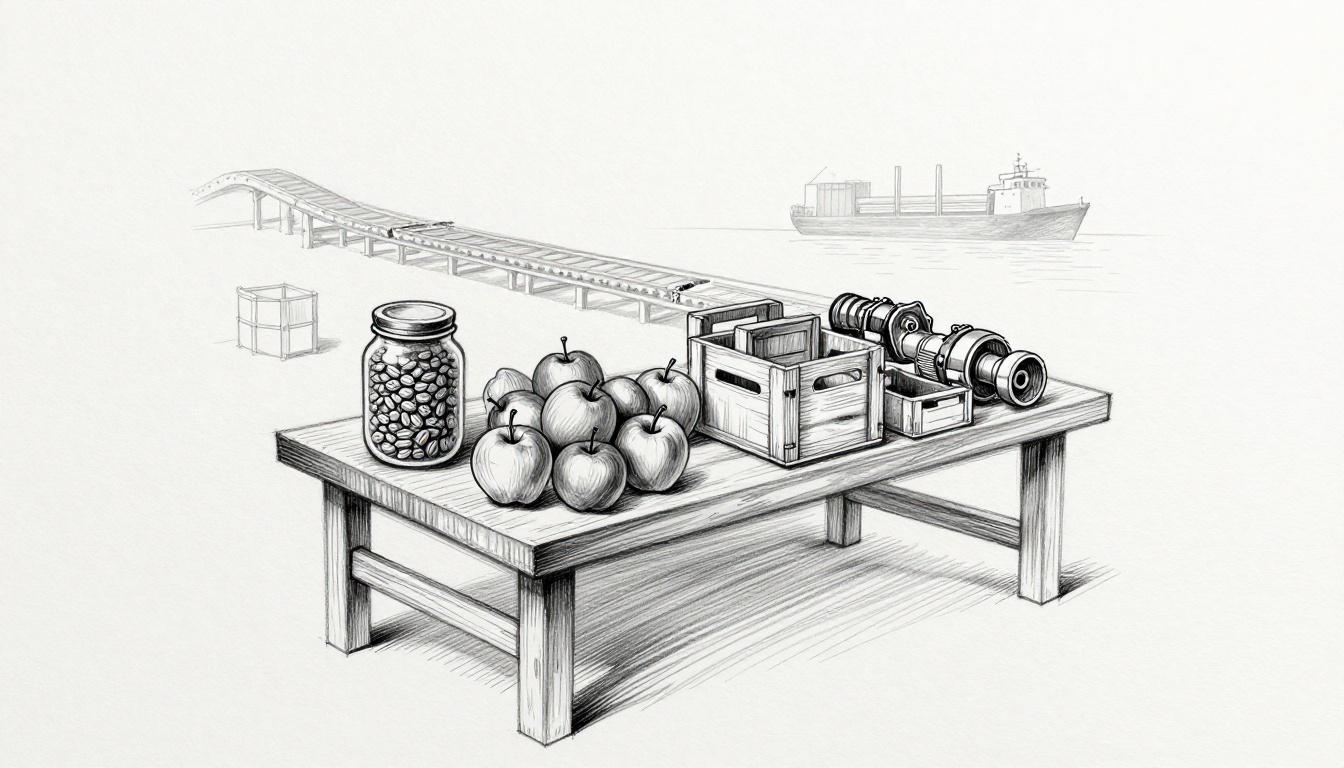
Picture a market like a table with food on it. People still want apples, coffee, or car parts. However, the table gets lighter because shipments get delayed or production slows down. That mismatch is what lifts prices.
Here’s the simplest version of supply and demand. Supply is how many items businesses can sell at different prices. Demand is how many items people want to buy. In normal times, these forces balance out. Prices land where supply and demand meet.
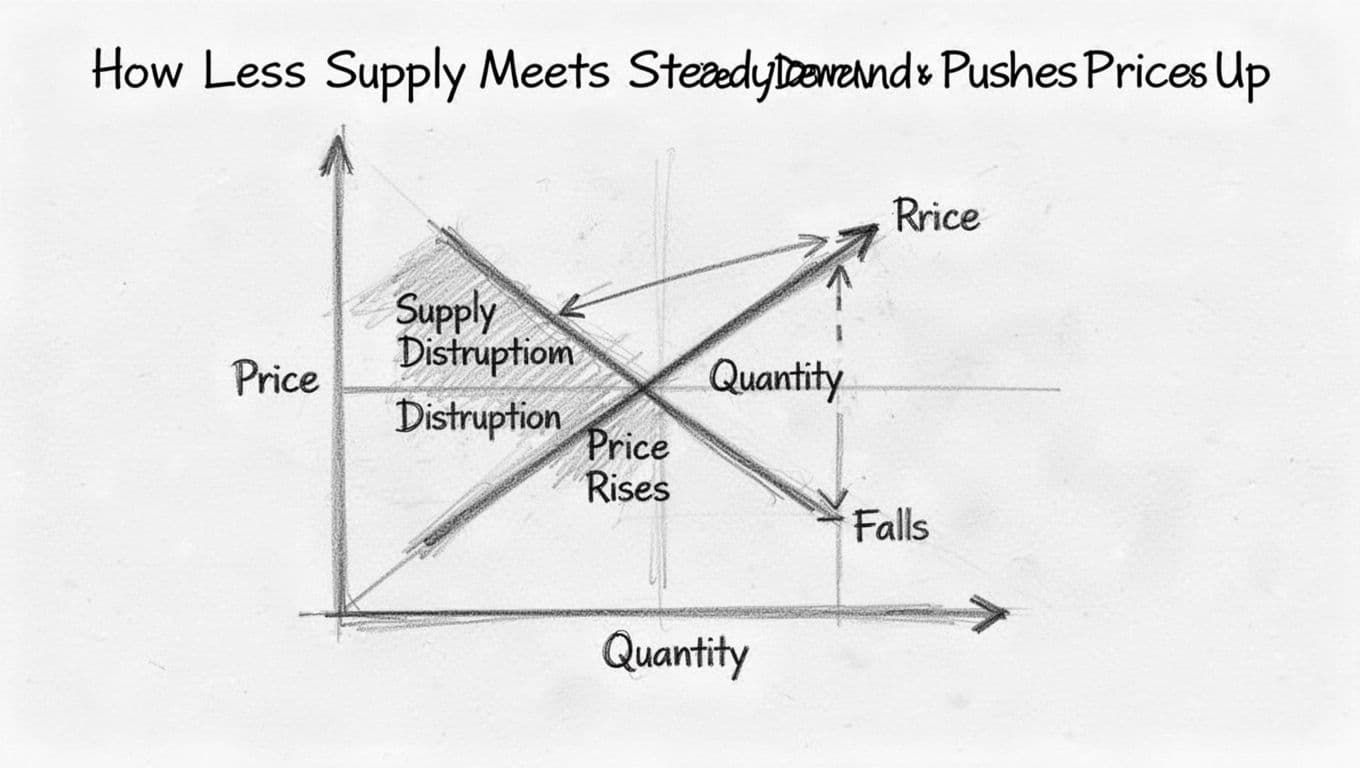
When supply chains get affected, supply shifts down. In plain terms, it’s like your “incoming goods” line gets cut. You can imagine a basic graph in your head:
- The vertical axis is Price
- The horizontal axis is Quantity
- Supply slopes upward, demand slopes downward
- When supply drops, the supply curve shifts left
- The new intersection shows a higher price and a lower quantity
The math can be simple even if the real world is messy. When fewer units reach stores, sellers can ask for more money. Buyers still need some things, especially essentials. So sellers don’t just lose customers, they gain bargaining power.
A helpful analogy is a leaky bucket. Supply is the bucket filling through shipping and production. Demand is the bucket draining as people buy. If the leak gets bigger, the bucket empties faster. Prices rise because buyers rush to fill their needs before the next drop.
Even when disruptions start, demand doesn’t fall at the same speed. People usually still need food, fuel, and basic household goods. They may switch brands, but they don’t stop buying. Demand stays “sticky” because most needs don’t pause.
So prices move first, not only because of scarcity, but because sellers expect scarcity to last. Meanwhile, factories and ports cannot instantly rebuild what got delayed.
The Basic Rules of Supply and Demand Everyone Should Know
Let’s keep it friendly and basic.
Demand means people want more when prices are lower. For example, if apples get cheaper, shoppers buy more baskets. That’s the typical pattern.
Supply means producers offer more when prices are higher. If a seller can earn more per unit, they have more reason to produce, ship, or restock.
In normal conditions, the market finds an equilibrium. That’s the point where the quantity sellers want to sell matches what buyers want to buy.
Now add a disruption. A factory shuts down for repairs. A drought hits a growing region. A ship can’t take its usual route. Whatever the cause, the effect is the same.
Supply gets smaller first. That changes the balance before buyers can fully adjust their habits. Only later do people reduce purchases, switch substitutes, or delay big buys.
Why Shortages Force Sellers to Charge More Right Away
Shortages create two pressures at once.
First, buyers feel urgency. When shelves look thin, people grab what they can. That spikes demand in the short run, even if long-term demand stays similar.
Second, sellers see risk. If inventory will run out, they protect their remaining stock. They also learn quickly what customers will pay.
This is why price hikes can start almost immediately. A disruption doesn’t need to destroy the whole system to raise prices. It only needs to cut the flow enough to create tightness.
Also, essentials behave differently from “nice-to-haves.” If you need gas to commute, you pay more before you cancel your day. If you need certain parts for a business, you may pay the premium rather than stop operations.
When supply drops, the first visible result is not “no sales.” It’s higher prices for what’s available.
Everyday Disruptions That Break Supply Chains and Spike Costs
Supply chains don’t run on one road. They rely on many steps: factories, workers, ports, trucking, warehouses, and paperwork. Break one link, and the chain gets slower. Break several links, and you get a shortage.
Here are common causes that affect 2025 to 2026 pricing in the US:
- Weather and natural disasters that shut down farms or factories
- Geopolitical events that slow or reroute shipping lanes
- Labor and logistics problems like port delays and strikes
- Trade policy shifts and tariffs that raise import costs and disrupt planning
Because these issues hit different stages, their effects also vary. Still, the price outcome tends to rhyme. If fewer goods arrive, sellers have room to raise prices, and buyers have to adjust.
Weather Disasters and Factory Shutdowns
Weather can squeeze food supply fast. Drought reduces yields. Flooding damages crops and roads. Heat stresses plants at the worst possible time.
For example, coffee and avocados rely on specific growing conditions. If rainfall swings wildly, farms face higher disease risk, lower harvests, and higher replanting costs. Even if demand doesn’t change, supply shrinks for the season.
Weather also hits manufacturing indirectly. Power outages slow production. Storm damage affects warehouses. Then the ripple spreads through distribution.
Factory shutdowns do something similar, but with a different trigger. One plant pause can stall a key component. Then assembly lines elsewhere feel it.
Chips are a good example of this kind of domino effect. When factories making advanced components face risk, the rest of the supply chain can’t “print” replacements quickly. Inventory and substitutions only go so far.
Shipping Blocks from Conflicts or Strikes
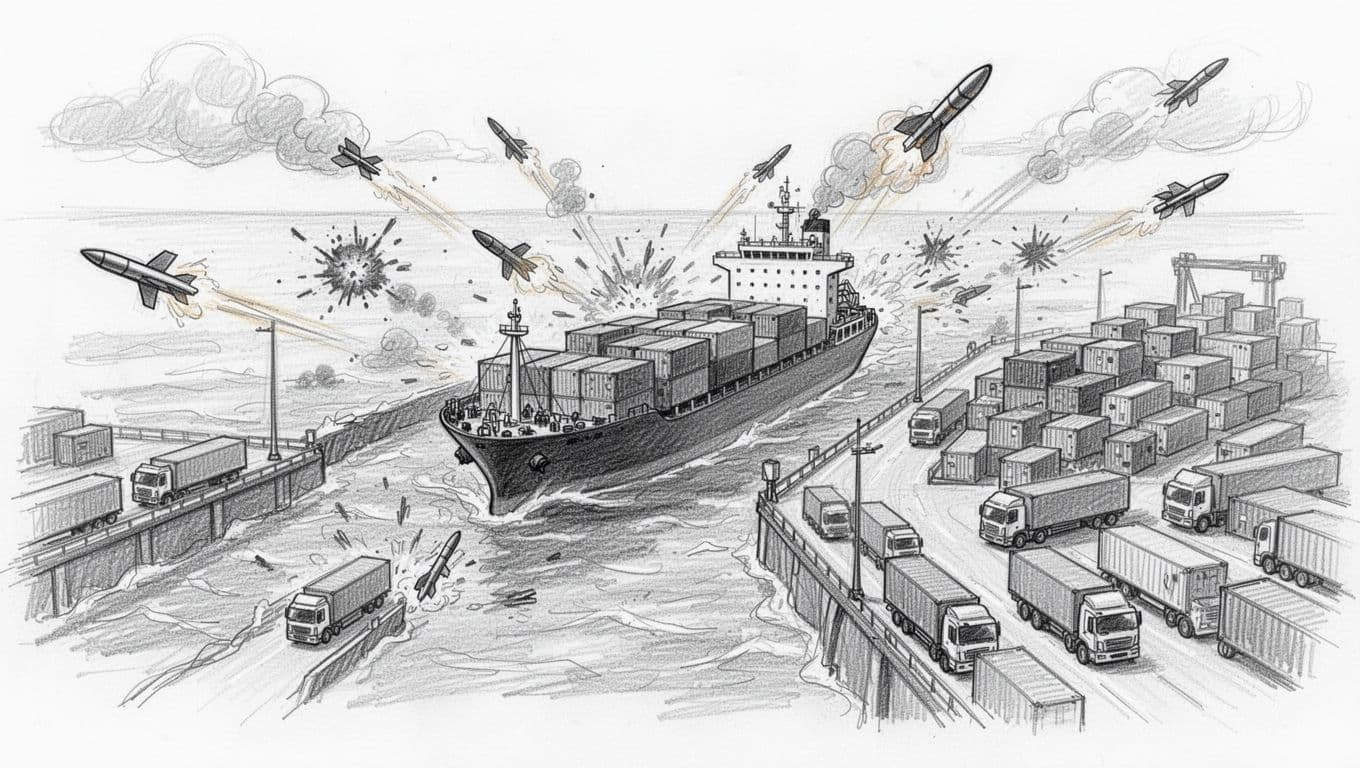
Shipping problems can be brutal because they affect the “moving parts” of global trade. When routes get disrupted, lead times jump. That means inventory arrives later, even if total production eventually recovers.
In recent years, conflict-linked disruptions have made some shipping paths harder. Longer routes increase fuel use. They also raise the chance of delays. Meanwhile, ports and trucking networks still have limited capacity.
Strikes and labor issues matter too. If workers stop loading or unloading for a stretch of time, containers pile up. Once that backlog forms, it takes extra days to catch up.
And because many goods travel through the same hubs, congestion can spread. You don’t need every supplier to fail. You just need key shipments to miss their window.
Real 2025-2026 Examples of Price Surges from Supply Woes
Supply chain disruptions don’t land on one product category. They show up across chips, groceries, and energy. In the US, you can see the pattern when fewer inputs arrive, costs rise, and businesses pass some of that burden to customers.
Here’s how it tends to unfold.
Chip Crisis Hits Phones and Cars Hard
Semiconductors sit inside tons of products. That makes chip supply problems especially wide. When chips get scarce, many industries face a mismatch between what people want and what makers can build.
In 2025 and into 2026, shortages have continued in areas like memory chips and other semiconductors. Some of the pressure ties to geopolitical risks around major production hubs and trade friction. As a result, companies manage risk by running lean inventories and revising pricing.
You can also see price pressure shifting downstream. One industry report noted that a chip price surge in 2Q26 pushed cost pressure toward end markets (including electronics). That matters because carmakers and device makers often buy chips well before sales, and shortages can force them into expensive short-notice sourcing. You can follow the reporting in chip price surge cost pressure.
So what do buyers see? Higher prices, delayed upgrades, or tighter availability. Even when demand stays strong, production slows because the “brains” and components for machines are missing.
Droughts Make Groceries Sting More
Food prices feel personal because they hit your weekly budget. Weather swings show up quickly in items that depend on growing seasons and specific conditions.
In 2025 to 2026, disruptions tied to climate stress and broader supply risks have pushed grocery costs higher. Energy prices and fertilizer supply can raise farm input costs too. Then the retailer faces higher costs for both ingredients and shipping.
Recent coverage highlights how food prices rise as energy and fertilizer costs climb. That link matters because it connects the dots between supply disruptions and store-level pricing.
Even if your cart includes a mix of products, the same pattern repeats. If harvests shrink or costs rise, retailers often adjust through higher shelf prices and smaller package sizes. That’s one reason grocery inflation can feel “sticky,” even when the overall economy slows down.
Fuel Prices Climb from Sea Route Attacks
Energy is one of the fastest ways disruptions show up. When shipping routes get more expensive or unstable, the cost of getting fuel moves upward.
Also, fuel prices have their own timing. They can fall, then rise again with seasons.
For a US snapshot, the EIA forecast in 2026 points to lower average gas prices than 2025. It projected around $2.90 per gallon in 2026, down from about $3.10 in 2025. However, prices aren’t flat. They’re expected to climb toward about $3.20 between spring and early summer, then ease after June.
One key reason is crude oil and demand changes. When crude prices fall, gas often follows. But disruptions can still create bumps, because logistics and risks affect what suppliers pay.
And it ripples outward. If fuel costs rise, trucking costs rise. Then delivery costs rise for food, goods, and services. The Conversation has a clear breakdown on how gas shocks ripple to costs in every store.
So even when gas seems like a “one item” issue, it affects many businesses that rely on transport.
Extra Reasons Prices Climb Higher and Stay There Longer
Supply drops can explain the first price spike. But why do prices sometimes stay elevated longer than people expect?
Several extra forces show up after the initial disruption.
First, businesses face higher risk costs. When routes and production schedules become less reliable, firms add a buffer. They pay for faster shipping options. They hold larger safety inventories. They add backup suppliers when they can, and when they can’t, they pay more for rush orders.
Second, disruptions can raise costs beyond the product itself. Shipping, labor, energy, and insurance can all climb at the same time. Then even if availability improves, the landed cost may not go back down quickly.
Third, trade policy can intensify the problem. In 2025, US tariff changes raised import costs for some key inputs. One report summarized that 86% of supply chain leaders said trade tariffs disrupted operations. That kind of pressure can force new sourcing, new compliance steps, and higher unit costs for goods like cars and electronics. See 86% tariff disruption report.
Finally, fixes take time. New suppliers need contracts. New factories need ramp-up. Shipping lanes need normalization. Until then, the market keeps pricing scarcity and uncertainty.
Prices settle when supply flows stabilize, not when the headlines stop.
Conclusion
Prices rise when supply chains are affected because the market suddenly has less supply moving toward steady demand. Then shortages create urgency, sellers gain leverage, and costs spread across the rest of the economy.
You saw it across categories, from chip constraints that slow production, to food pricing pressures tied to weather and farm inputs, to energy volatility that ripples into nearly every store.
The next time you feel that monthly “why is this more?” shock, remember the simple cause behind it. When supply flow breaks, prices adjust before most people can change their behavior.
Want a practical way to stay ahead? Watch for the next supply disruption trend, then shop smart by buying essentials earlier (and considering alternatives when brands run thin). What item has surprised you most during the last price jump?